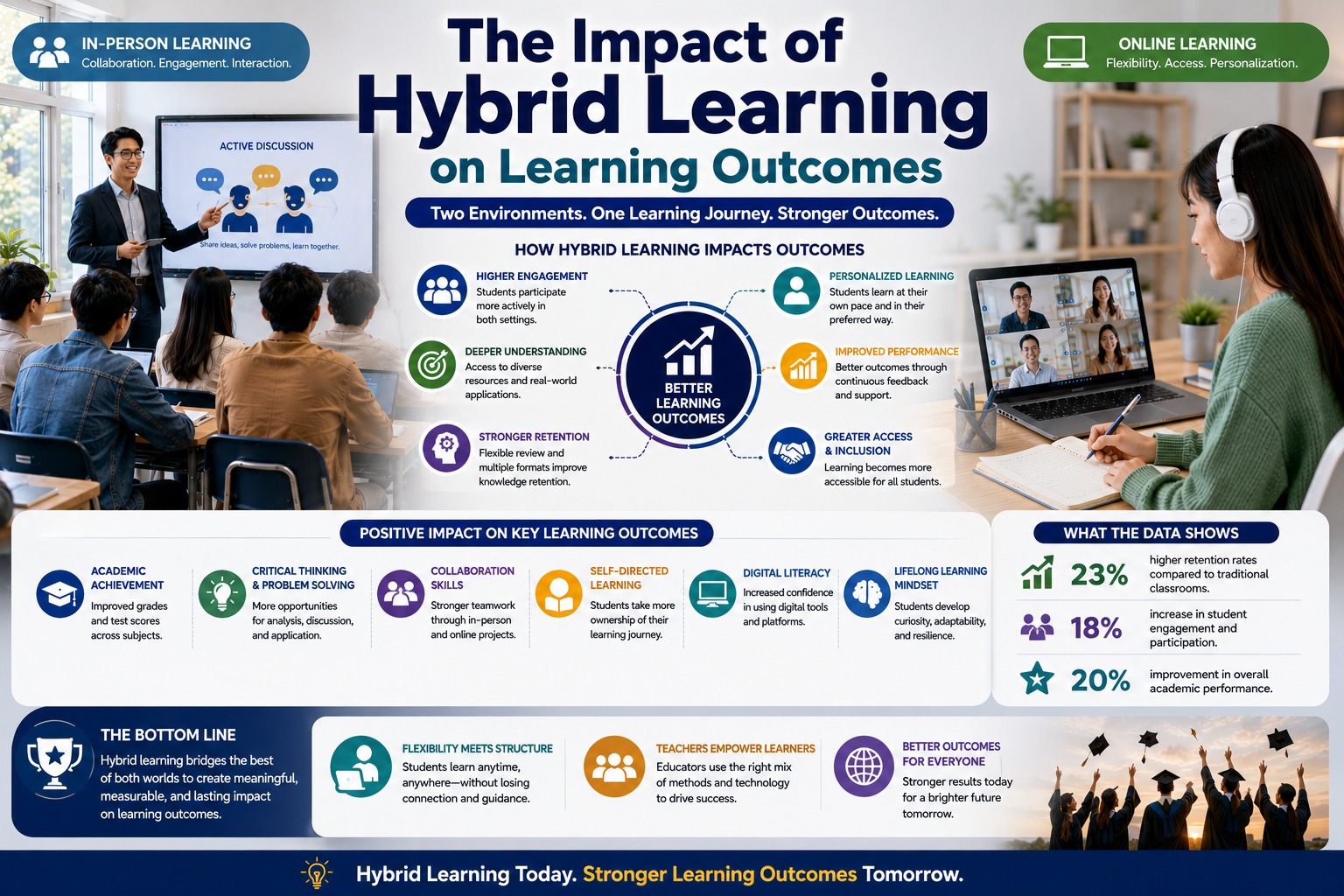
The rapid development of technology has transformed many aspects of education, including teaching methods and learning systems. One of the most significant innovations in modern education is hybrid learning. This educational approach combines traditional face-to-face instruction with online learning activities, creating a more flexible and interactive learning environment.
Hybrid learning has become increasingly popular in schools, universities, and professional training institutions because it offers various benefits for both students and lecturers. One of the most important aspects of this learning model is its impact on learning outcomes. By integrating digital technology with classroom interaction, hybrid learning can improve student understanding, participation, and academic performance.
UNDERSTANDING HYBRID LEARNING
Hybrid learning is a teaching method that combines direct classroom instruction with online learning experiences. In this model, students participate in both physical classroom sessions and digital learning activities through online platforms.
Lecturers can provide recorded lectures, virtual discussions, digital assignments, and interactive multimedia materials to support the learning process. This combination allows students to experience more flexible and personalized education.
Hybrid learning aims to create a balanced learning system that maximizes the strengths of both traditional and online education.
IMPROVED ACCESS TO LEARNING MATERIALS
One of the major impacts of hybrid learning on learning outcomes is improved access to educational resources. Students can access lectures, notes, e-books, and recorded videos anytime and from anywhere.
This accessibility allows students to review learning materials repeatedly until they fully understand the subject. Students who need additional time to learn complex topics can revisit online resources without depending entirely on classroom explanations.
Better access to educational content often leads to improved comprehension and stronger academic performance.
INCREASED STUDENT ENGAGEMENT
Student participation plays an important role in academic success, and hybrid learning helps increase engagement through interactive teaching methods.
Online quizzes, virtual discussions, collaborative projects, and multimedia presentations encourage students to become more active in the learning process. Students can participate in discussions both inside and outside the classroom, creating more opportunities for interaction.
Higher engagement levels often result in better concentration, motivation, and learning outcomes.
FLEXIBILITY THAT SUPPORTS LEARNING
Hybrid learning offers flexibility that can positively affect student achievement. Students can organize their learning schedules based on their personal needs and responsibilities.
This flexibility is especially beneficial for students who have part-time jobs, family commitments, or different learning speeds. Students can study at their own pace and spend more time on subjects they find challenging.
When students feel less pressured by rigid schedules, they often become more focused and productive in their studies.
DEVELOPMENT OF INDEPENDENT LEARNING SKILLS
Hybrid learning encourages students to become more independent learners. Since online learning requires self-discipline and time management, students develop important academic and personal skills.
Students learn how to manage assignments, participate in online discussions, and search for additional learning resources independently. These habits improve critical thinking, problem-solving abilities, and personal responsibility.
Independent learning skills contribute significantly to long-term academic success and professional development.
ENHANCING DIGITAL LITERACY
Digital literacy has become an essential skill in the modern world, and hybrid learning helps students improve their technological competence.
Through hybrid learning systems, students become familiar with online communication platforms, digital collaboration tools, and educational software. Lecturers also gain experience in using technology to create more engaging teaching methods.
These digital skills not only support academic performance but also prepare students for future career opportunities in technology-driven workplaces.
SUPPORTING DIFFERENT LEARNING STYLES
Every student has a unique learning style, and hybrid learning provides various methods to accommodate these differences.
Visual learners can benefit from videos and presentations, auditory learners can focus on recorded lectures, and kinesthetic learners can participate in practical classroom activities. Students who prefer independent study can access online materials according to their own learning pace.
This personalized approach helps students understand subjects more effectively, which can improve overall learning outcomes.
IMPROVED COMMUNICATION AND COLLABORATION
Hybrid learning creates more opportunities for communication between students and lecturers. Online forums, messaging applications, and virtual meetings allow continuous interaction outside classroom hours.
Students can ask questions more easily and collaborate with classmates through digital platforms. Group projects and online discussions also improve teamwork and communication skills.
Better communication often leads to stronger academic support systems and higher student confidence.
CHALLENGES THAT MAY AFFECT LEARNING OUTCOMES
Although hybrid learning offers many advantages, certain challenges can negatively affect learning outcomes if not managed properly.
Technical problems such as poor internet connections and limited access to digital devices can disrupt the learning process. Some students may also struggle with maintaining motivation and concentration during online sessions.
Lecturers must design engaging learning activities and provide regular feedback to ensure students remain active and focused.
STRATEGIES TO MAXIMIZE LEARNING OUTCOMES
To improve learning outcomes in hybrid learning environments, educational institutions should provide reliable technological infrastructure and effective digital learning platforms.
Lecturers should combine interactive classroom activities with engaging online content. Regular communication, flexible learning resources, and continuous assessment can also help students achieve better academic performance.
Training programs for both students and lecturers are important to improve digital skills and maximize the effectiveness of hybrid learning systems.
CONCLUSION
Hybrid learning has a significant impact on learning outcomes by increasing accessibility, flexibility, engagement, and independent learning opportunities. The combination of face-to-face instruction and online education creates a more adaptable and interactive learning environment for students.
Although challenges such as technical issues and motivation problems still exist, proper strategies and technological support can help educational institutions maximize the benefits of hybrid learning. As education continues to evolve in the digital era, hybrid learning will remain an important method for improving academic performance and preparing students for future challenges.
Tentang Penulis
Gusti Ayu Tita P
Penulis — Universitas STEKOM
Penulis aktif yang berfokus pada isu-isu akademik, teknologi pendidikan, dan pengembangan sumber daya manusia di lingkungan kampus.