The Impact of Social Media on Teenagers’ Behavior and Lifestyle
Gusti Ayu Tita P
19 Juni 2026
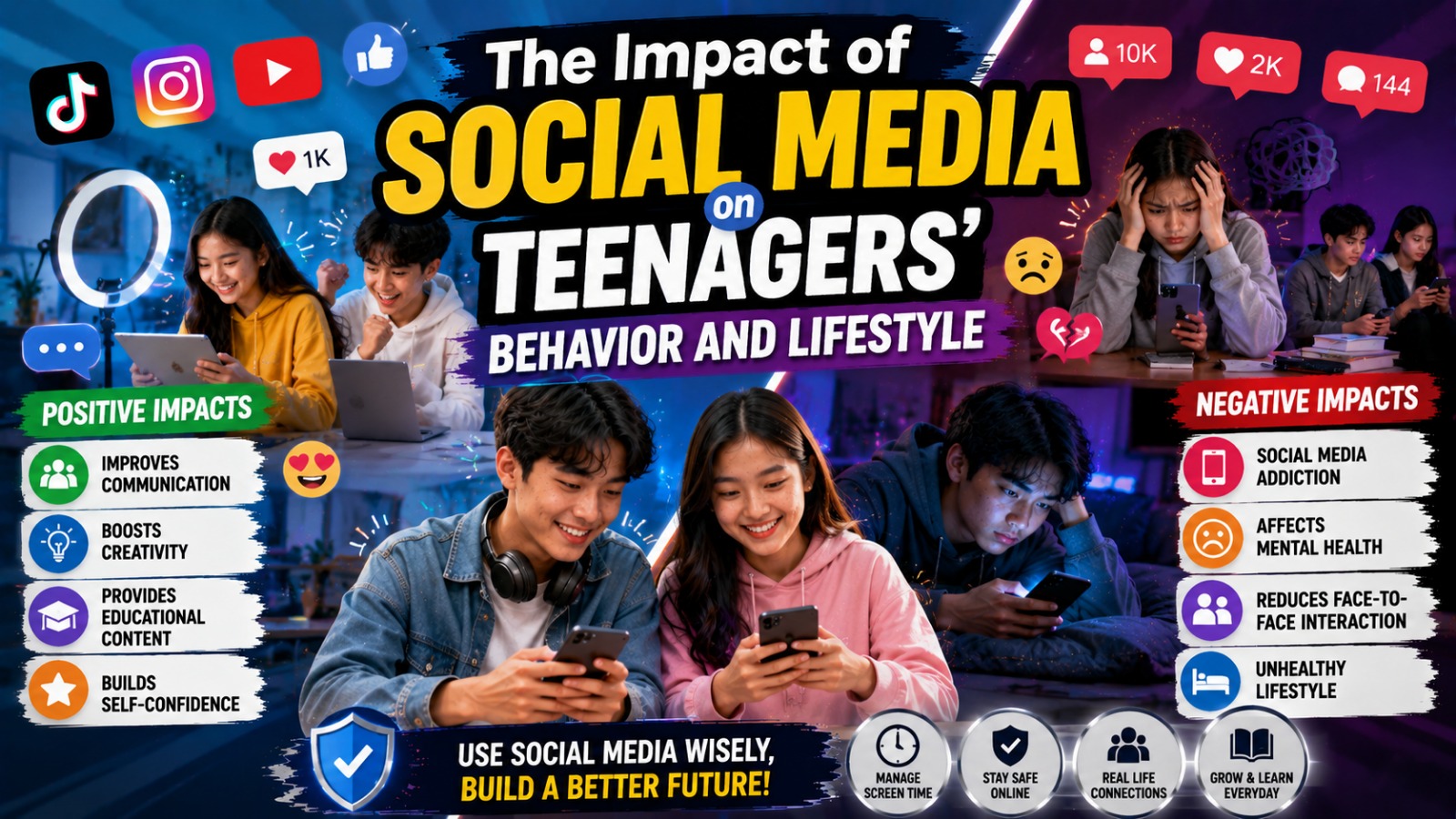
Social media has become an essential part of teenagers’ daily lives in the digital era. Platforms such as TikTok, Instagram, YouTube, and Snapchat are widely used for communication, entertainment, education, and self-expression. With easy internet access and smartphones, teenagers can connect with people around the world anytime and anywhere.
Although social media offers many benefits, its excessive use can significantly influence teenagers’ behavior and lifestyle. The way teenagers think, communicate, dress, and interact with others is often shaped by trends and content they see online. Therefore, understanding the impact of social media is important to help teenagers use it wisely.
THE ROLE OF SOCIAL MEDIA IN TEENAGERS’ LIVES
Social media allows teenagers to communicate quickly and easily with friends and family. It also provides access to information, entertainment, and educational content that can help improve knowledge and creativity.
Many teenagers use social media to share their hobbies, talents, and opinions. Digital platforms also help them build online communities and connect with people who have similar interests.
However, the growing dependence on social media has changed many aspects of teenagers’ lifestyles and social behavior.
POSITIVE IMPACTS OF SOCIAL MEDIA
IMPROVES COMMUNICATION
Social media helps teenagers stay connected with friends and relatives regardless of distance. Messaging apps and video calls make communication faster and more practical.
ENCOURAGES CREATIVITY
Teenagers can use social media to create videos, digital art, photography, and other creative content. Many young people develop new skills through online platforms.
PROVIDES EDUCATIONAL CONTENT
Educational videos, tutorials, and motivational content available on social media can help teenagers learn new things outside the classroom.
BUILDS SELF-CONFIDENCE
Positive feedback and support from online communities can increase teenagers’ confidence and encourage them to express themselves creatively.
NEGATIVE IMPACTS OF SOCIAL MEDIA
SOCIAL MEDIA ADDICTION
Spending too much time on social media can reduce productivity and make teenagers dependent on gadgets. Excessive screen time may interfere with study habits and daily activities.
NEGATIVE LIFESTYLE INFLUENCE
Teenagers are often influenced by trends and lifestyles displayed online. Some may feel pressured to follow certain fashion styles or behaviors to gain acceptance from others.
MENTAL HEALTH PROBLEMS
Constant comparison with others on social media can lower self-esteem and create feelings of anxiety or stress. Negative comments and cyberbullying can also affect teenagers’ emotional well-being.
REDUCED FACE-TO-FACE INTERACTION
Excessive social media use may reduce direct communication in real life. Many teenagers spend more time online than interacting with family or friends personally.
HOW TO USE SOCIAL MEDIA WISELY
Teenagers should learn to use social media in a balanced and responsible way. Limiting screen time can help maintain productivity and mental health.
Choosing positive and educational content is also important. Teenagers should avoid harmful trends and negative online behavior.
In addition, maintaining real-life social interactions and participating in offline activities such as sports, reading, or community events can help create a healthier lifestyle.
Parents and schools also play an important role in guiding teenagers to become responsible digital users.
CONCLUSION
Social media has a strong impact on teenagers’ behavior and lifestyle in the modern digital era. It can provide positive benefits such as improving communication, creativity, and access to information. However, excessive use can also lead to addiction, mental health problems, and unhealthy lifestyle changes.
Therefore, teenagers need to use social media wisely and maintain a balance between digital activities and real-life interactions. With proper guidance and self-control, social media can become a useful tool for personal growth and positive development.
Tentang Penulis
Gusti Ayu Tita P
Penulis — Universitas STEKOM
Penulis aktif yang berfokus pada isu-isu akademik, teknologi pendidikan, dan pengembangan sumber daya manusia di lingkungan kampus.