The Importance of Environmental Education for Children and Young Generations
Gusti Ayu Tita P
18 Juni 2026
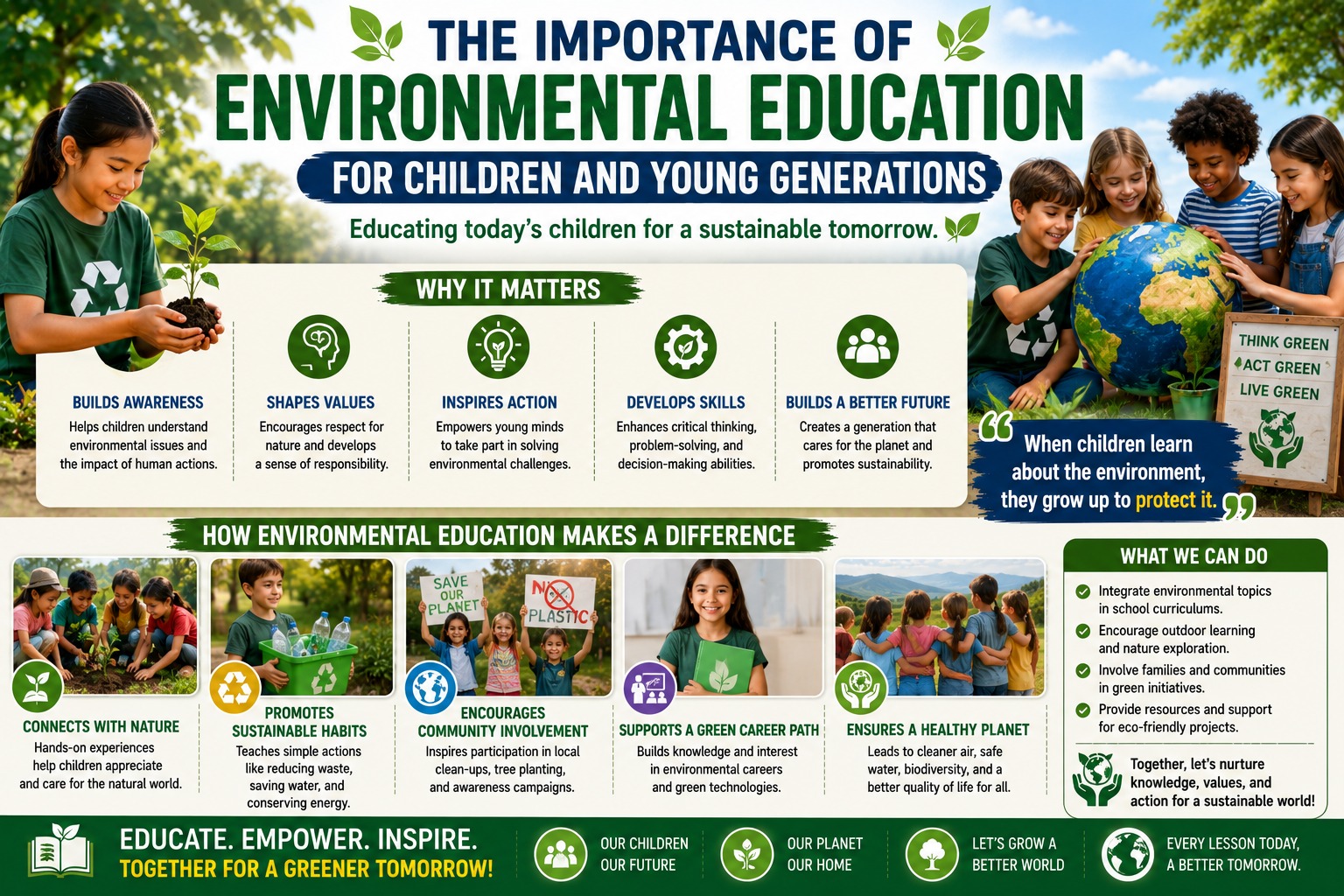
Environmental education plays a vital role in building awareness and responsibility toward nature and the environment. As environmental problems such as climate change, pollution, deforestation, and waste management continue to increase, educating children and young generations about environmental protection has become more important than ever.
Children are the future leaders of society, and the habits they develop today will shape the future of the planet. By teaching environmental values from an early age, young people can grow into responsible individuals who care about sustainability and natural resource conservation. Environmental education not only increases knowledge but also encourages positive actions that help create a healthier and more sustainable world.
UNDERSTANDING ENVIRONMENTAL EDUCATION
Environmental education is the process of teaching people about environmental issues, sustainability, and the importance of protecting natural resources. It helps individuals understand how human activities affect ecosystems and encourages responsible behavior toward nature.
Environmental education can be introduced through schools, families, communities, and social activities. Lessons may include topics such as recycling, water conservation, renewable energy, biodiversity, and climate change.
By learning about environmental challenges and solutions, children and young people become more aware of their role in protecting the Earth.
BUILDING ENVIRONMENTAL AWARENESS FROM AN EARLY AGE
Teaching environmental responsibility at a young age helps children develop positive habits that can last a lifetime. Simple activities such as throwing garbage in the correct bin, saving water, planting trees, and reducing plastic use can teach children the importance of caring for the environment.
When children understand the consequences of pollution and environmental destruction, they are more likely to adopt sustainable lifestyles as they grow older. Early environmental education also helps create empathy toward animals, plants, and ecosystems.
Schools and parents play an important role in guiding children to become environmentally conscious individuals.
ENCOURAGING RESPONSIBLE DAILY HABITS
Environmental education encourages children and teenagers to practice eco-friendly habits in their daily lives. These habits may seem small, but they can have a significant impact when practiced consistently.
Examples of responsible environmental habits include:
- Saving electricity and water
- Recycling household waste
- Using reusable bags and bottles
- Avoiding littering
- Planting and caring for trees
- Reducing single-use plastic consumption
Teaching these habits early helps young generations understand that protecting the environment starts with simple everyday actions.
SUPPORTING SUSTAINABLE FUTURES
Environmental education is essential for creating sustainable communities and long-term environmental solutions. Young generations who understand sustainability are more likely to support environmentally friendly policies, green technologies, and conservation programs in the future.
As environmental problems continue to grow globally, future leaders will need the knowledge and skills to solve complex ecological challenges. Educated young people can contribute innovative ideas for renewable energy, waste management, environmental conservation, and climate action.
Investing in environmental education today helps prepare future generations for a more sustainable world.
IMPROVING CRITICAL THINKING AND PROBLEM-SOLVING SKILLS
Environmental education also strengthens critical thinking and problem-solving abilities. Children learn to analyze environmental issues, identify causes, and explore possible solutions.
For example, students may study how plastic pollution affects marine life or how deforestation contributes to climate change. These learning experiences encourage curiosity, creativity, and responsibility.
Environmental projects, outdoor activities, and community programs can further improve teamwork and leadership skills among young people.
THE ROLE OF SCHOOLS AND FAMILIES
Schools are important places for introducing environmental education. Teachers can integrate environmental topics into science, geography, and social studies lessons. School recycling programs, gardening activities, and environmental campaigns can also provide practical learning experiences.
Families also play a major role in shaping children’s environmental attitudes. Parents who practice sustainable habits at home can become positive role models for their children.
When schools and families work together, children receive stronger environmental values and are more motivated to care for nature.
USING TECHNOLOGY TO SUPPORT ENVIRONMENTAL EDUCATION
Modern technology can make environmental education more engaging and accessible. Educational videos, online learning platforms, mobile applications, and interactive games help children understand environmental topics in fun and creative ways.
Social media can also spread environmental awareness and encourage young people to participate in environmental movements and campaigns. Technology allows students to access global information about environmental challenges and solutions.
However, it is important to guide children in using technology responsibly and balancing screen time with direct interaction with nature.
CHALLENGES IN ENVIRONMENTAL EDUCATION
Despite its importance, environmental education still faces several challenges. In some regions, schools may lack environmental learning materials or trained educators. Limited public awareness and insufficient government support can also reduce the effectiveness of environmental programs.
Some children may have limited access to natural environments due to urbanization and modern lifestyles. This can reduce opportunities for direct environmental experiences.
To overcome these challenges, governments, educational institutions, and communities should continue investing in environmental learning programs and public awareness campaigns.
CONCLUSION
Environmental education is essential for helping children and young generations understand the importance of protecting nature and preserving natural resources. By teaching environmental values early, society can encourage sustainable habits, responsible behavior, and greater environmental awareness.
Children who receive environmental education are more likely to become future leaders who care about sustainability and environmental protection. Through cooperation between schools, families, and communities, environmental education can help create a cleaner, healthier, and more sustainable future for everyone.
Tentang Penulis
Gusti Ayu Tita P
Penulis — Universitas STEKOM
Penulis aktif yang berfokus pada isu-isu akademik, teknologi pendidikan, dan pengembangan sumber daya manusia di lingkungan kampus.