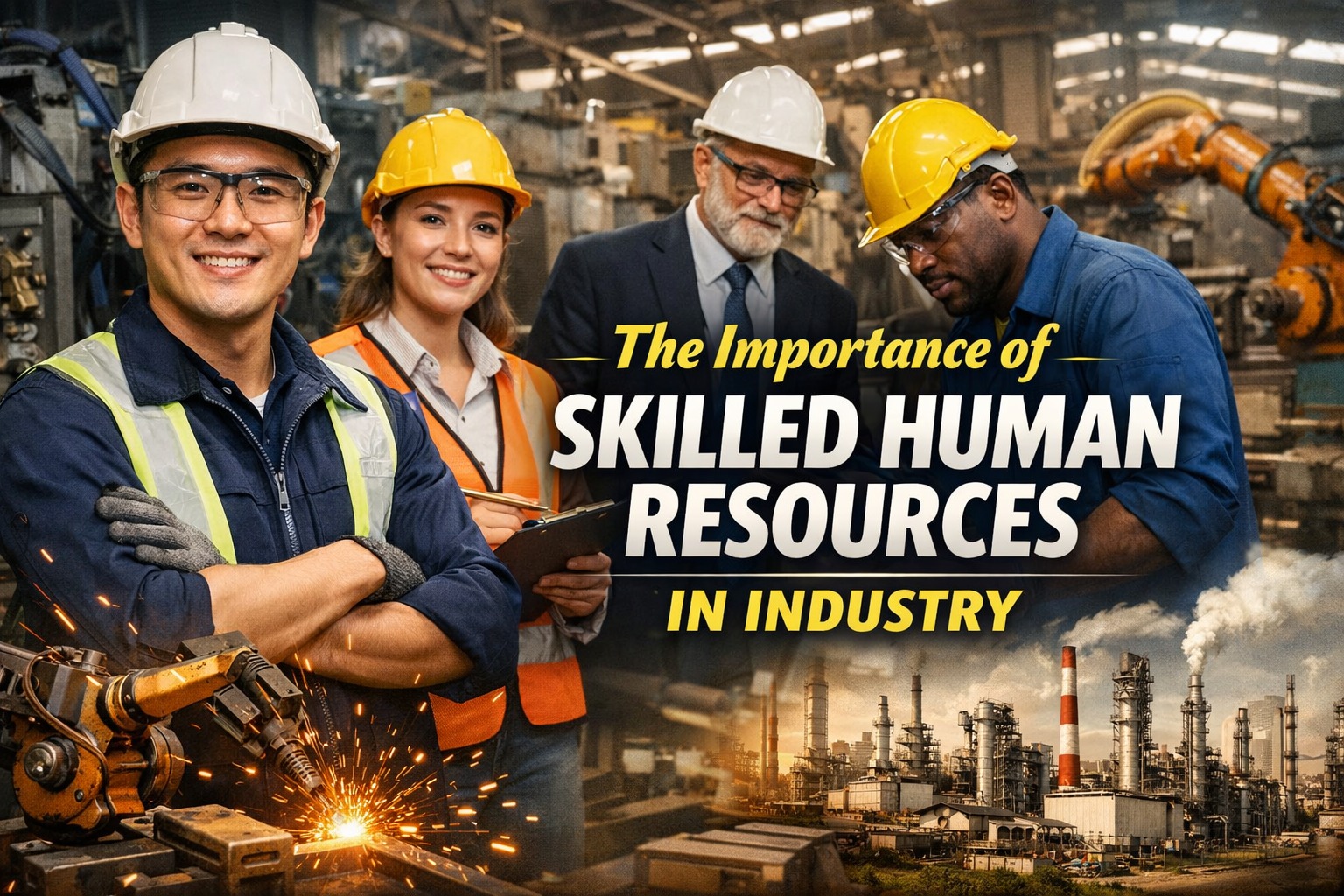
In today’s modern industrial era, companies are not only competing through technology and machinery, but also through the quality of their human resources. Skilled employees play a major role in helping industries improve productivity, efficiency, and innovation. Without competent workers, even the most advanced equipment cannot operate optimally. This is why many industries prioritize employee development and professional training.
The industrial sector continues to evolve rapidly due to globalization and digital transformation. Companies need workers who can adapt to new systems, technologies, and market demands. Skilled human resources help industries survive in competitive markets while maintaining product quality and customer satisfaction. Therefore, investing in employee skills has become one of the most important strategies for business growth.
THE ROLE OF SKILLED HUMAN RESOURCES IN INDUSTRY
Skilled human resources are essential because they directly influence the success of industrial operations. Employees with strong technical abilities can complete tasks more efficiently and reduce production errors. This helps companies save time, lower operational costs, and improve overall performance. In addition, experienced workers can identify problems quickly and provide effective solutions.
Another important role of skilled workers is supporting innovation and creativity in the workplace. Industries that encourage employee development often produce better ideas and more competitive products. Skilled employees also contribute to teamwork, communication, and leadership within the company. As a result, industries can build stronger organizational structures and achieve long-term success.
BENEFITS OF HAVING SKILLED EMPLOYEES
One major benefit of skilled employees is increased productivity. Workers who understand their responsibilities and possess the necessary expertise can complete tasks faster and with higher accuracy. This improves production efficiency and helps companies meet customer demands more effectively. High productivity also allows businesses to compete in both local and international markets.
Skilled employees also improve workplace safety and reduce operational risks. In industrial environments, workers often handle heavy machinery and complex systems. Employees with proper training are more likely to follow safety procedures and avoid accidents. This creates a safer working environment and reduces financial losses caused by workplace incidents.
THE IMPORTANCE OF TRAINING AND EDUCATION
Training and education are essential for developing qualified human resources in industry. Companies that regularly provide training programs help employees improve their technical and professional skills. Training also allows workers to stay updated with the latest industrial technologies and trends. As industries continue to modernize, continuous learning becomes increasingly important.
Educational background also influences employee performance and career opportunities. Workers with strong educational foundations usually adapt more easily to industrial challenges. However, practical experience and hands-on training are equally important in building professional competence. By combining education and training, industries can create a highly skilled and competitive workforce.
CHALLENGES IN DEVELOPING SKILLED HUMAN RESOURCES
Although skilled workers are highly valuable, many industries still face challenges in developing qualified employees. One common problem is the lack of access to proper education and vocational training. Some workers may not have opportunities to learn modern industrial skills due to financial or geographical limitations. This creates a gap between industrial needs and workforce capabilities.
Another challenge is the rapid advancement of technology. Industrial systems continue to change, requiring workers to constantly upgrade their knowledge and abilities. Companies that fail to provide continuous development programs may struggle to remain competitive. Therefore, industries must actively support employee learning and professional growth to face future challenges successfully.
STRATEGIES TO IMPROVE HUMAN RESOURCE QUALITY
Industries can improve human resource quality by investing in employee training programs and skill development workshops. Companies should also encourage a culture of learning and innovation within the workplace. Providing opportunities for career advancement can motivate employees to improve their performance and contribute more effectively to the company.
In addition, collaboration between industries and educational institutions is highly beneficial. Schools and universities can prepare students with the practical skills needed in modern industries. Internship programs and industrial training also help students gain real-world experience before entering the workforce. Through these strategies, industries can build a stronger and more competent workforce for the future.
CONCLUSION
The importance of skilled human resources in industry cannot be underestimated. Qualified employees help companies improve productivity, maintain product quality, support innovation, and achieve business growth. In an increasingly competitive industrial environment, human resources remain one of the most valuable assets for every company.
To build strong industries, companies must continue investing in education, training, and employee development. Skilled workers not only contribute to industrial success but also support economic growth and social progress. With competent and professional human resources, industries can face future challenges more confidently and sustainably.
Tentang Penulis
Gusti Ayu Tita P
Penulis — Universitas STEKOM
Penulis aktif yang berfokus pada isu-isu akademik, teknologi pendidikan, dan pengembangan sumber daya manusia di lingkungan kampus.