The Relationship Between Decentralization, Regional Autonomy, and Good Governance
Gusti Ayu Tita P
4 Oktober 2026
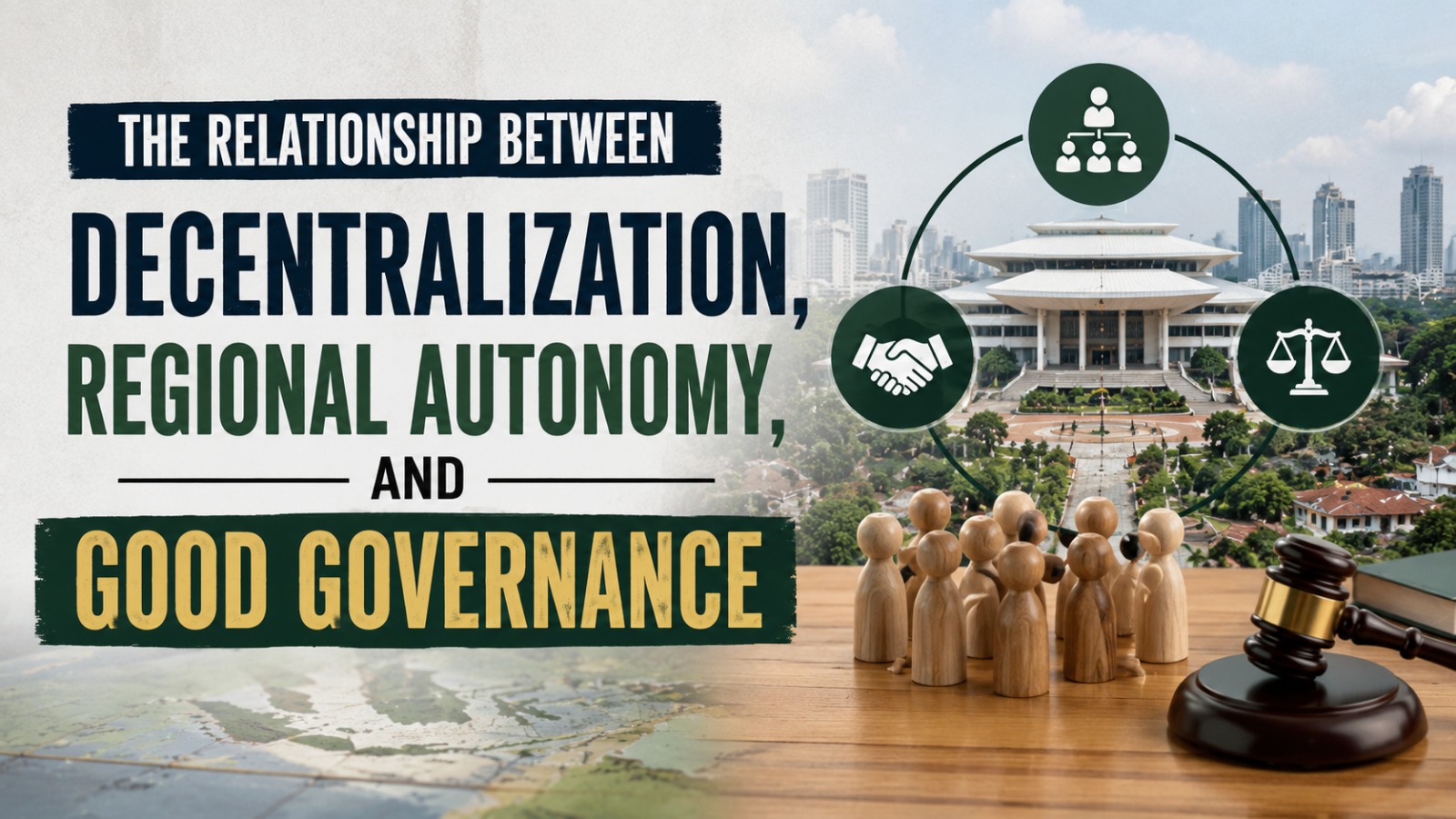
Decentralization, regional autonomy, and good governance are closely connected concepts in modern public administration. Decentralization gives local governments greater authority to manage regional affairs, while regional autonomy allows them to make decisions based on local needs and conditions. When these systems are implemented effectively, they can create more responsive, transparent, and accountable government. Therefore, understanding the relationship between these three concepts is important for improving public services and supporting sustainable regional development.
UNDERSTANDING DECENTRALIZATION AND REGIONAL AUTONOMY
Decentralization refers to the transfer of certain powers, responsibilities, and resources from the central government to lower levels of government. This approach allows local authorities to make decisions closer to the communities they serve. Regional autonomy is the practical ability of local governments to manage their own affairs within the authority provided by national law. Although these concepts are closely related, decentralization focuses on the distribution of authority, while regional autonomy emphasizes the ability of regions to exercise that authority.
Effective regional autonomy can help local governments respond more quickly to local problems. Each region has different economic conditions, social characteristics, natural resources, and community needs. By having sufficient decision-making authority, local governments can develop policies and programs that are more relevant to their specific circumstances. However, autonomy must still operate within the national legal framework to maintain unity, coordination, and consistent public standards.
THE ROLE OF DECENTRALIZATION IN GOOD GOVERNANCE
Good governance is characterized by principles such as transparency, accountability, participation, effectiveness, efficiency, and responsiveness. Decentralization can support these principles by bringing government decision-making closer to citizens. When local governments have greater responsibility, communities have more opportunities to monitor policies and provide feedback on public services.
However, decentralization does not automatically guarantee good governance. Greater local authority must be accompanied by accountability mechanisms, clear regulations, and effective supervision. Without proper oversight, decentralized power can create risks such as corruption, inefficient spending, or conflicts of interest. Therefore, decentralization must be designed to balance local flexibility with strong institutional controls.
REGIONAL AUTONOMY AND BETTER PUBLIC SERVICES
One of the main goals of regional autonomy is to improve the quality of public services. Local governments generally have a better understanding of the challenges faced by their communities because they operate closer to citizens. This local knowledge can help governments design services that are more suitable for regional needs, including education, healthcare, infrastructure, and social programs.
Regional autonomy also encourages local governments to become more innovative and responsive. They can develop new approaches based on their available resources and local priorities. Nevertheless, service quality can vary between regions if there are significant differences in financial capacity, infrastructure, or human resources. For this reason, national standards and intergovernmental support remain important in ensuring that all citizens receive fair and adequate services.
TRANSPARENCY AND ACCOUNTABILITY IN LOCAL GOVERNMENT
The success of decentralization depends heavily on transparency and accountability. Local governments must provide clear information about budgets, policies, development programs, and public spending. Transparent information allows citizens to understand how government resources are used and encourages greater public participation in decision-making.
Accountability ensures that local officials are responsible for their decisions and performance. Strong monitoring systems, public reporting, audits, and community participation can help prevent misuse of authority. When transparency and accountability are properly implemented, regional autonomy can strengthen public trust and contribute to better governance.
COMMUNITY PARTICIPATION AND LOCAL DEMOCRACY
Decentralization and regional autonomy can create greater opportunities for community participation. Citizens can become more involved in discussions about regional development, public policies, and government programs. Local decision-making can also make it easier for communities to communicate their needs and evaluate government performance.
Active participation is an important element of good governance because government policies are more effective when they reflect the needs of society. Local governments can encourage participation through public consultations, digital platforms, community meetings, and open information systems. However, participation must be meaningful and inclusive so that different groups in society have a fair opportunity to express their views.
CHALLENGES IN IMPLEMENTING DECENTRALIZATION
Despite its potential benefits, decentralization faces several challenges. Differences in regional capacity, financial resources, administrative skills, and infrastructure can affect the ability of local governments to manage their responsibilities. Some regions may have strong institutions and sufficient resources, while others may struggle to provide basic public services.
Another challenge is maintaining coordination between central and local governments. Excessive central control can limit regional autonomy, while insufficient coordination may lead to inconsistent policies and inefficient public administration. Therefore, successful decentralization requires a clear division of responsibilities, adequate funding, strong institutions, and effective cooperation between different levels of government.
BUILDING GOOD GOVERNANCE THROUGH EFFECTIVE AUTONOMY
The relationship between decentralization, regional autonomy, and good governance can be understood as a connected process. Decentralization provides the framework for distributing authority, while regional autonomy gives local governments the space to exercise that authority. Good governance provides the principles that guide how power should be used to ensure that government remains transparent, accountable, participatory, and focused on public interests.
To achieve these goals, local governments need capable institutions, professional human resources, transparent financial management, and effective public participation. Digital technology can also support open government by improving access to information and making public services more efficient. When decentralization and regional autonomy are supported by strong governance principles, they can contribute to more responsive government, better public services, and sustainable regional development.
Tentang Penulis
Gusti Ayu Tita P
Penulis — Universitas STEKOM
Penulis aktif yang berfokus pada isu-isu akademik, teknologi pendidikan, dan pengembangan sumber daya manusia di lingkungan kampus.