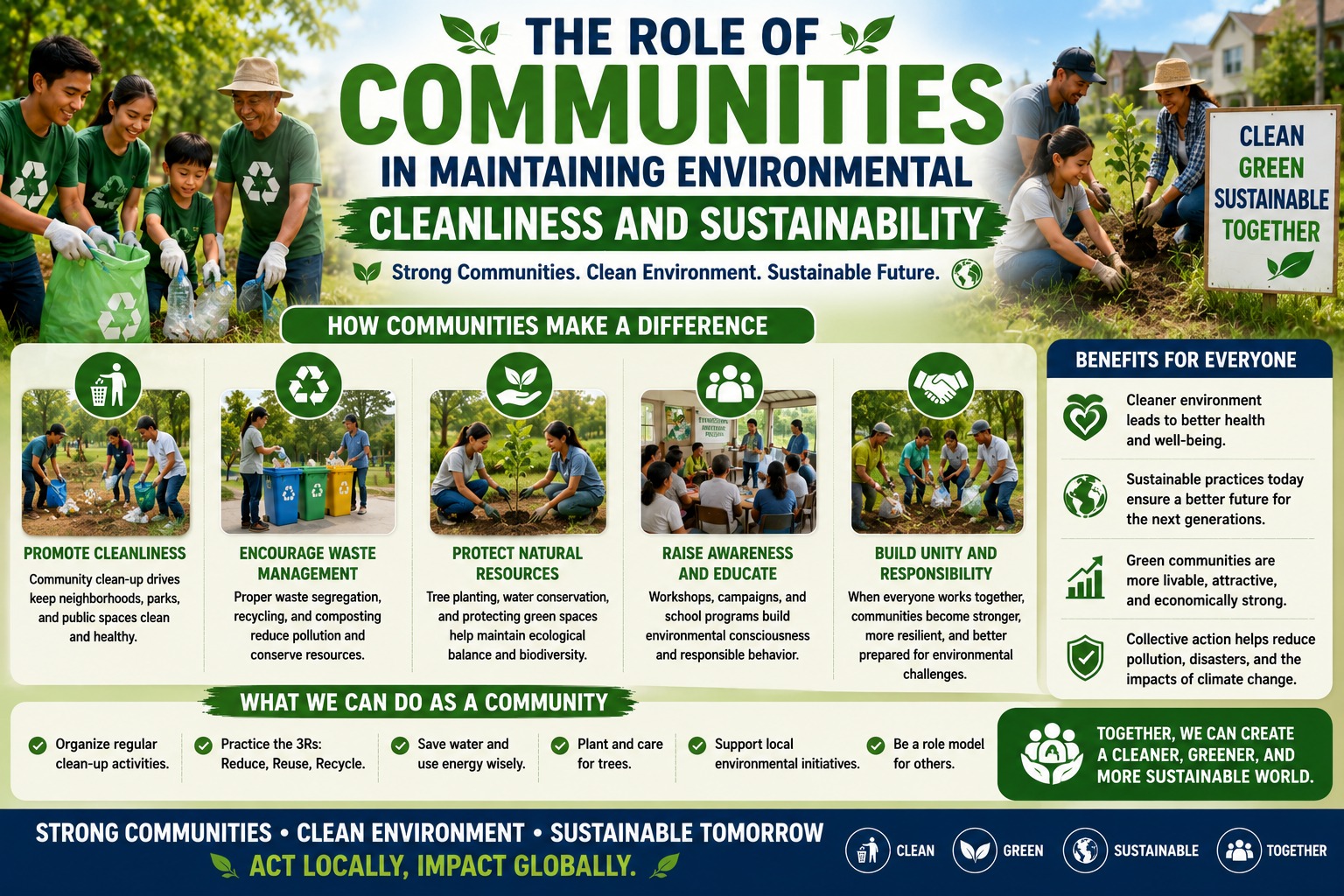
Communities play a crucial role in maintaining environmental cleanliness and sustainability. Environmental problems such as pollution, waste accumulation, deforestation, and climate change cannot be solved by governments alone. Active participation from local communities is essential to create cleaner, healthier, and more sustainable living environments.
When people work together to protect their surroundings, they can significantly reduce environmental damage and improve the quality of life for everyone. Community involvement not only helps preserve nature but also strengthens social responsibility and cooperation among citizens. Through collective action and environmental awareness, communities can become powerful drivers of positive environmental change.
UNDERSTANDING ENVIRONMENTAL CLEANLINESS AND SUSTAINABILITY
Environmental cleanliness refers to maintaining clean surroundings free from waste, pollution, and harmful contaminants. Sustainability, on the other hand, focuses on using natural resources responsibly to ensure they remain available for future generations.
Both concepts are closely connected. A clean environment supports public health, while sustainable practices help preserve ecosystems and natural resources. Communities that prioritize environmental cleanliness and sustainability contribute to long-term environmental protection and social well-being.
THE IMPORTANCE OF COMMUNITY PARTICIPATION
Community participation is one of the key factors in successful environmental management. Local residents understand the environmental conditions and challenges in their area better than anyone else. Their involvement allows environmental programs to be implemented more effectively and consistently.
When communities participate in environmental activities, they help build awareness and encourage responsible behavior. Cooperation among residents can create stronger environmental habits and inspire others to take action.
Community participation also increases a sense of ownership and responsibility toward the environment.
WASTE MANAGEMENT AND RECYCLING PROGRAMS
One of the most important roles communities can play is managing waste properly. Improper waste disposal can cause pollution, flooding, unpleasant odors, and health problems.
Communities can organize waste management programs such as:
- Recycling campaigns
- Waste separation systems
- Community clean-up activities
- Composting programs
- Plastic reduction initiatives
The 3R method — Reduce, Reuse, and Recycle — is highly effective in minimizing waste production and promoting environmental sustainability.
By working together, communities can significantly reduce the amount of waste sent to landfills and improve local environmental conditions.
PROMOTING ENVIRONMENTAL EDUCATION
Environmental education is essential for increasing public awareness about sustainability and environmental protection. Communities can organize educational activities such as seminars, workshops, tree-planting events, and environmental campaigns.
Teaching children and young generations about environmental responsibility is especially important because they will become future leaders and decision-makers.
Public education programs help people understand the impact of pollution, excessive resource use, and climate change on everyday life. Informed communities are more likely to adopt environmentally friendly lifestyles.
MAINTAINING CLEAN PUBLIC SPACES
Communities are responsible for keeping public spaces clean and safe. Parks, streets, rivers, beaches, and public facilities require regular maintenance and care to remain healthy environments.
Community clean-up activities encourage residents to work together while improving neighborhood conditions. Clean public spaces also promote tourism, public health, and social comfort.
Simple actions such as disposing of trash properly and avoiding vandalism can help maintain environmental cleanliness.
SUPPORTING TREE PLANTING AND GREEN SPACES
Trees and green areas provide many environmental benefits. They help absorb carbon dioxide, reduce air pollution, prevent soil erosion, and improve urban temperatures.
Communities can participate in tree-planting programs, urban gardening projects, and park conservation activities. Protecting green spaces also supports biodiversity and creates healthier environments for residents.
Urban areas with more green spaces often experience better air quality and improved community well-being.
ENCOURAGING SUSTAINABLE LIFESTYLES
Communities can encourage sustainable lifestyles by promoting environmentally friendly habits in daily life. These habits include saving water and electricity, reducing plastic use, using public transportation, and supporting local products.
Local leaders and organizations can inspire residents to adopt greener practices through campaigns and community initiatives. When sustainable habits become part of community culture, environmental protection becomes more effective and long-lasting.
THE ROLE OF COMMUNITY LEADERS AND ORGANIZATIONS
Community leaders, environmental organizations, and local governments play important roles in organizing environmental programs and motivating public participation.
Strong leadership helps communities coordinate environmental activities more efficiently. Leaders can also build partnerships with schools, businesses, and government agencies to support sustainability projects.
Environmental organizations often provide resources, education, and volunteer opportunities that strengthen community involvement.
CHALLENGES IN COMMUNITY ENVIRONMENTAL ACTION
Despite many positive efforts, communities still face environmental challenges. Lack of public awareness, limited funding, insufficient waste facilities, and weak law enforcement can reduce the effectiveness of environmental programs.
In some areas, rapid urbanization and population growth create additional pressure on the environment. Communities may also struggle with changing long-standing habits related to waste disposal and resource consumption.
Continuous education, government support, and community cooperation are necessary to overcome these challenges.
CONCLUSION
Communities play a vital role in maintaining environmental cleanliness and sustainability. Through waste management, environmental education, tree planting, and sustainable lifestyle practices, communities can help create cleaner and healthier environments.
Collective action and public awareness are essential for protecting natural resources and addressing environmental challenges. When communities work together with governments and organizations, they can build a more sustainable future for current and future generations.
Tentang Penulis
Gusti Ayu Tita P
Penulis — Universitas STEKOM
Penulis aktif yang berfokus pada isu-isu akademik, teknologi pendidikan, dan pengembangan sumber daya manusia di lingkungan kampus.