The Role of Schools in Building Environmental Awareness
Gusti Ayu Tita P
24 September 2026
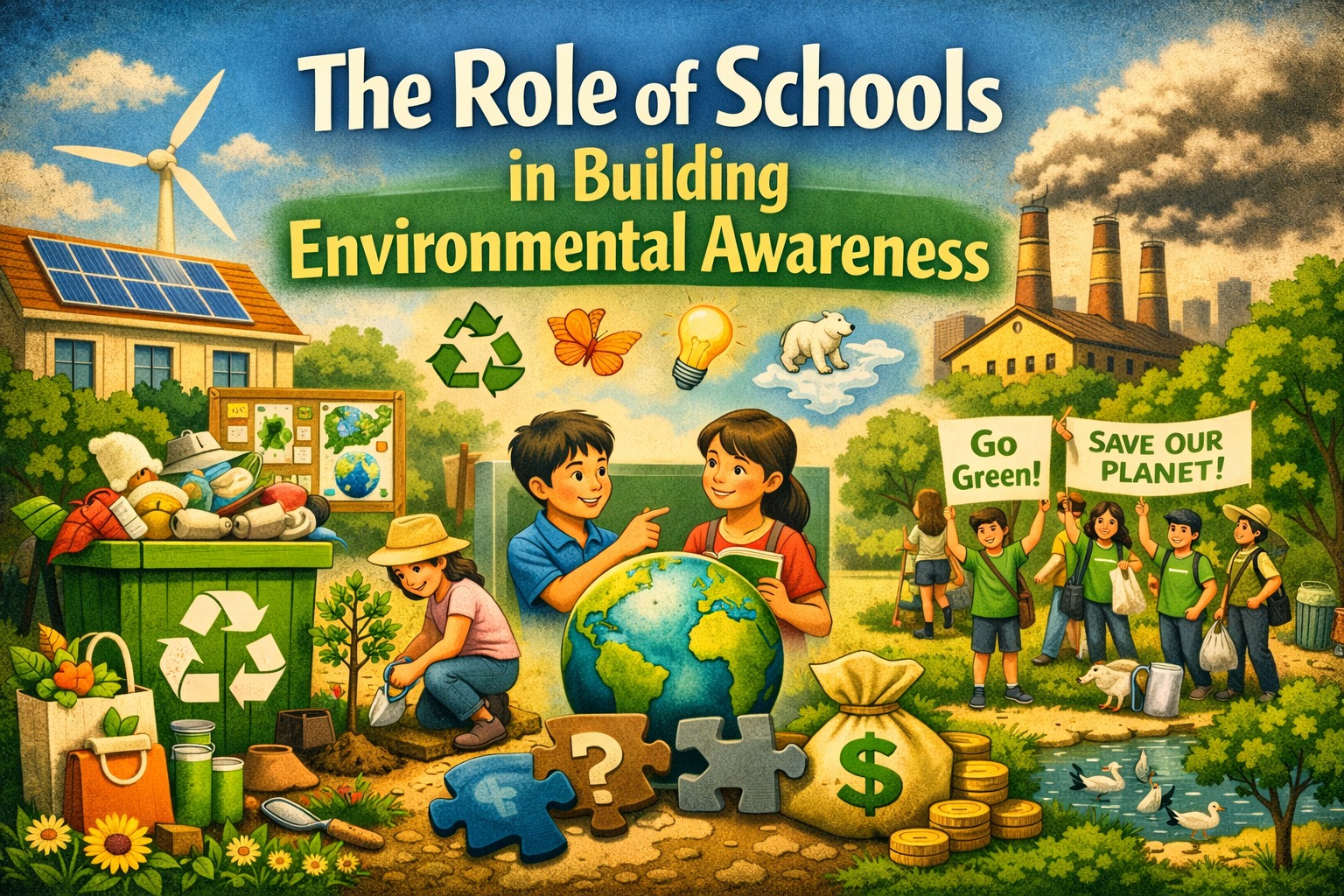
Environmental issues such as climate change, pollution, and resource depletion are becoming more urgent every year. While governments and industries play a major role in addressing these challenges, schools are equally important in shaping environmentally responsible generations. By introducing sustainability concepts early, schools can help students develop lifelong habits that protect the planet.
---
## WHY ENVIRONMENTAL EDUCATION MATTERS IN SCHOOLS
Children spend a significant part of their lives in school. This makes educational institutions the perfect place to introduce environmental values and responsible behaviors. When students learn about environmental issues early, they grow up understanding the consequences of their actions and the importance of sustainability.
Environmental education also encourages critical thinking, problem-solving, and empathy toward nature and communities.
---
## HOW SCHOOLS CAN INTEGRATE ENVIRONMENTAL AWARENESS
Schools can incorporate sustainability into daily learning in simple yet effective ways.
### 1. INCLUDING ENVIRONMENTAL TOPICS IN THE CURRICULUM
Subjects such as science, geography, and social studies can include lessons about climate change, renewable energy, biodiversity, and conservation.
### 2. CREATING GREEN SCHOOL PROGRAMS
Schools can introduce recycling systems, waste separation, and energy-saving practices. These programs help students apply knowledge in real-life situations.
### 3. BUILDING SCHOOL GARDENS
Gardening projects teach students about ecosystems, food production, and responsibility. They also encourage teamwork and hands-on learning.
### 4. ORGANIZING ENVIRONMENTAL EVENTS
Activities like tree planting, clean-up campaigns, and Earth Day celebrations can strengthen students’ connection to nature.
---
BENEFITS OF ENVIRONMENTAL EDUCATION FOR STUDENTSTeaching sustainability in schools offers long-term advantages beyond environmental protection.
* Encourages responsible decision-making
* Develops leadership and teamwork skills
* Improves awareness of global challenges
* Promotes healthier lifestyles and communities
Students who understand environmental responsibility often inspire change in their families and neighborhoods.
---
OTEACHERS ## THE ROLE ANDF PARENTS
Teachers act as role models who can inspire students to care about the environment. By demonstrating eco-friendly habits, they reinforce classroom lessons. Parents also play a vital role by supporting sustainable practices at home, creating consistency between school and daily life.
Collaboration between schools and families ensures that environmental awareness becomes a shared responsibility.
---
## PREPARING STUDENTS FOR A SUSTAINABLE FUTURE
The future workforce will need skills related to sustainability, innovation, and environmental problem-solving. Schools that promote environmental awareness prepare students to become future leaders who can address global challenges responsibly.
---
## CONCLUSION
Schools play a powerful role in building environmental awareness and shaping sustainable habits. By integrating environmental education into daily learning and activities, schools help create a generation that values and protects the Earth. Investing in environmental education today means building a better future for tomorrow.
---
Tentang Penulis
Gusti Ayu Tita P
Penulis — Universitas STEKOM
Penulis aktif yang berfokus pada isu-isu akademik, teknologi pendidikan, dan pengembangan sumber daya manusia di lingkungan kampus.