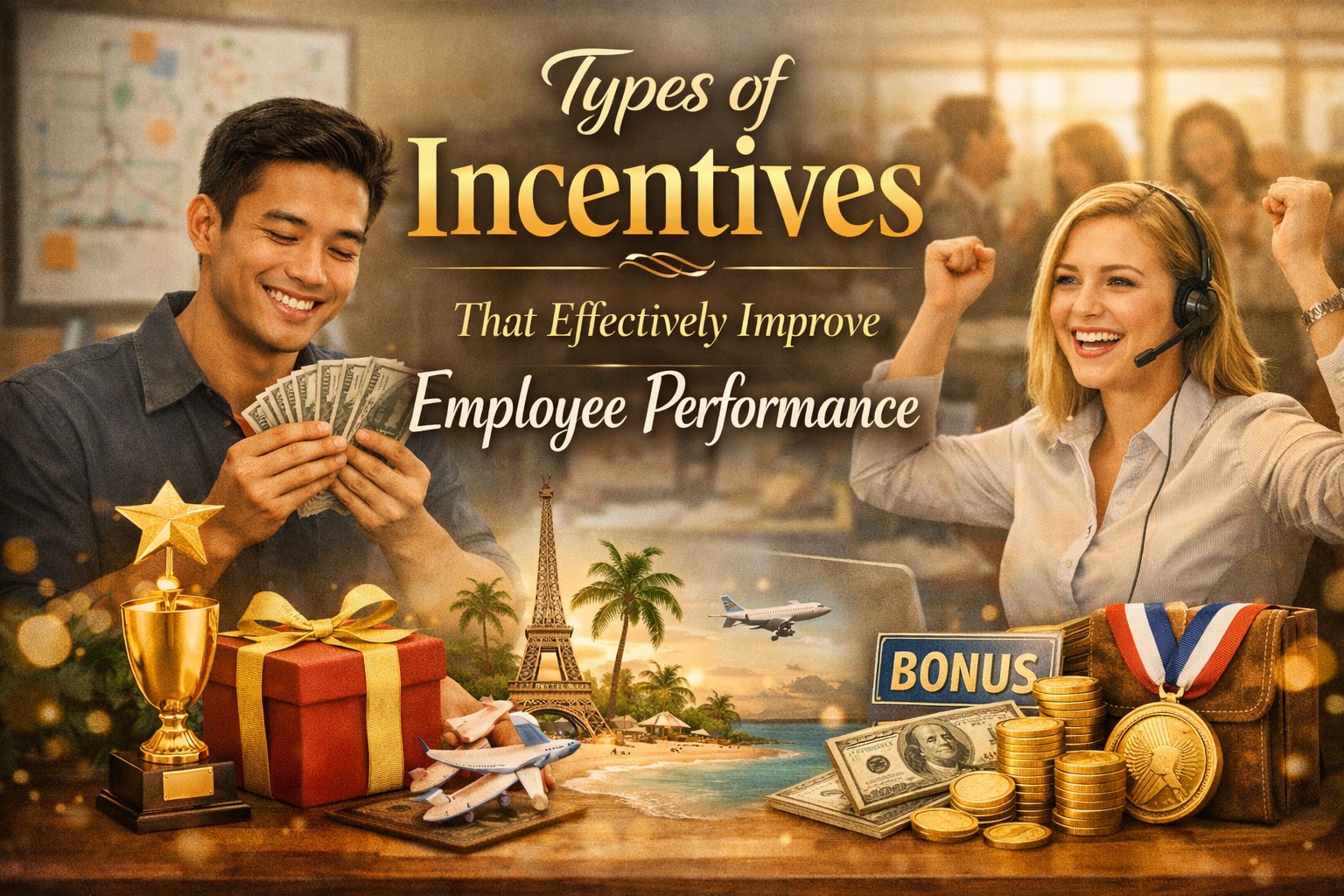
Types of Incentives That Effectively Improve Employee Performance
Gusti Ayu Tita P
7 Oktober 2026
Employee motivation is one of the most important factors behind business success. Companies that invest in the right employee incentives often experience higher productivity, stronger teamwork, and better employee retention. Incentives encourage employees to perform at their best by recognizing their efforts and rewarding outstanding contributions.
However, not all incentives produce the same results. Organizations need to understand which types of rewards truly motivate employees based on their needs, work environment, and career goals. By implementing effective incentive programs, businesses can create a positive workplace culture while continuously improving employee performance.
FINANCIAL INCENTIVES THAT BOOST PRODUCTIVITY
Financial incentives remain one of the most effective ways to motivate employees. Bonuses, performance-based commissions, profit sharing, and salary increases provide direct rewards for achieving specific goals. These incentives encourage employees to work harder because they can clearly see the connection between their performance and financial benefits.
In addition, financial rewards can increase employee satisfaction when they are distributed fairly and transparently. Employees are more likely to stay committed when they feel their hard work is recognized through competitive compensation. A well-designed financial incentive system also helps companies attract and retain talented professionals in competitive industries.
RECOGNITION AND APPRECIATION PROGRAMS
Not every employee is motivated solely by money. Employee recognition plays a significant role in improving morale and encouraging continuous improvement. Public appreciation, employee-of-the-month awards, certificates, and personalized thank-you messages can make employees feel valued and respected.
Recognition also strengthens emotional connections between employees and the organization. When people receive appreciation for their achievements, they become more confident and motivated to maintain high performance. Consistent recognition creates a workplace culture where excellence is celebrated and teamwork becomes stronger.
CAREER DEVELOPMENT INCENTIVES
Providing opportunities for career development is another powerful incentive that encourages long-term commitment. Employees appreciate companies that invest in training programs, professional certifications, mentoring, and leadership development opportunities. These incentives help individuals improve their knowledge and prepare for greater responsibilities.
Career development benefits both employees and employers. Workers gain valuable skills that support their professional growth, while organizations build a more capable and competitive workforce. Employees who see clear career advancement opportunities are generally more loyal and motivated to contribute their best efforts.
WORK-LIFE BALANCE INCENTIVES
Modern employees increasingly value incentives that support a healthy work-life balance. Flexible working hours, remote work options, additional paid leave, and wellness programs can significantly improve job satisfaction. These benefits reduce stress and help employees maintain both personal and professional responsibilities.
A balanced work environment contributes to better mental health and higher productivity. Employees who feel supported outside of work are often more focused and energetic during working hours. Companies that prioritize work-life balance also build a positive employer reputation, making it easier to recruit skilled professionals.
PERFORMANCE-BASED REWARD SYSTEMS
A performance-based incentive system ensures that rewards are directly linked to measurable achievements. Employees clearly understand the goals they need to accomplish and the rewards they will receive after meeting those targets. This transparency creates fairness and encourages continuous improvement.
Performance-based rewards can include bonuses, promotions, special projects, or exclusive professional opportunities. Regular performance evaluations also allow employees to receive constructive feedback that supports their development. When implemented fairly, this approach increases accountability and overall organizational performance.
TEAM-BASED INCENTIVES
Many organizations rely on collaboration to achieve business objectives. Team incentives reward groups that successfully complete projects, exceed targets, or solve complex challenges together. This approach promotes cooperation instead of unhealthy competition among employees.
Team-based rewards strengthen communication and trust within departments. Employees become more willing to share knowledge and support one another because everyone benefits from collective success. As a result, organizations enjoy stronger teamwork, better innovation, and improved operational efficiency.
HOW TO CHOOSE THE RIGHT INCENTIVE PROGRAM
Selecting the most effective incentive program requires understanding employee needs and organizational objectives. Companies should gather employee feedback, evaluate performance metrics, and regularly review incentive effectiveness. Different departments may require different motivational approaches depending on their responsibilities and work environment.
It is also important to ensure that every incentive program is fair, transparent, and aligned with company values. Regular evaluation allows businesses to adjust their strategies as employee expectations evolve. A flexible incentive system keeps employees engaged while supporting sustainable business growth.
CONCLUSION
Choosing the right types of incentives is essential for improving employee performance, increasing motivation, and strengthening organizational success. Financial rewards, recognition programs, career development opportunities, work-life balance initiatives, performance-based rewards, and team incentives all contribute to building a highly engaged workforce.
Companies that consistently invest in meaningful incentive programs create a positive workplace where employees feel appreciated and motivated to perform at their highest potential. By combining multiple incentive strategies, organizations can improve productivity, increase employee satisfaction, and achieve long-term business success.
Tentang Penulis
Gusti Ayu Tita P
Penulis — Universitas STEKOM
Penulis aktif yang berfokus pada isu-isu akademik, teknologi pendidikan, dan pengembangan sumber daya manusia di lingkungan kampus.