Understanding Decentralization as a Strategy to Improve Local Government Effectiveness
Gusti Ayu Tita P
4 Oktober 2026
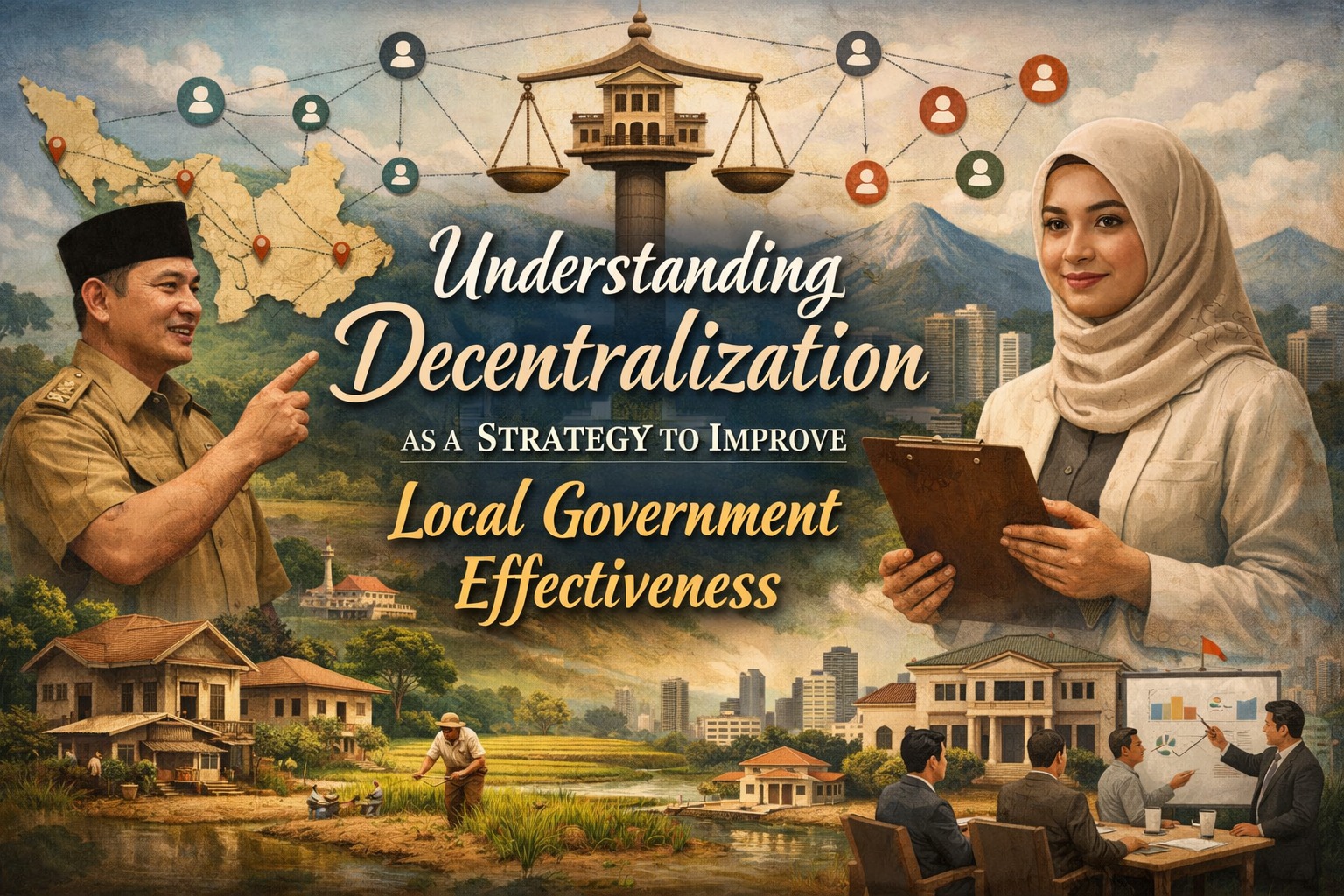
Decentralization is an important governance strategy that transfers certain responsibilities and decision-making authority from the central government to local governments. This approach allows regional administrations to respond more effectively to the unique needs of their communities while improving the quality of public services. As governments face increasingly complex social, economic, and technological challenges, decentralization has become a valuable tool for creating more responsive and efficient public institutions.
An effective local government is one that understands local priorities, delivers quality public services, and manages resources responsibly. Decentralization supports these goals by empowering local authorities to make timely decisions based on regional conditions. When implemented with strong governance, transparency, and accountability, decentralization can significantly improve government performance and contribute to sustainable regional development.
UNDERSTANDING THE CONCEPT OF DECENTRALIZATION
Decentralization refers to the transfer of administrative, fiscal, and political authority from the national government to local governments. This system enables regional administrations to manage public affairs based on local priorities while still following national laws and regulations. It encourages flexibility in policymaking because local leaders have a better understanding of their communities' needs. As a result, government programs become more relevant and effective.
At the same time, decentralization strengthens democracy by bringing government closer to citizens. People have more opportunities to participate in local decision-making and monitor government performance. This closer relationship helps create policies that better reflect public interests while increasing trust in government institutions.
IMPROVING PUBLIC SERVICE DELIVERY
One of the greatest advantages of decentralization is the improvement of public services. Local governments can respond more quickly to community demands because they do not need to wait for every decision from the central government. Services such as healthcare, education, licensing, and civil administration become faster and more efficient. This flexibility allows local authorities to solve problems based on actual conditions.
Better public services also increase citizen satisfaction and strengthen public confidence in government institutions. When services are accessible, transparent, and efficient, communities experience higher levels of trust. Ultimately, improved service quality supports long-term social and economic development.
STRENGTHENING LOCAL ECONOMIC DEVELOPMENT
Decentralization enables local governments to maximize their regional economic potential. Each region has different strengths, such as agriculture, tourism, fisheries, manufacturing, or creative industries. Local authorities can design policies that encourage investment, support small businesses, and create employment opportunities according to local conditions. This targeted approach helps regional economies grow more effectively.
Economic growth generated through local initiatives also contributes to reducing regional disparities. Communities benefit from increased income, improved infrastructure, and greater business opportunities. As local economies become stronger, they contribute positively to national economic development.
ENHANCING TRANSPARENCY AND ACCOUNTABILITY
A successful decentralization policy requires transparency and accountability in every stage of governance. Local governments should openly share information about budgets, development projects, and public programs so citizens can monitor government performance. Transparent governance minimizes the risk of corruption and increases public trust.
Accountability also ensures that government officials remain responsible for their decisions and use public resources efficiently. Regular evaluations, financial reporting, and community participation strengthen oversight mechanisms. Together, transparency and accountability create more effective and trustworthy local governments.
UTILIZING DIGITAL TECHNOLOGY FOR BETTER GOVERNANCE
The rapid growth of digital technology has significantly strengthened decentralization efforts. Local governments can now implement e-government systems that simplify administrative services, tax payments, licensing, and public complaints. Digital platforms reduce paperwork, improve efficiency, and provide easier access to government services for citizens. They also allow governments to collect and analyze data more effectively.
Technology supports better decision-making by providing accurate information about regional conditions. Digital transformation also promotes transparency because citizens can access government information more easily. As a result, technology becomes an essential component of effective and modern local governance.
CHALLENGES IN IMPLEMENTING DECENTRALIZATION
Despite its many benefits, decentralization also presents several challenges. Some local governments have limited financial resources, insufficient infrastructure, or shortages of skilled public officials. These differences in capacity may affect the quality of public services and regional development. Therefore, strengthening institutional capacity remains a key priority.
Another challenge involves maintaining coordination between central and local governments. National policies and local initiatives must complement each other to achieve common development goals. Continuous supervision, professional training, and fair resource distribution are essential for ensuring successful decentralization.
CONCLUSION
Decentralization is a powerful strategy for improving local government effectiveness by giving regional authorities greater responsibility to manage public affairs according to local needs. It enhances public service delivery, promotes economic growth, strengthens transparency, encourages citizen participation, and supports innovation through digital technology. Although challenges remain, strong governance, capable public officials, and effective cooperation between central and local governments can maximize the benefits of decentralization. With continuous improvement, decentralization will remain a key driver of efficient governance and sustainable regional development.
Tentang Penulis
Gusti Ayu Tita P
Penulis — Universitas STEKOM
Penulis aktif yang berfokus pada isu-isu akademik, teknologi pendidikan, dan pengembangan sumber daya manusia di lingkungan kampus.