Understanding Employee Mutation Processes and Their Impact on Career Development
Gusti Ayu Tita P
27 September 2026
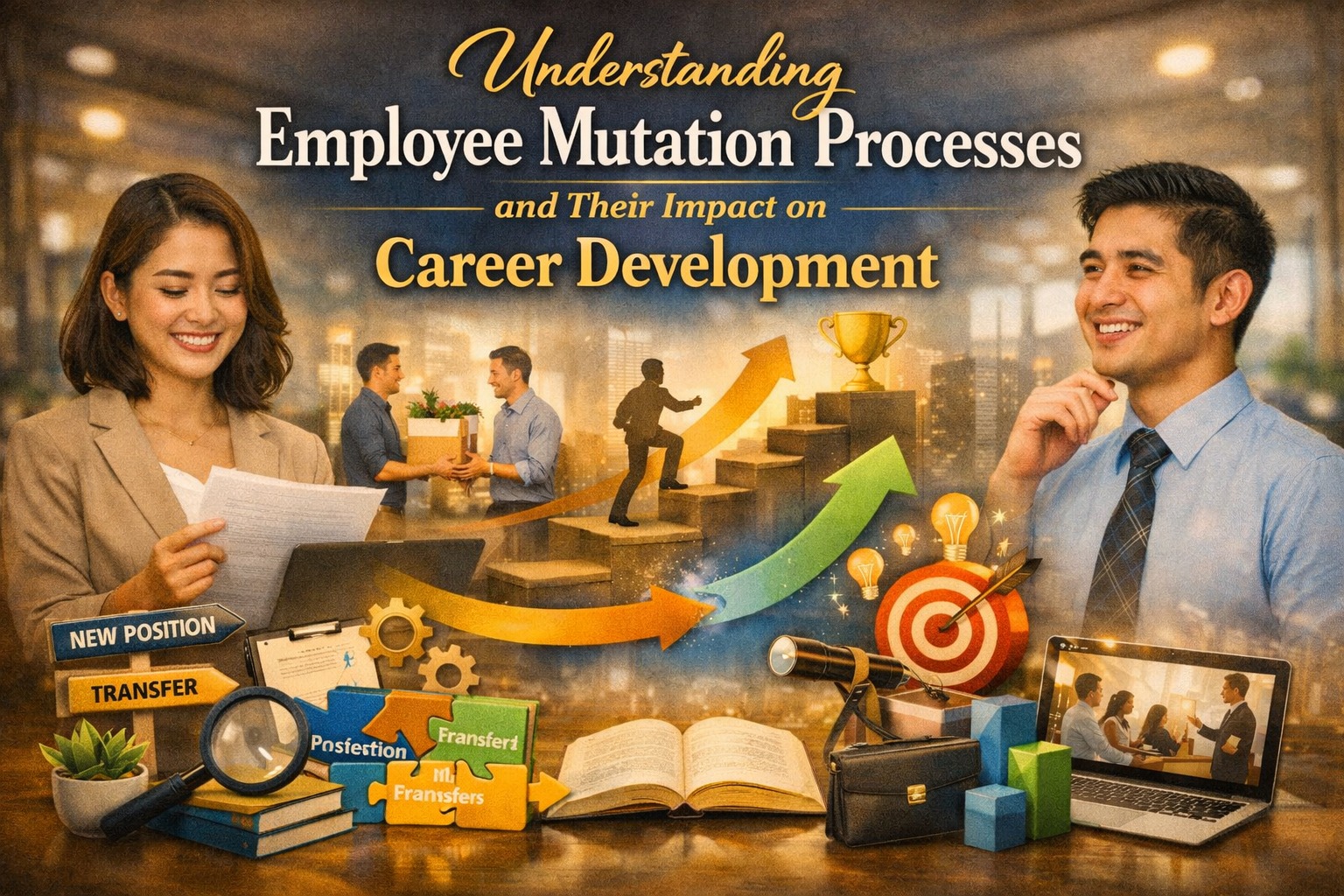
Employee mutation is a strategic human resource management practice that involves transferring employees to different positions, departments, or work locations within the same organization. Rather than being a sign of instability, employee mutation is often used to improve workforce performance, develop new competencies, and support organizational growth. When implemented with clear objectives and transparent communication, this process benefits both employers and employees. It helps organizations place the right people in the right roles while giving employees opportunities to expand their professional experience.
UNDERSTANDING THE EMPLOYEE MUTATION PROCESS
The employee mutation process begins with identifying organizational needs and evaluating employee qualifications. Human resource managers assess factors such as skills, work performance, experience, and career potential before deciding whether a transfer is appropriate. The process may involve promotions, lateral transfers, or relocation to another branch depending on business requirements.
A successful mutation process also requires transparent communication between management and employees. Clear explanations about the purpose, expectations, and benefits of the transfer reduce uncertainty and encourage employee acceptance. Proper planning ensures that the transition is smooth and minimizes disruptions to daily operations.
TYPES OF EMPLOYEE MUTATION
Organizations apply different types of employee mutation based on their strategic objectives. Horizontal mutation moves employees to positions with similar responsibilities but different departments or locations, allowing them to gain broader organizational knowledge. Vertical mutation usually involves promotions or changes to positions with greater responsibility.
Another common form is temporary mutation, where employees are assigned to a different role for a limited period to support specific projects or operational needs. Some companies also implement cross-functional transfers to strengthen collaboration between departments. Each type serves a different purpose but shares the goal of improving organizational effectiveness and employee capability.
BENEFITS FOR EMPLOYEE CAREER DEVELOPMENT
Employee mutation provides valuable opportunities for career development by exposing employees to new responsibilities and work environments. This experience helps them strengthen leadership skills, improve problem-solving abilities, and increase adaptability. Employees who successfully handle multiple roles often become stronger candidates for future promotions.
In addition, mutation expands professional networks within the organization. Working with different teams enhances communication, collaboration, and knowledge sharing. As employees gain diverse experiences, they build confidence and become more prepared for higher-level positions and long-term career success.
CHALLENGES OF EMPLOYEE MUTATION
Despite its advantages, employee mutation can create several challenges if not managed properly. Employees may experience stress, uncertainty, or difficulty adapting to unfamiliar tasks and workplace cultures. These challenges can temporarily affect productivity and job satisfaction during the adjustment period.
Organizations can reduce these risks by providing orientation programs, training, and continuous support after the transfer. Managers should monitor employee progress, encourage open communication, and address concerns promptly. A supportive work environment helps employees adapt more quickly and maintain positive performance.
BEST PRACTICES FOR SUCCESSFUL EMPLOYEE MUTATION
An effective employee mutation program should be based on objective performance evaluations and organizational needs rather than personal preferences. Companies should establish clear policies, fair assessment criteria, and transparent decision-making processes to maintain employee trust. Employees also need sufficient preparation before starting their new assignments.
Regular feedback is equally important throughout the transition process. Human resource teams should evaluate the outcomes of each mutation to determine whether organizational goals and employee development objectives have been achieved. Continuous improvement ensures that the mutation program remains beneficial for both the company and its workforce.
CONCLUSION
Employee mutation is an important human resource strategy that supports organizational flexibility while encouraging employee growth. When carried out fairly and strategically, it develops new competencies, broadens work experience, and creates stronger career opportunities. Although the process may present adaptation challenges, proper planning, communication, and ongoing support help employees transition successfully. Ultimately, an effective employee mutation program contributes to higher employee performance, career advancement, and long-term organizational success.
Tentang Penulis
Gusti Ayu Tita P
Penulis — Universitas STEKOM
Penulis aktif yang berfokus pada isu-isu akademik, teknologi pendidikan, dan pengembangan sumber daya manusia di lingkungan kampus.