What Are Common Mistakes When Using PPE?
Gusti Ayu Tita P
29 September 2026
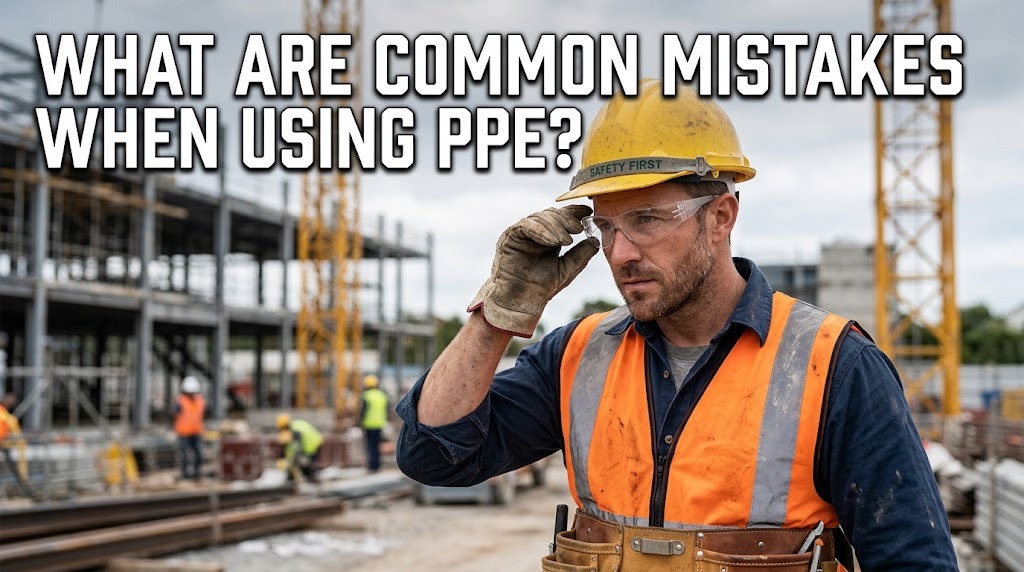
Personal Protective Equipment (PPE) is an important part of workplace safety because it can help reduce workers’ exposure to different hazards. However, PPE may not provide its intended protection when workers use it incorrectly or choose equipment that is unsuitable for the task. Common mistakes can include wearing damaged equipment, using the wrong size, or failing to inspect PPE before use. Workers may also forget to use PPE consistently when performing routine tasks. Understanding these mistakes can help workplaces improve safe PPE practices.
USING THE WRONG TYPE OF PPE
One common mistake is choosing PPE that does not match the workplace hazard. Different hazards require different types of protective equipment, so workers should understand the risks associated with their tasks. For example, safety glasses may provide eye protection from certain particles, but they may not provide adequate protection against every type of chemical splash. Similarly, not all gloves are designed to protect against the same substances or physical hazards.
Workers should use PPE based on a workplace risk assessment and established safety procedures. Employers should identify hazards and provide appropriate equipment for the tasks being performed. Workers should also understand the purpose and limitations of their PPE. Selecting suitable equipment is an important first step in effective protection.
WEARING PPE INCORRECTLY
Another frequent mistake is wearing PPE incorrectly. Equipment that is not properly adjusted may not provide the intended level of protection. For example, eye protection should fit securely, while respiratory protection may require an appropriate fit to work effectively. Loose, poorly positioned, or improperly adjusted PPE can also interfere with movement and visibility.
Workers should receive proper PPE training before using protective equipment. They need to understand how to put on, adjust, remove, and use each item safely. Instructions from the manufacturer and workplace procedures should be followed. Correct use helps ensure that PPE performs as designed.
USING DAMAGED OR DIRTY PPE
Using damaged PPE is another important mistake. Cracks, tears, broken components, worn materials, or other defects can affect the equipment’s ability to provide protection. Dirty or contaminated equipment may also create additional hygiene or safety concerns. Workers should inspect their PPE regularly and before use when required by workplace procedures.
If PPE is damaged or unsuitable, workers should stop using it and report the problem according to workplace procedures. Cleaning should also be performed according to the manufacturer’s instructions. PPE should be stored properly to reduce unnecessary damage. Regular inspection and maintenance help keep protective equipment in suitable condition.
FAILING TO WEAR PPE CONSISTENTLY
Some workers may wear PPE only when they believe a task appears dangerous. This is a mistake because workplace hazards are not always obvious. A routine activity can still involve exposure to particles, chemicals, noise, impacts, or other risks. PPE requirements should therefore be followed whenever the identified hazard is present.
Consistent PPE use depends on clear safety procedures, appropriate equipment, and proper training. Employers can reinforce these practices through communication and supervision. Workers should also report situations where required PPE is unavailable or unsuitable. Consistency helps make safe PPE use part of normal workplace behavior.
IGNORING PPE LIMITATIONS
PPE is sometimes treated as complete protection, but this is another common mistake. PPE does not eliminate the hazard and may have specific limitations depending on its design and intended use. For example, a particular glove may protect against certain substances but not others. Workers need to understand what their PPE can and cannot protect them from.
PPE should be used together with other safety measures, such as hazard elimination, engineering controls, and administrative controls. Workers should follow established procedures and avoid relying on PPE as the only safety measure when other controls are required. Understanding PPE limitations can help prevent a false sense of security. Proper training should explain these limitations clearly.
CONCLUSION
Common PPE mistakes include using the wrong equipment, wearing it incorrectly, using damaged PPE, failing to wear it consistently, and misunderstanding its limitations. These problems can reduce the protection that PPE is intended to provide. Workers should inspect equipment, follow workplace procedures, receive appropriate training, and use PPE that matches the identified hazard. Employers also have an important role in providing suitable equipment and maintaining effective safety programs. Avoiding these mistakes can support safer and more responsible workplace practices.
Tentang Penulis
Gusti Ayu Tita P
Penulis — Universitas STEKOM
Penulis aktif yang berfokus pada isu-isu akademik, teknologi pendidikan, dan pengembangan sumber daya manusia di lingkungan kampus.