What Are The Main Duties And Responsibilities Of FIVB?
Gusti Ayu Tita P
29 September 2026
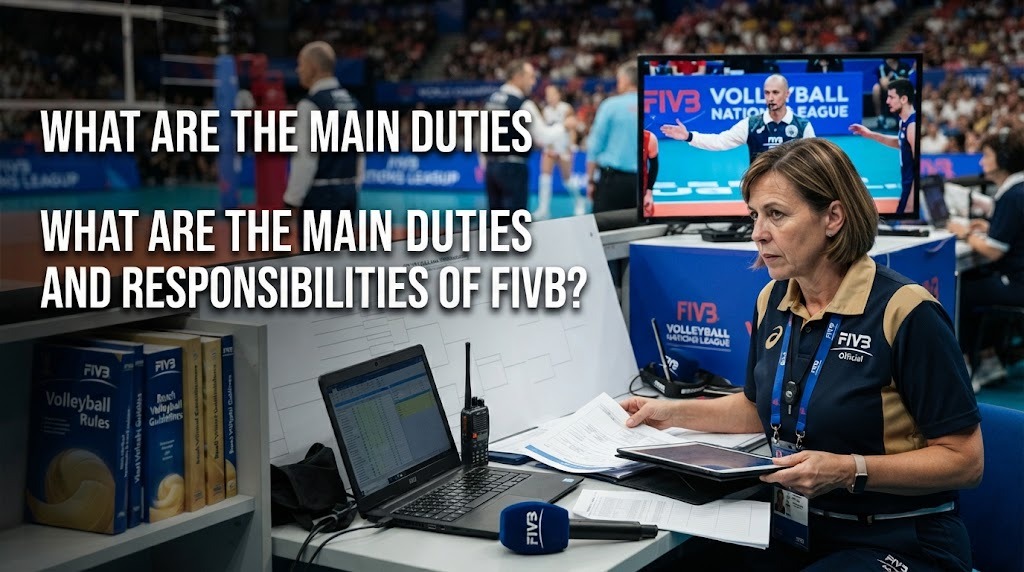
The FIVB, or Fédération Internationale de Volleyball, is the global governing body for volleyball. It is responsible for all forms of volleyball and works with national federations and other members of the volleyball community to develop the sport worldwide. Founded in 1947, the FIVB manages many important areas, including rules, competitions, referees, player eligibility, and volleyball development. (FIVB)
Understanding the duties of the FIVB is important because its work helps volleyball competitions operate under consistent international standards. Its responsibilities cover both the administration of the sport and efforts to support its continued growth.
GOVERNING VOLLEYBALL WORLDWIDE
One of the main duties of the FIVB is to govern volleyball at the international level. The organization has authority over different forms of volleyball and works with national federations and continental confederations. It establishes regulations that provide a common framework for volleyball activities around the world. The FIVB also coordinates and supervises important aspects of international volleyball. (FIVB)
The FIVB's legal framework includes its Constitution and several regulations covering areas such as sports, events, discipline, finance, and anti-doping. Its headquarters are located in Lausanne, Switzerland. Through this structure, the organization can coordinate volleyball activities across different countries while maintaining common international standards. (FIVB)
ESTABLISHING OFFICIAL VOLLEYBALL RULES
Another important responsibility of the FIVB is to establish and modify the Official Volleyball Rules. These rules provide the standards used for international volleyball competitions. They cover important parts of the game and help players, coaches, referees, and organizers understand how matches should be conducted. The current indoor volleyball edition is the Official Volleyball Rules 2025–2028. (FIVB)
The FIVB can also test possible changes before deciding whether rules should be updated. In 2026, for example, the FIVB approved several rule and procedure tests involving playing actions, video challenges, coach and referee interactions, and pre-match procedures. This process allows the organization to evaluate possible improvements while maintaining the basic structure of the sport. (FIVB)
ORGANIZING AND SUPERVISING COMPETITIONS
The FIVB has a major responsibility for international volleyball competitions. It establishes regulations for competitions and controls important aspects of volleyball events under its authority. These regulations help ensure that teams and officials follow consistent requirements. The organization also establishes the competition and qualification systems for the Olympic Games in relation to volleyball. (FIVB)
The FIVB's responsibilities cover both professional and amateur volleyball. Its regulations provide frameworks for competitions, teams, players, and other organizations involved in the sport. By supervising these areas, the FIVB helps international competitions operate according to established standards. (FIVB)
MANAGING INTERNATIONAL REFEREES
The FIVB is also responsible for controlling and governing the appointment of international referees. Referees are essential because they apply the official rules during international matches. Consistent officiating helps ensure that teams from different countries compete under the same interpretations of the rules. The FIVB therefore maintains structures dedicated to rules and refereeing. (FIVB)
The Rules of the Game and Refereeing Commission is one part of this structure. It supports the development and application of rules and refereeing standards in international volleyball. This responsibility helps maintain fair and consistent officiating across international competitions.
REGULATING PLAYER ELIGIBILITY AND TRANSFERS
Another important FIVB responsibility is regulating player eligibility and international transfers. The organization establishes regulations that determine whether players can participate in national and international competitions. Factors such as nationality and other eligibility requirements can be considered under the applicable regulations. (FIVB)
The FIVB also has authority over international player transfers. Its current regulations state that it remains responsible for transfers between national federations belonging to different confederations and is the ultimate authority for interpreting and applying the relevant regulations worldwide. This creates a common system for handling international player movement. (FIVB)
SETTING EQUIPMENT AND FACILITY STANDARDS
The FIVB also establishes official standards and specifications for volleyball equipment and facilities. These standards are important because international matches need suitable playing environments and approved equipment. Common standards help make competition conditions more consistent from one venue to another. (FIVB)
This responsibility covers more than simply deciding how the ball should be used during a match. The FIVB's regulatory framework includes standards that apply to international and world competitions. Through these requirements, the organization helps ensure that important technical aspects of volleyball events meet recognized international standards.
DEVELOPING VOLLEYBALL AROUND THE WORLD
The FIVB does not only regulate volleyball because it also has a responsibility to promote and develop the sport worldwide. Its Constitution states that the organization should encourage the growth of volleyball in all its forms and promote the creation and development of national federations. Development programs are therefore an important part of its work. (FIVB)
One example is Volleyball Empowerment, a development program designed to support national federations and athletes. The FIVB also works with national federations to identify development opportunities and strengthen volleyball structures. In 2026, the FIVB reported that its development approach was being expanded to all 222 national federations through a categorization and assessment process. (FIVB)
ENFORCING REGULATIONS AND DISCIPLINE
The FIVB also has responsibilities related to discipline and compliance. Its legal framework includes disciplinary regulations and judicial bodies that address alleged violations of FIVB rules and regulations. This provides a formal process for dealing with certain disciplinary matters in international volleyball. (FIVB)
The organization also maintains regulations covering areas such as medical matters and anti-doping. These rules form part of the broader system used to manage international volleyball responsibly. Together, these mechanisms help protect the integrity and proper administration of the sport. (FIVB)
WORKING WITH NATIONAL FEDERATIONS
The FIVB works closely with national volleyball federations because these organizations are important parts of the global volleyball structure. National federations help organize and develop volleyball within their own countries while operating within the international framework established by the FIVB. Continental confederations also have responsibilities for supporting national federations in their regions. (FIVB)
This cooperation allows international programs and regulations to be implemented at different levels. The FIVB can provide guidance and development support while national federations handle volleyball activities in their respective countries. This connected structure helps volleyball continue to grow across different regions of the world.
CONCLUSION
The main duties of the FIVB include governing volleyball, establishing official rules, supervising competitions, managing international referees, regulating player eligibility and transfers, and setting equipment and facility standards. It also works to develop volleyball through national federations and international development programs. (FIVB)
In addition, the FIVB manages disciplinary and regulatory systems that support the organization of international volleyball. Through these responsibilities, the FIVB provides a global framework that helps volleyball remain organized, consistent, and accessible across different countries.
Tentang Penulis
Gusti Ayu Tita P
Penulis — Universitas STEKOM
Penulis aktif yang berfokus pada isu-isu akademik, teknologi pendidikan, dan pengembangan sumber daya manusia di lingkungan kampus.