What Are The Requirements To Become An Athlete In FIVB Competitions?
Gusti Ayu Tita P
29 September 2026
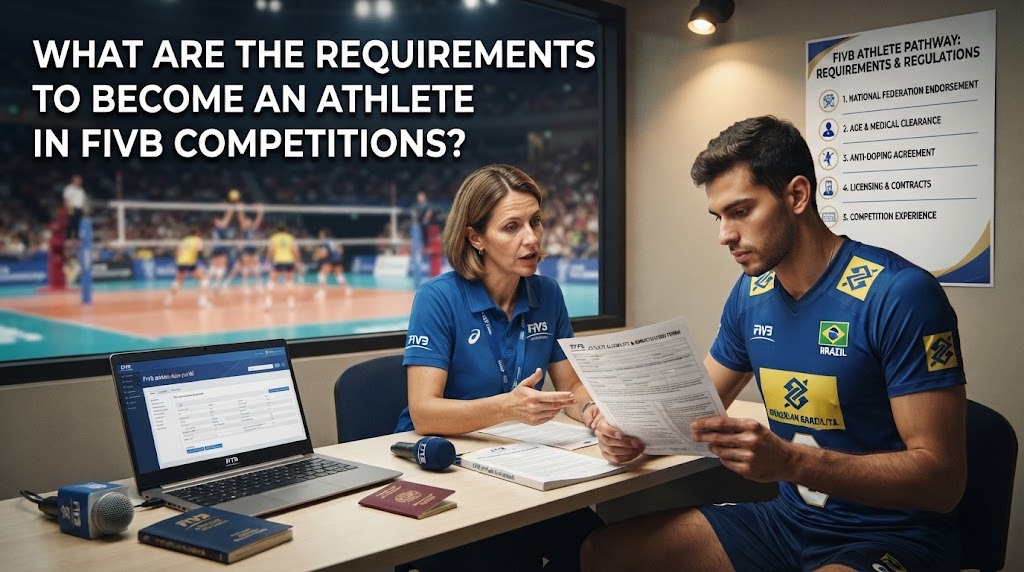
Becoming an athlete in an FIVB competition requires more than having good volleyball skills. Players must meet eligibility rules, follow registration procedures, respect competition regulations, and maintain proper sporting conduct. The exact requirements can vary depending on the type of competition, such as senior events, age-group tournaments, beach volleyball, or national team competitions. FIVB regulations provide the framework that National Federations and athletes must follow.
MEETING FIVB ELIGIBILITY RULES
The first requirement is to meet the FIVB eligibility rules for the specific competition. Athletes must be properly registered through the relevant National Federation or team structure. Eligibility can depend on the competition category, age, registration status, and other requirements established in FIVB regulations. Players representing national teams must also meet the rules concerning their Federation of Origin.
For national team competitions, a player's Federation of Origin is an important factor. FIVB regulations include specific rules for players who change their Federation of Origin. These rules are designed to establish which national team a player can represent and to regulate international eligibility. Therefore, athletes should understand their registration and nationality situation before competing internationally.
BEING REGISTERED THROUGH A NATIONAL FEDERATION
Athletes generally enter international FIVB competitions through the appropriate National Federation or competition registration system. The National Federation is responsible for managing players who represent its country in eligible competitions. This means athletes cannot simply register themselves for every international event without following the required process. Their federation and team must complete the necessary registration and documentation.
FIVB regulations also define how a player's Federation of Origin can be determined. In certain circumstances, the federation that first registered a player in the relevant season can become the player's Federation of Origin. This registration can be connected to a club, school, team, or other volleyball organisation. Such rules are especially important when determining national team eligibility.
FOLLOWING AGE AND COMPETITION REQUIREMENTS
Some FIVB competitions have specific age requirements for athletes. Age-group World Championships, for example, are designed for players within particular age categories. Athletes therefore need to meet the age conditions established for the competition in which they want to participate. The requirements can differ from those used for senior international events.
Players also need to satisfy the registration conditions for their particular competition. A young athlete may be eligible for an age-group event but not automatically eligible for a senior national team competition. Teams and National Federations are responsible for checking the applicable rules before submitting their players. This helps prevent eligibility problems during an international tournament.
MAINTAINING GOOD PHYSICAL PREPARATION
Athletes competing internationally need a suitable level of physical preparation. Volleyball requires strength, speed, jumping ability, coordination, endurance, and quick reactions. Players therefore need regular training to prepare their bodies for the demands of competition. Proper preparation can also help athletes perform consistently during long tournaments.
FIVB also places attention on athlete health and safety. Its Medical Commission works on areas including athlete wellbeing, safety, and anti-doping. These areas are part of FIVB's wider effort to maintain appropriate standards of care within the Global Volleyball Movement.
FOLLOWING ANTI DOPING RULES
One of the most important requirements is compliance with anti-doping rules. Athletes participating under FIVB jurisdiction must follow the applicable anti-doping regulations and the World Anti-Doping Code framework. Prohibited substances and methods can be banned both in and out of competition depending on the substance or method. Athletes are responsible for understanding what they are allowed to use.
Athletes who need certain medicines should also pay attention to Therapeutic Use Exemptions or TUEs. If a necessary medication contains a prohibited substance, an approved TUE can provide authorization under the applicable rules. FIVB states that responsibility for TUE applications for international-level athletes under its jurisdiction has been delegated to the International Testing Agency.
UNDERSTANDING ATHLETE RIGHTS AND RESPONSIBILITIES
FIVB athletes are expected to understand both their rights and responsibilities. In March 2026, the FIVB Board of Administration endorsed an Athletes' Rights and Responsibilities Declaration developed through consultation with the FIVB Athletes' Commission. The declaration contains a framework of 12 aspirational rights and 10 responsibilities for athletes within the Global Volleyball Movement.
These principles help explain the responsibilities that come with competing internationally. Athletes are expected to respect competition rules and contribute to a safe and fair sporting environment. Understanding these responsibilities can help players deal with officials, teammates, opponents, and competition organisers professionally. It also supports the broader principle of fair play.
RESPECTING COMPETITION AND TEAM RULES
Players must follow the official volleyball rules and the regulations of their specific competition. These rules cover important aspects of the game, including player conduct, playing actions, substitutions, equipment, and officiating procedures. Teams also have responsibilities related to competition administration and match procedures. Following these rules is necessary for fair and organised competition.
Athletes should also follow instructions from authorised team and competition officials. International tournaments involve many procedures that must be completed before, during, and after matches. Players who understand these procedures can avoid unnecessary administrative or disciplinary problems. Good discipline is therefore an important part of competing at the FIVB level.
HAVING THE REQUIRED DOCUMENTATION
International competitions require athletes to have the correct registration and identification documents. Depending on the event, players may need documents connected to registration, nationality, eligibility, transfers, or medical and anti-doping requirements. The National Federation and competition organisers handle many of these administrative processes. Athletes should provide accurate information and documents when requested.
Documentation becomes particularly important when a player changes clubs, federations, or eligibility status. FIVB Sports Regulations contain specific provisions concerning International Transfer Certificates and changes of Federation of Origin. These procedures help establish whether a player is eligible to participate for a particular team or national federation.
DEVELOPING THE SKILLS NEEDED FOR INTERNATIONAL COMPETITION
Meeting administrative requirements is only one part of becoming an international athlete. Players also need strong volleyball skills and tactical understanding to compete at a high level. Depending on their position, they may need to develop serving, receiving, setting, attacking, blocking, or defensive skills. Beach volleyball athletes have additional technical and tactical demands because teams consist of two players.
Athletes also benefit from learning how to communicate effectively with teammates and coaches. International competitions can involve opponents with different playing styles and strategies. Good preparation helps players adapt to these situations and perform under pressure. FIVB's development programmes also support National Federations in improving coaching, technical knowledge, equipment, and training environments.
CONCLUSION
The requirements to become an athlete in FIVB competitions include meeting eligibility rules, completing registration, satisfying competition requirements, and following official regulations. Athletes also need appropriate physical preparation, respect anti-doping rules, and understand their rights and responsibilities. National Federation procedures are especially important for players representing countries in international competitions. By combining eligibility, proper registration, clean sport, discipline, and strong volleyball skills, athletes can prepare themselves for participation in the international volleyball environment.
Tentang Penulis
Gusti Ayu Tita P
Penulis — Universitas STEKOM
Penulis aktif yang berfokus pada isu-isu akademik, teknologi pendidikan, dan pengembangan sumber daya manusia di lingkungan kampus.