What Are the Rights and Responsibilities of Students When Expressing Their Aspirations?
Gusti Ayu Tita P
28 September 2026
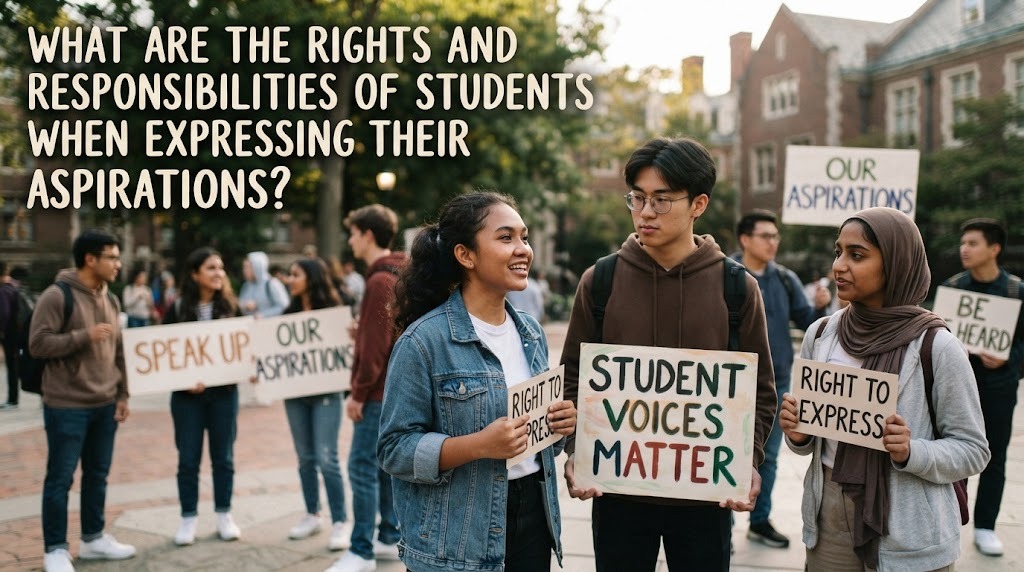
Students have the opportunity to express their aspirations about educational, social, and community issues. This expression can take different forms, including discussions, written opinions, organizational activities, and peaceful demonstrations. However, the right to express an opinion should be accompanied by responsibility toward other people and the surrounding environment. Students need to understand the boundaries of their actions and respect applicable rules. A balanced approach can help create meaningful and orderly public expression.
UNDERSTANDING THE RIGHT TO EXPRESS OPINIONS
Students can express their opinions about issues that affect their education and community. They may communicate their views through discussions, writing, meetings, or peaceful public activities. Freedom Of Expression gives individuals an opportunity to communicate ideas and concerns. Students should use this opportunity responsibly and avoid intentionally spreading false information. Understanding this right can help students participate more confidently in academic and social discussions.
Expressing an opinion does not mean that every form of behavior is acceptable. Students should consider the rights of other people when communicating their views. They should avoid threats, violence, harassment, and actions that intentionally damage property. Public Expression is more meaningful when it respects the safety and dignity of others. This balance helps students understand that rights and responsibilities are connected.
RESPECTING OTHER PEOPLE'S RIGHTS
When expressing aspirations, students should recognize that other people may have different opinions. Participants should listen to opposing perspectives without using insults or intimidation. Respectful Communication can help prevent disagreements from becoming unnecessary conflicts. Students can respond to different views by discussing evidence and explaining their reasoning. This approach supports a healthier environment for exchanging ideas.
Students should also consider people who are not participating in an activity. Demonstrations or public gatherings can affect pedestrians, residents, workers, and other members of the community. Participants should avoid unnecessary disruption and respect the use of public facilities. Social Responsibility means considering how personal actions may affect others. This principle is important whenever students communicate their aspirations in public.
FOLLOWING APPLICABLE RULES
Students should understand the rules that apply to the activity before expressing their aspirations publicly. These may include regulations concerning public spaces, campus policies, safety procedures, or other applicable requirements. Following these rules can help participants organize activities in a more orderly manner. Responsible Participation requires students to understand both their rights and their obligations. When uncertain, students should seek reliable information about the relevant rules.
Following rules does not prevent students from communicating concerns. Instead, it can help ensure that the message is delivered through an organized and responsible process. Students should prepare the necessary information and coordinate with others when appropriate. They should also follow lawful instructions intended to maintain safety and public order. Peaceful Expression can provide a constructive way to communicate concerns while reducing unnecessary risks.
USING ACCURATE INFORMATION
Students have a responsibility to ensure that the information they communicate is as accurate as possible. Before sharing a claim, they should check its source and compare information when necessary. Reliable Information can strengthen the quality of an argument and reduce the spread of misinformation. Students should clearly distinguish between verified facts and personal opinions. This habit can also improve their critical thinking abilities.
Accurate information is especially important when an issue involves many people or has public consequences. Misleading claims can create confusion and make constructive discussion more difficult. Students can use official documents, credible publications, and other trustworthy sources when researching an issue. Critical Thinking helps students evaluate whether information is relevant and supported by evidence. Careful preparation can make their aspirations more focused and credible.
MAINTAINING SAFETY AND ORDER
Students should consider safety when participating in activities to express their aspirations. They can prepare essential items, maintain communication with trusted participants, and remain aware of their surroundings. Participants should avoid actions that could put themselves or others in danger. Safety Awareness is an important part of responsible participation. If conditions become unsafe, students should prioritize safety and follow appropriate instructions.
Maintaining order also helps ensure that public expression can take place without unnecessary conflict. Students should avoid damaging property, provoking violence, or interfering unnecessarily with people who are not involved. They can focus their actions on communicating their message clearly and peacefully. Peaceful Demonstrations require cooperation and self-control from participants. These principles can help protect both the message being communicated and the people involved.
BALANCING RIGHTS AND RESPONSIBILITIES
The right to express aspirations and the responsibility to respect others should work together. Students can communicate strong opinions while still using respectful language and considering the consequences of their actions. Responsible Expression does not require students to remain silent; it encourages them to communicate concerns thoughtfully. Students can also propose constructive solutions instead of focusing only on problems. This can make public discussions more productive.
Students can reflect on their behavior after participating in an activity. They can consider whether their message was clear, whether they respected different opinions, and whether they followed applicable rules. This reflection can help develop better communication and decision-making skills. Civic Responsibility can grow when students understand that participation involves both rights and obligations. These lessons can be useful in campus activities, communities, and future professional environments.
CONCLUSION
Students have the right to express their aspirations, but this right should be balanced with responsibility toward other people and the community. Students should practice Respectful Communication, follow applicable rules, use reliable information, and maintain safety and order. They should also respect different opinions and avoid actions that could cause harm or unnecessary disruption. Understanding the relationship between rights and responsibilities can help students participate more constructively. Through responsible expression, students can communicate their concerns while developing valuable skills for academic and social life.
Tentang Penulis
Gusti Ayu Tita P
Penulis — Universitas STEKOM
Penulis aktif yang berfokus pada isu-isu akademik, teknologi pendidikan, dan pengembangan sumber daya manusia di lingkungan kampus.