What Challenges Can a New SAR Team Face During Emergency Missions?
Gusti Ayu Tita P
29 September 2026
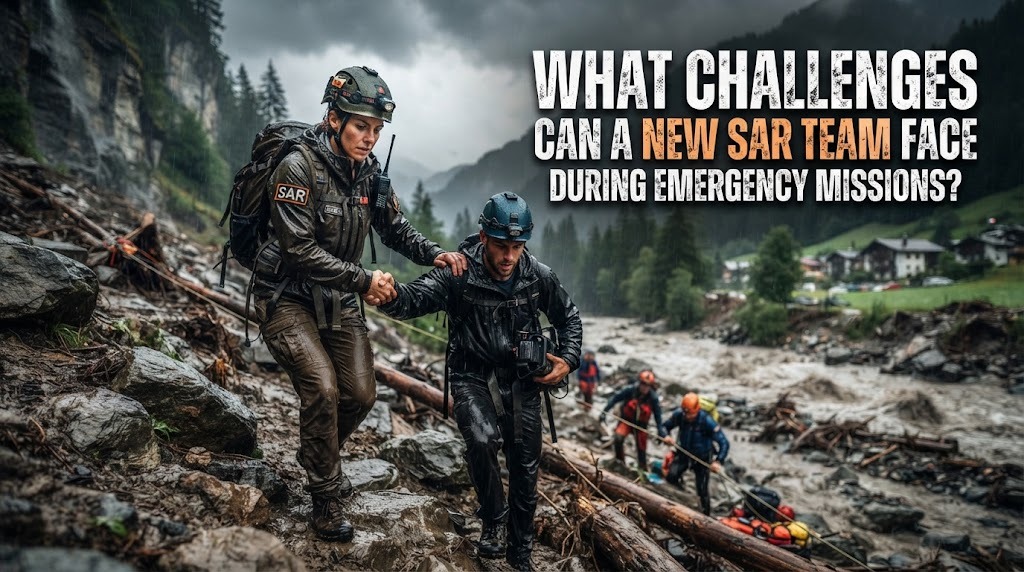
A new SAR team can face many challenges when responding to emergency missions. Search and rescue operations may involve difficult terrain, severe weather, damaged infrastructure, limited equipment, communication problems, and rapidly changing conditions. Recent BASARNAS evaluations of disaster operations in Aceh and Sumatra identified blocked access, extreme terrain, prolonged bad weather, limited air assets, and communication blind spots as significant field challenges. These conditions require a new team to combine careful planning, practical skills, teamwork, and strong safety awareness.
Emergency missions also require rescuers to work with other organizations and manage available resources effectively. Preparation and coordination are important because a new team may not yet have extensive operational experience. BASARNAS emphasizes readiness of personnel, equipment, communication systems, and cooperation with other SAR elements as part of emergency preparedness. Understanding these challenges can help a new team prepare more effectively before entering the field.
DIFFICULT TERRAIN AND ACCESS PROBLEMS
One major challenge for a new SAR team is reaching the location where people need help. Mountains, forests, rivers, damaged roads, collapsed structures, and remote areas can make movement difficult. BASARNAS reported that some disaster areas in Aceh and Sumatra experienced severely disrupted access and extreme terrain, which affected rescue operations. A new team therefore needs to understand the environment before deciding how personnel and equipment should be deployed.
Access problems can also affect the amount of equipment that rescuers are able to bring into the field. Teams may need to adjust routes or request additional transportation and specialized resources when normal access is unavailable. Route planning and situational assessment can help identify safer and more practical ways to reach the operational area. Rescue personnel should also be prepared for the possibility that conditions may change after they arrive.
CHANGING WEATHER AND ENVIRONMENTAL CONDITIONS
Weather can create additional challenges during emergency rescue operations. Heavy rain, strong winds, high waves, extreme heat, or other environmental conditions can reduce visibility and make movement more difficult. BASARNAS reported prolonged bad weather as one of the significant challenges encountered during recent disaster operations in Sumatra. A new SAR team needs to monitor weather information before and throughout an operation.
Changing environmental conditions may require the team to modify its operational plan. Certain activities may need to be delayed, relocated, or supported with additional resources when conditions become unsafe. Weather awareness should therefore be part of operational planning rather than an afterthought. BASARNAS has also emphasized updating weather information and checking equipment readiness during SAR standby activities.
COMMUNICATION AND COORDINATION GAPS
Clear communication can become difficult when SAR teams operate in remote locations or disaster areas with damaged communication infrastructure. BASARNAS identified communication blind spots that affected real-time coordination during disaster operations in Aceh and Sumatra. For a new team, communication problems can make it harder to share information about victim locations, hazards, team positions, and changing priorities.
The team may also need to coordinate with several organizations during one emergency. BASARNAS emphasizes collaboration and synergy with related agencies and SAR elements to strengthen emergency readiness. Clear communication procedures, backup communication methods, and regular communication exercises can help a new team maintain coordination when normal systems are disrupted.
LIMITED PERSONNEL AND RESOURCES
A new search and rescue team may face situations where the number of rescuers, vehicles, equipment, or other resources is limited. Large emergencies can require several teams to work across different areas at the same time. BASARNAS has noted that some operations face limitations in personnel, equipment, and supporting facilities, making coordination with SAR potential elements important. This means a new team needs to understand how to use available resources efficiently.
Resource limitations also mean that teams should recognize the boundaries of their capabilities. A new SAR team should not attempt specialized tasks without the appropriate training, equipment, or support. FEMA guidance for US&R operations emphasizes the importance of managing additional resources and providing safety oversight, especially when outside personnel have limited rescue training. Effective resource management helps teams focus on realistic operational priorities.
SAFETY RISKS DURING RESCUE OPERATIONS
Emergency environments can expose rescuers to hazards such as unstable structures, falling debris, floodwater, fire, damaged utilities, or other dangerous conditions. FEMA's US&R guidance notes that rescue environments may be immediately dangerous to life and health and emphasizes hazard awareness, safety management, and supervision. A new team must therefore assess risks before and during every activity.
Safety also requires clear site management and appropriate protective measures. FEMA guidance recommends hazard assessment, mitigation, defined work zones, safety briefings, and controlled access during complex rescue operations. Rescuer safety and victim safety must be considered together because an injured responder can create an additional emergency and reduce the team's ability to continue working.
STRESS AND TIME PRESSURE
New SAR members may also face significant pressure when a rescue involves people who need urgent assistance. Information can be incomplete, conditions can change, and decisions may need to be made quickly. This creates a need for calm communication, clear responsibilities, and disciplined procedures rather than impulsive action. FEMA's US&R framework assigns task force leaders responsibility for leadership, supervision, wellness, safety, medical, logistics, and planning during missions.
Training can help members become more familiar with this kind of operational pressure. Simulation exercises allow teams to practice communication, planning, searching, and coordination while dealing with changing scenarios. FEMA's exercise framework includes design, conduct, evaluation, and improvement planning, which supports continuous development after each exercise. Regular practice can help a new team respond more systematically when real emergencies become demanding.
EQUIPMENT AND TECHNOLOGY LIMITATIONS
Technology can support SAR work, but new teams may face challenges involving equipment availability, battery life, signal coverage, maintenance, or operator skills. BASARNAS has identified the need to strengthen emergency communication systems and integrate drone technology with ground teams and K9 units following disaster operations. This shows that technology can be useful while still requiring suitable infrastructure and trained personnel.
Equipment must also be matched to the specific mission. Radios, GPS devices, protective equipment, medical supplies, drones, and technical rescue tools may have different functions and limitations. Regular equipment checks and practical training can help ensure that technology is ready for use when needed. A new team should also maintain basic rescue and navigation skills so that operations can continue when technological tools become unavailable.
CONCLUSION
A new SAR team can face challenges involving difficult terrain, changing weather, communication gaps, limited resources, safety risks, operational pressure, and equipment limitations. Recent BASARNAS evaluations demonstrate that real disaster operations can be affected by disrupted access, extreme conditions, communication blind spots, and limited supporting assets. These challenges show why preparation must cover more than basic rescue techniques.
A strong response requires training, teamwork, risk assessment, communication, resource management, and equipment readiness. Regular exercises and evaluations can help a new team identify weaknesses and improve its procedures before the next emergency. FEMA and BASARNAS materials both emphasize organized coordination, safety, preparedness, and continuous improvement as important elements of effective rescue operations.
Tentang Penulis
Gusti Ayu Tita P
Penulis — Universitas STEKOM
Penulis aktif yang berfokus pada isu-isu akademik, teknologi pendidikan, dan pengembangan sumber daya manusia di lingkungan kampus.