
What Challenges Do Startup Founders Commonly Face in the Early Stages?
Gusti Ayu Tita P
23 September 2026
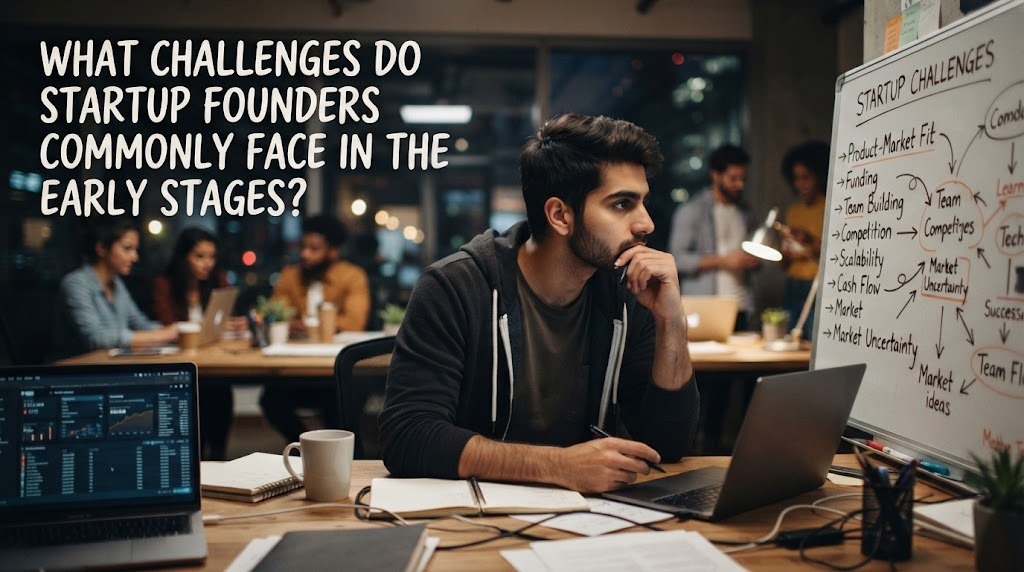
Starting a startup can be exciting, but the early stages often come with many challenges. Founders must develop a business idea while also managing limited resources, building a team, finding customers, and making important decisions. Unlike established companies, startups often operate with limited data and uncertain market conditions. This means founders need to learn quickly and adapt their strategies as the business develops.
The challenges faced by startup founders can vary depending on the industry, business model, funding situation, and target market. However, several problems are common across many early-stage startups. Understanding these challenges can help founders prepare more realistic strategies and avoid preventable mistakes.
FINDING THE RIGHT MARKET
One of the biggest challenges for startup founders is determining whether there is enough demand for their product or service. A business idea may seem attractive to the founder but may not solve an important problem for customers. Early research is therefore important for understanding customer needs, competitors, pricing, and market behavior.
Founders may also need to change their original idea after receiving feedback from potential customers. This process, often called a pivot, can be difficult because founders may feel emotionally attached to their initial concept. However, adapting based on reliable customer feedback can help a startup develop a product that provides real value.
MANAGING LIMITED FUNDING
Many startups begin with limited financial resources. Founders must carefully decide how much money should be spent on product development, marketing, employees, technology, and daily operations. Poor financial planning can cause a startup to run out of cash before it reaches sustainable revenue.
Managing cash flow is therefore essential during the early stages. Founders need to understand their operating costs, expected revenue, and available funding. They may also need to consider different funding sources, such as personal capital, investors, loans, or other financing options. The appropriate choice depends on the startup's circumstances and financial needs.
BUILDING THE RIGHT TEAM
A startup often depends heavily on a small group of people, making hiring an important challenge. Founders need employees who have the necessary skills and can work effectively in an environment where roles may change quickly. Hiring someone solely because they have strong technical skills may not be enough if they cannot adapt to the startup's working environment.
Team management can also become difficult as responsibilities increase. Founders must communicate expectations, establish priorities, and create a healthy working culture. When roles are unclear, employees may duplicate work or overlook important tasks. Clear communication can help a small team remain focused despite limited resources.
ATTRACTING AND RETAINING CUSTOMERS
Having a good product does not automatically guarantee that customers will buy it. Startups need to understand how to reach their target audience and communicate the value of their product clearly. This can be challenging when the business has limited marketing resources and little brand recognition.
Customer retention can be just as important as customer acquisition. Founders need to understand why customers continue using a product and why others stop. Feedback, customer support, and continuous product improvements can help startups build stronger relationships with their target market.
DEALING WITH COMPETITION
Early-stage startups often enter markets where established businesses already have customers, resources, and brand recognition. Competing directly with larger companies can be difficult, especially when a startup has limited funding. Founders therefore need to understand what makes their product or service different.
A startup does not always need to compete by offering the lowest price. It may focus on a specific customer group, solve a particular problem, provide better convenience, or offer a different customer experience. A clear value proposition can help customers understand why the startup deserves their attention.
MANAGING TIME AND MULTIPLE RESPONSIBILITIES
Startup founders often have to handle many responsibilities at the same time. They may work on product development in the morning, meet potential investors later, and handle hiring or customer problems afterward. This wide range of responsibilities can make it difficult to focus on the activities that have the greatest impact.
Poor time management can also increase stress and reduce productivity. Founders can address this by identifying high-priority tasks, delegating appropriate responsibilities, and creating realistic schedules. As the company grows, developing systems and processes can reduce dependence on the founder for every decision.
MAKING DECISIONS WITH LIMITED INFORMATION
Early-stage founders rarely have complete information when making business decisions. They may not know exactly how customers will respond, how quickly the market will grow, or which strategy will produce the best results. Waiting for perfect information is often unrealistic in a fast-moving startup environment.
Founders can instead use available data, customer feedback, market research, and small experiments to reduce uncertainty. Tracking important business metrics can also help them identify whether a strategy is working. The goal is not to eliminate uncertainty completely but to make decisions based on the best available evidence.
MAINTAINING A HEALTHY WORKING BALANCE
The demands of building a startup can make it difficult for founders to separate work from personal life. Long working hours may become common when founders are trying to launch a product, attract customers, or secure funding. Although intense effort may sometimes be necessary, constantly working without adequate rest can affect decision making and long-term productivity.
Maintaining reasonable boundaries can help founders protect their energy and focus. Delegating tasks, scheduling breaks, and building a reliable team can reduce unnecessary pressure. A sustainable working routine is especially important because startup development can take months or years rather than producing immediate results.
CONCLUSION
Startup founders commonly face challenges involving market validation, limited funding, team building, customer acquisition, competition, time management, and uncertain decision making. These challenges are often interconnected because a shortage of funding can affect hiring, marketing, and product development at the same time. Founders can respond by researching their market, listening to customers, monitoring finances, and adapting their strategies when evidence suggests a change is needed. Building a startup is an ongoing learning process, so flexibility and careful planning are important during the early stages.
Tentang Penulis
Gusti Ayu Tita P
Penulis — Universitas STEKOM
Penulis aktif yang berfokus pada isu-isu akademik, teknologi pendidikan, dan pengembangan sumber daya manusia di lingkungan kampus.



