What FIVB Programs Support Volleyball Athletes?
Gusti Ayu Tita P
29 September 2026
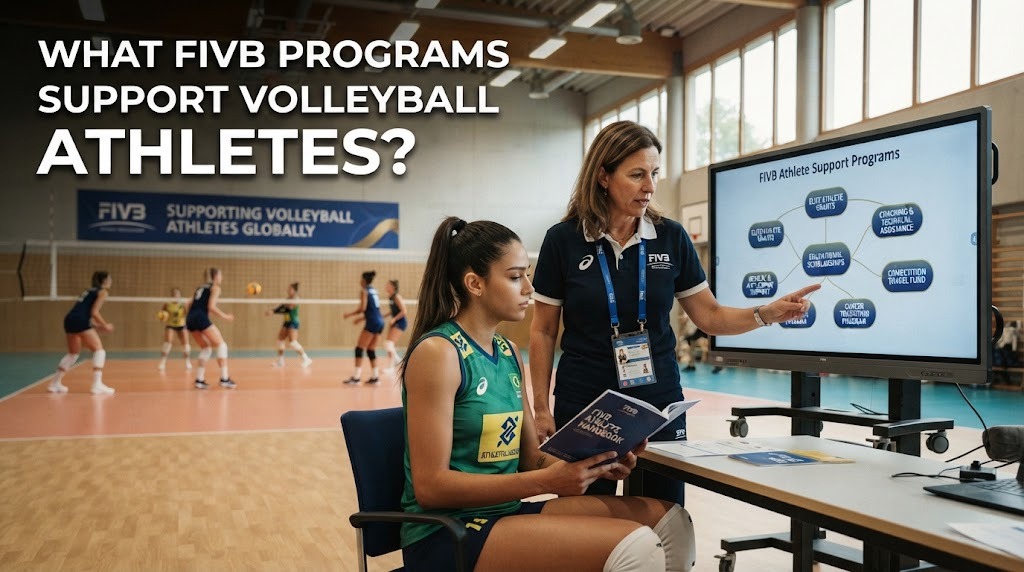
Volleyball athletes need good coaching, proper equipment, strong training systems, and opportunities to compete at a high level. The Fédération Internationale de Volleyball or FIVB supports these needs through several development programmes. One of its main initiatives is Volleyball Empowerment, which is designed to help national teams and athletes reach their full potential. The programme supports both volleyball and beach volleyball development through National Federations around the world.
FIVB support is not limited to one type of assistance. It includes coach support, volleyball equipment, knowledge transfer, and access to high-quality training environments. These programmes are generally delivered through National Federations, which apply for or receive support for their teams and development projects. This system allows support to be adapted to the different needs of countries and athletes.
VOLLEYBALL EMPOWERMENT PROGRAMME
The Volleyball Empowerment Programme is one of FIVB's main programmes for supporting athletes and national teams. It was created to improve the technical level of national teams and help athletes develop the skills needed to compete at the highest level. The programme includes two main approaches, targeted support and application-based support. Both approaches are designed to strengthen volleyball development in different countries.
The programme can support National Federations with coaching, equipment, and technical knowledge. FIVB says the programme has invested more than USD 58 million across more than 1,747 approved projects supporting 207 National Federations as of April 2026. This shows the large scale of the programme across the global volleyball community. The support is intended to create stronger national teams and better development pathways for athletes.
COACH SUPPORT FOR NATIONAL TEAMS
Coach support is an important part of Volleyball Empowerment because qualified coaches can have a major influence on athlete development. FIVB can provide an expert coach to help improve the performance of a national team. Depending on the team's level and goals, coach support can be provided for three, six, or twelve months. National Federations can also propose longer support arrangements when they have a suitable long-term development plan.
The programme can cover several costs connected with the supported coach, including travel and a subsidy for the coach's salary. It can also provide relevant volleyball equipment according to the team's needs. The National Federation remains responsible for the employment agreement and certain local arrangements. This type of support gives athletes access to specialized coaching and structured training that can improve their preparation for international competition.
VOLLEYBALL EQUIPMENT SUPPORT
Athletes need appropriate equipment to train safely and effectively. FIVB therefore provides volleyball equipment support as one of the three main application-based areas of Volleyball Empowerment. National Federations can request equipment based on the needs of their approved development projects. This can help improve training conditions for national teams and other volleyball development activities.
Equipment support can be especially useful for National Federations that need better resources for their athletes and staff. FIVB has reported examples where equipment funding helped teams improve their training environments. In 2025, FIVB support included equipment projects alongside coaching and knowledge transfer initiatives. Better equipment can give athletes more suitable conditions for practising technical skills and preparing for competitions.
KNOWLEDGE TRANSFER PROGRAMMES
Athlete development also depends on the knowledge of coaches, technical staff, referees, and administrators. FIVB therefore includes a knowledge transfer programme within its application-based support. The programme allows National Federations to strengthen their technical expertise and share knowledge within their own volleyball systems. This can help countries develop skills that remain useful after a particular project ends.
Knowledge transfer can support areas such as coaching and technical development. It can also help National Federations improve the way they manage and develop their volleyball programmes. Stronger technical knowledge can indirectly benefit athletes because coaches and staff can apply better methods during training. In this way, athlete development is supported through the wider volleyball system, not only through direct assistance to players.
TARGETED SUPPORT FOR NATIONAL TEAMS
FIVB also provides targeted support for National Federations selected according to their development needs and potential. This approach is different from application-based support because FIVB identifies and works with selected federations. The assistance can focus on strengthening national teams and improving their ability to compete internationally. It can include high-performance coaches and other technical professionals.
Targeted support can involve specialists such as coaches, trainers, managers, and physiotherapists. These professionals can help national teams improve different aspects of preparation and performance. The support is intended to strengthen the overall team environment rather than focus on only one athlete. This can provide athletes with access to a more complete high-performance structure.
INTERNATIONAL CENTRES OF EXCELLENCE
FIVB introduced the International Centres of Excellence to strengthen access to high-quality volleyball training environments. The global network has two main levels, including High-Performance International Training Centres for elite national teams and International Training Centres for development, education, youth, and regional programmes. These centres are recognized by FIVB based on established quality standards.
Since 1 April 2026, National Federations have been able to apply for FIVB support for national team training camps at recognized International Centres of Excellence. These environments can provide structured facilities for athlete development and competition preparation. The initiative is intended to increase access to quality training environments around the world. It therefore gives athletes another pathway to improve their preparation and performance.
FIVB COACH EDUCATION
FIVB also supports athletes indirectly through coach education. Coaches influence how players learn technical skills, tactics, physical preparation, and teamwork. FIVB reports that its coaches courses train more than 1.15 million athletes every five years through coaches of different levels. This demonstrates how improving coaching knowledge can reach a large number of athletes worldwide.
Coach education can create benefits that continue beyond one competition or training camp. A coach who gains new knowledge can use it with athletes in future seasons. This helps National Federations develop their own technical resources and reduce dependence on short-term assistance. Better coaches can contribute to better athlete development over the long term.
APPLICATION BASED SUPPORT
FIVB's application-based support gives National Federations a way to request assistance for specific development projects. There are three main categories, namely coach support, volleyball equipment, and knowledge transfer. All 222 National Federations in categories 1 through 5 can submit applications through the programme's application windows. Projects are expected to have clear goals that contribute to volleyball development in the country.
This system allows support to be connected to the actual needs of each National Federation. For coach support and knowledge transfer, FIVB uses application windows during the year and asks federations to prepare comprehensive development plans. This encourages National Federations to think about athlete development over a longer period. As a result, support can become part of a broader long-term volleyball development strategy.
SUPPORT FOR LONG TERM ATHLETE DEVELOPMENT
FIVB programmes are designed not only to help athletes prepare for one event but also to build stronger development systems. Coaching support can improve daily training, while equipment support can provide better resources for practice. Knowledge transfer can strengthen the people responsible for developing athletes. Training centres can also provide better environments for national team preparation.
The combination of these programmes can create a more complete athlete development pathway. In 2026, FIVB approved 95 new Volleyball Empowerment projects across 55 National Federations, representing more than USD 1.9 million in investment. The projects focus on areas such as coaching, technical expertise, and training environments. This shows how FIVB continues to use development programmes to strengthen volleyball at the national level.
ATHLETE RIGHTS AND RESPONSIBILITIES
FIVB has also strengthened its focus on athletes through the Athletes' Rights and Responsibilities Declaration. In March 2026, the FIVB Board of Administration endorsed the declaration after a consultation process involving the FIVB Athletes' Commission. The document establishes a shared framework containing 12 aspirational rights and 10 responsibilities for athletes within the Global Volleyball Movement.
This initiative gives athletes a clearer framework for their role within international volleyball. It complements performance-focused development programmes by recognizing that athletes are important participants in the wider volleyball system. Athlete development therefore involves more than physical and technical performance. Rights, responsibilities, education, and a supportive environment are also relevant to the development of volleyball athletes.
CONCLUSION
FIVB supports volleyball athletes through several programmes, with Volleyball Empowerment serving as one of its main development initiatives. Its support includes expert coaching, equipment, knowledge transfer, targeted assistance, and access to International Centres of Excellence. These programmes are delivered through National Federations and can be adapted to different development needs.
The overall purpose is to help athletes and national teams reach a higher level while creating stronger volleyball systems. Better coaching, suitable equipment, technical knowledge, and quality training environments can give athletes more opportunities to improve. Through these programmes, FIVB continues to support the development of volleyball athletes and national teams around the world.
Tentang Penulis
Gusti Ayu Tita P
Penulis — Universitas STEKOM
Penulis aktif yang berfokus pada isu-isu akademik, teknologi pendidikan, dan pengembangan sumber daya manusia di lingkungan kampus.