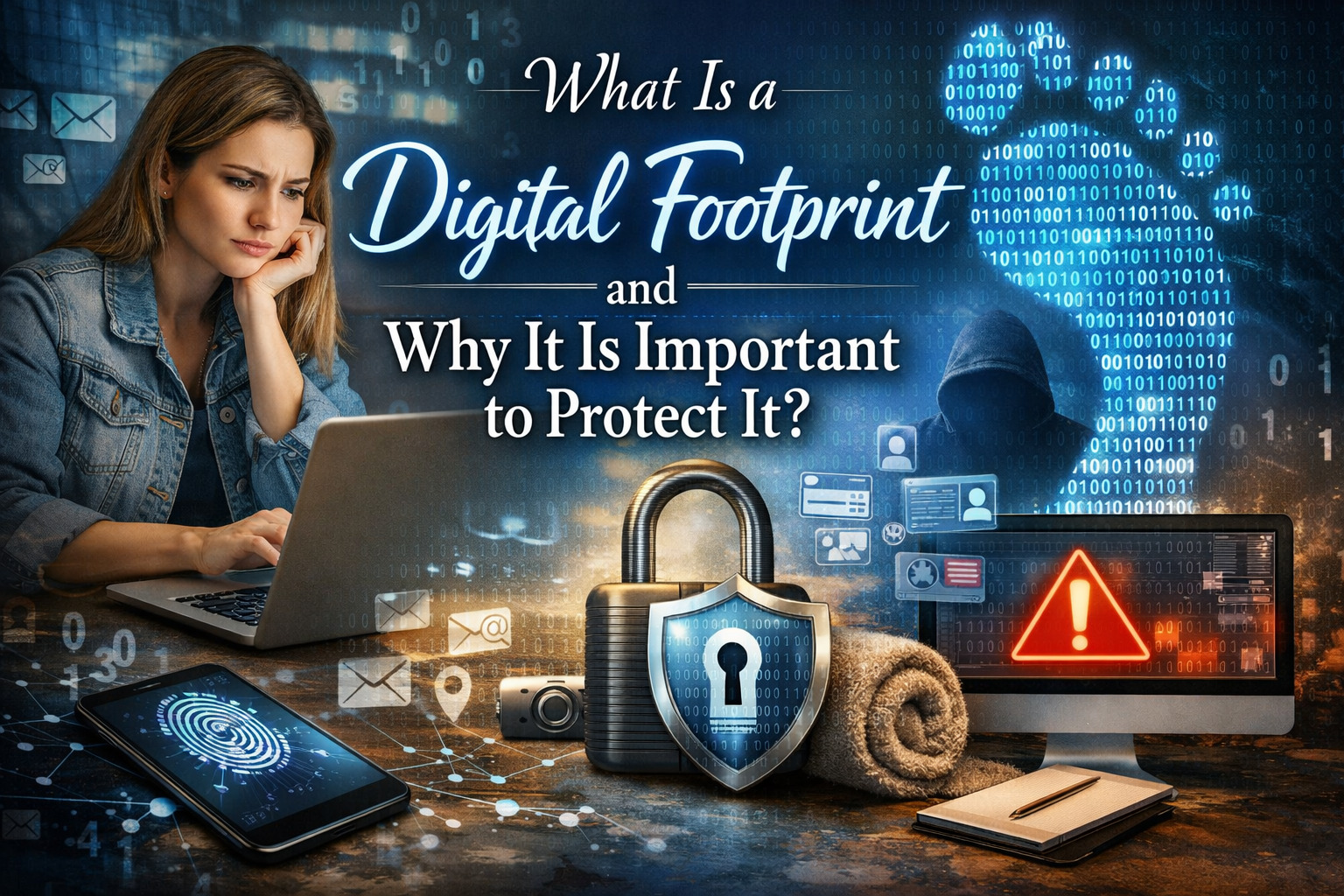
In today's connected world, almost every online activity leaves a trace. Whether you browse websites, use social media, shop online, or send emails, you are creating a digital footprint. Many people do not realize how much personal information is available online and how it can affect their privacy, security, and reputation. Understanding and protecting your digital footprint is essential for staying safe in the digital age.
WHAT IS A DIGITAL FOOTPRINT?
A digital footprint is the collection of data and information created through your online activities. Every time you visit a website, post on social media, subscribe to a service, or make an online purchase, you leave behind digital traces. These traces can be collected, stored, and analyzed by companies, advertisers, and even cybercriminals.
There are two main types of digital footprints: active digital footprints and passive digital footprints. Active footprints are created when users intentionally share information online, such as posting comments or uploading photos. Passive footprints are generated automatically through activities like website tracking, cookies, and browsing behavior. Together, these footprints form a detailed picture of an individual's online presence.
WHY DIGITAL FOOTPRINTS MATTER
A digital footprint can significantly impact your personal and professional life. Employers, universities, and business partners often review online profiles before making decisions. Content shared years ago can still be accessible and may influence how others perceive you.
Additionally, your digital footprint contains valuable information that can be exploited if it falls into the wrong hands. Personal details such as email addresses, phone numbers, and location data can be used for identity theft, scams, or targeted cyberattacks. This makes online privacy and digital security increasingly important.
RISKS OF AN UNPROTECTED DIGITAL FOOTPRINT
An unmanaged digital footprint can expose sensitive information to cybercriminals. Publicly available personal data may be used for phishing attacks, account hacking, or financial fraud. Even small pieces of information can be combined to build a detailed profile of an individual.
Another risk is damage to your online reputation. Inappropriate posts, controversial comments, or outdated information can remain visible for years. Since search engines often index online content, negative information may continue to appear in search results, affecting personal and professional opportunities.
HOW TO PROTECT YOUR DIGITAL FOOTPRINT
Protecting your digital footprint starts with being mindful of the information you share online. Before posting personal details, consider who can access the content and how it might be used in the future. Regularly reviewing privacy settings on social media platforms can help limit unwanted exposure.
Using strong passwords, enabling multi-factor authentication, and keeping software updated are also effective security measures. It is important to avoid clicking suspicious links and to verify the legitimacy of websites before sharing sensitive information. These simple habits can greatly reduce cybersecurity risks.
BEST PRACTICES FOR MAINTAINING ONLINE PRIVACY
Regularly monitoring your online presence is an important step in protecting your digital identity. Search for your name occasionally to see what information is publicly available. If outdated or unwanted content appears, take action to remove or update it whenever possible.
You should also be cautious about granting permissions to apps and websites. Many services collect more information than necessary. Limiting data sharing, clearing browser cookies, and using privacy-focused tools can help strengthen your online privacy and reduce your digital exposure.
CONCLUSION
A digital footprint is an unavoidable part of modern life, but it does not have to become a security risk. By understanding how digital footprints are created and taking proactive steps to manage them, individuals can better protect their personal information and online reputation.
As technology continues to evolve, maintaining strong cybersecurity, protecting online privacy, and monitoring your digital identity will become even more important. Taking control of your digital footprint today can help ensure a safer and more secure online future.
Tentang Penulis
Gusti Ayu Tita P
Penulis — Universitas STEKOM
Penulis aktif yang berfokus pada isu-isu akademik, teknologi pendidikan, dan pengembangan sumber daya manusia di lingkungan kampus.