What Is A Virtual Friend And How Does It Work?
Gusti Ayu Tita P
25 September 2026
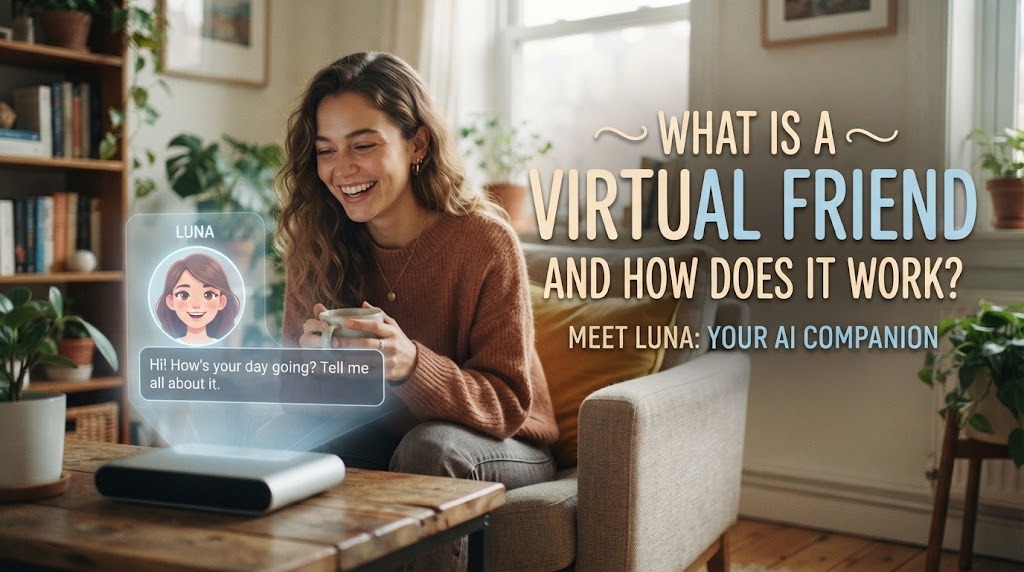
A virtual friend is a digital companion designed to communicate with people through technology. It can chat, respond to questions, provide encouragement, or simply keep someone company. Virtual friends are commonly powered by artificial intelligence, allowing them to respond to messages based on the information and instructions they process. They are becoming more common as people look for new ways to communicate and interact with technology.
Unlike a human friend, a virtual friend does not have personal experiences or real emotions. Its responses are generated by a computer system that is designed to simulate natural conversation. Some virtual friends are available through mobile applications, websites, or other digital platforms. The way they work depends on the technology and features provided by each service.
WHAT IS A VIRTUAL FRIEND?
A virtual friend is a technology based companion that interacts with users through text, voice, or sometimes other digital features. It can be created to have a specific personality, communication style, or purpose. Some are designed mainly for casual conversation, while others may focus on entertainment, learning, or daily support. Users can communicate with them whenever the service is available.
The main difference between a virtual friend and a human friend is that a virtual friend is an artificial system. It does not have a human body, personal life, or genuine feelings. Its friendly behavior is produced through programmed systems or artificial intelligence. This allows the conversation to feel more natural, but it does not mean the system experiences emotions in the same way people do.
HOW DOES A VIRTUAL FRIEND WORK?
A virtual friend usually works by receiving a user's message and processing the meaning of that message. An AI system or conversational program then generates a response based on its training, available information, and system instructions. More advanced systems can consider previous parts of a conversation to make their responses more relevant. The exact technology can vary depending on the platform.
Some virtual friends can also recognize patterns in how users communicate. They may adjust their responses based on the conversation, preferences, or features provided by the service. However, the system does not think exactly like a human. It predicts or generates suitable responses using computational methods. This is why a virtual friend can sometimes misunderstand a question or provide an inaccurate answer.
WHAT CAN A VIRTUAL FRIEND DO?
Virtual friends can perform different functions depending on how they are designed. They can hold conversations, answer questions, provide entertainment, suggest activities, and offer general encouragement. Some systems can also help users practice languages, organize simple tasks, or learn new topics. These features can make digital interaction more convenient.
A virtual friend can also be available at times when a person wants to talk but other people are unavailable. However, it should not automatically be considered a replacement for human relationships. Human connections provide emotional experiences and mutual relationships that artificial systems cannot genuinely experience. Virtual friends are better understood as digital tools that can support certain types of interaction.
WHY DO PEOPLE USE VIRTUAL FRIENDS?
One reason people use virtual friends is convenience. A digital companion can be accessed through a phone, computer, or other connected device without requiring another person to be available. Some users may enjoy having casual conversations, practicing communication, or exploring different topics. Others may simply be interested in experiencing new forms of technology.
Virtual friends can also provide a space for users to express thoughts through conversation. However, people should understand the limits of these systems. A virtual friend cannot provide the same relationship as a trusted human being. For serious personal, emotional, or professional issues, it is important to consider information from appropriate human sources.
WHAT ARE THE BENEFITS OF A VIRTUAL FRIEND?
One potential benefit is accessibility. Users can often interact with a virtual friend whenever the service is available. This can make casual conversation and information access easier. Virtual friends may also help users practice languages, brainstorm ideas, or learn through interactive conversations. The usefulness depends on the quality and purpose of the system.
Another benefit is that users can sometimes customize the interaction. Certain platforms allow users to select communication styles, personalities, or conversation topics. This can make the experience feel more personalized and engaging. Even so, users should remember that customization does not turn an artificial system into a human relationship.
WHAT ARE THE LIMITATIONS OF VIRTUAL FRIENDS?
Virtual friends have important limitations that users should understand. First, they do not have genuine human emotions, personal experiences, or consciousness simply because they communicate naturally. Their responses are generated by software and artificial intelligence systems. They can also misunderstand context, make mistakes, or produce information that is not accurate. Therefore, users should not assume every response is automatically correct.
Privacy is another important consideration. Depending on the service, conversations may be collected or processed according to its privacy practices. Users should read the privacy policy and understand what information is being collected before sharing sensitive details. Avoid providing passwords, financial information, or other highly private information to a virtual friend. Responsible use can reduce potential privacy and security risks.
CAN A VIRTUAL FRIEND REPLACE A HUMAN FRIEND?
A virtual friend can provide conversation, but it cannot fully replace a human friendship. Human relationships involve shared experiences, mutual care, trust, physical presence, and genuine emotions. People can understand each other through real-life experiences and build relationships over time. An artificial system does not experience life in the same way.
Virtual friends can still be useful for specific purposes. They may help users practice communication, explore ideas, or enjoy casual conversations. However, maintaining healthy human relationships remains important for social connection and real-world support. Virtual interaction should ideally complement rather than completely replace meaningful relationships with other people.
HOW TO USE A VIRTUAL FRIEND RESPONSIBLY
Using a virtual friend responsibly begins with understanding what the technology can and cannot do. Treat it as a digital companion or tool, rather than assuming it has human feelings or personal intentions. Check important information through reliable sources before using it to make significant decisions. This is especially important for topics involving health, finances, education, or legal matters.
Users should also protect their personal information. Avoid sharing information that could create privacy or security risks. Set reasonable boundaries around how much time is spent interacting with a virtual friend and continue participating in real-world activities. A balanced approach can help users enjoy the technology without becoming overly dependent on it.
THE FUTURE OF VIRTUAL FRIENDS
Virtual friend technology is likely to continue developing as artificial intelligence becomes more advanced. Future systems may provide more natural conversations, better personalization, and improved understanding of context. Voice interaction and other digital features may also make these systems feel increasingly interactive. At the same time, developers and users will need to consider privacy, transparency, safety, and responsible use.
The growth of virtual friends does not mean human relationships will become unnecessary. Instead, the technology may create new ways for people to interact with digital systems. Understanding the difference between simulated companionship and genuine human connection will remain important. As the technology develops, users should continue evaluating its benefits and limitations carefully.
CONCLUSION
A virtual friend is a digital companion that uses software or artificial intelligence to communicate with users. It can hold conversations, answer questions, provide entertainment, and support certain learning activities. Its ability to communicate naturally comes from systems that process user input and generate appropriate responses. However, it does not experience human emotions or relationships in the same way people do.
Virtual friends can be useful when used with realistic expectations and proper boundaries. Users should protect their privacy, verify important information, and maintain meaningful human relationships. Virtual technology can support communication, but it should not be confused with genuine human friendship. Understanding how the technology works can help people use virtual friends more safely and effectively.
Tentang Penulis
Gusti Ayu Tita P
Penulis — Universitas STEKOM
Penulis aktif yang berfokus pada isu-isu akademik, teknologi pendidikan, dan pengembangan sumber daya manusia di lingkungan kampus.