What Is the Connection Between Industry Partners and Graduate Employability?
Gusti Ayu Tita P
29 September 2026
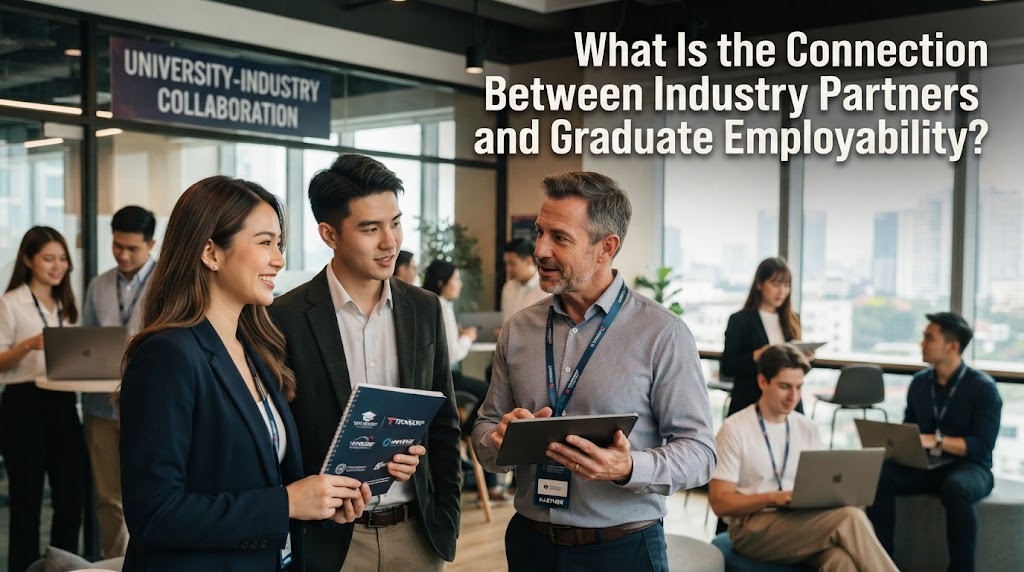
Graduate employability refers to a graduate's ability to obtain, maintain, and develop employment by using relevant knowledge, skills, experience, and professional abilities. In higher education, employability is influenced not only by academic qualifications but also by practical experience and understanding of the workplace. Industry partners can help universities connect academic learning with real professional requirements. This connection can give students opportunities to develop skills that are relevant to their future careers.
Universities and industry partners have different but complementary roles in preparing graduates for employment. Universities provide academic knowledge, critical thinking, and structured learning, while industry partners can provide practical insights and workplace exposure. When these elements are connected through well designed programs, students can better understand how their education relates to professional responsibilities.
PROVIDING REAL WORLD WORK EXPERIENCE
Industry partners can support graduate employability by giving students opportunities to experience real workplace situations. Internships, company projects, fieldwork, and industry visits allow students to apply what they learn in class. These activities can help students understand professional responsibilities and workplace expectations. Practical experience can also make it easier for students to recognize the skills they need to improve.
Work experience can develop both technical and transferable skills. Students may learn how to communicate with colleagues, manage deadlines, solve problems, and work as part of a team. They can also become familiar with professional tools, procedures, and workplace standards. These experiences can provide useful preparation for employment after graduation.
DEVELOPING SKILLS THAT EMPLOYERS NEED
Industry partners can provide universities with information about skills commonly required in specific sectors. These skills may include technical abilities, digital literacy, communication, teamwork, analytical thinking, and problem solving. Universities can consider this information when designing learning activities and practical assignments. This can help students develop a combination of academic and professional competencies.
Industry requirements can change as technology, business practices, and economic conditions develop. Regular communication with industry partners can help universities identify emerging skills and areas of professional development. However, higher education should continue to provide broad academic foundations and critical thinking rather than focusing only on immediate job requirements. A balanced approach can help graduates adapt to changing career conditions.
SUPPORTING CAREER AWARENESS
Industry partners can help students understand different career paths within their fields of study. Guest lectures, mentoring sessions, company visits, and career events can introduce students to various professional roles. Students can learn about daily responsibilities, required qualifications, workplace culture, and possible career development routes. This information can help them make more informed decisions about their professional goals.
Early exposure to career information can also help students identify gaps in their preparation. For example, a student may discover that a particular career requires additional technical skills or professional certifications. They can then use their remaining time at university to develop those competencies. Career awareness therefore becomes an important part of preparing for employment.
PROVIDING PROFESSIONAL NETWORKING OPPORTUNITIES
Industry partnerships can give students opportunities to interact with professionals before graduation. Networking can happen through internships, seminars, workshops, career fairs, research projects, and company events. These interactions can help students understand professional communication and learn more about their chosen industries. They may also discover career opportunities that they would not have encountered through academic activities alone.
Professional networking does not guarantee employment, but it can help students develop useful relationships and access information. Students can learn from experienced professionals and gain a better understanding of workplace expectations. Universities can support this process by creating structured networking activities. Students should approach these opportunities professionally and maintain respectful relationships with industry contacts.
IMPROVING CURRICULUM RELEVANCE
Industry partners can provide feedback about how well academic programs reflect workplace needs. Their feedback may help universities identify areas where practical content, technology, or professional skills need to be strengthened. This information can contribute to curriculum reviews and improvements. It can also help educators design learning activities that demonstrate how academic concepts are applied in professional settings.
Curriculum relevance should involve more than simply following current employer preferences. Universities also have responsibility for academic quality, ethics, research, critical thinking, and long term learning. Industry input can complement these educational objectives by adding practical perspectives. A balanced curriculum can therefore support both immediate employability and continued professional development.
SUPPORTING WORKPLACE TRANSITION
The transition from university to employment can be challenging because graduates may have limited experience with professional environments. Industry partnerships can reduce this gap by exposing students to workplace practices before graduation. Internships and practical projects can help students become familiar with professional schedules, communication, teamwork, and organizational responsibilities. This exposure can make workplace expectations less unfamiliar after graduation.
Industry partners can also provide feedback on students' performance during practical activities. Students can use this feedback to improve before entering full time employment. Universities can use the same information to strengthen career preparation programs. In this way, industry collaboration can create a continuous connection between education and employment preparation.
CREATING OPPORTUNITIES FOR CONTINUOUS DEVELOPMENT
Graduate employability is not only about obtaining a first job. Graduates also need to continue developing their skills as professional roles and industries change. Industry partners can support lifelong learning through professional training, workshops, mentoring, certifications, and collaborative projects. These activities can help graduates maintain relevant knowledge throughout their careers.
Universities can remain involved after graduation by offering professional development programs and maintaining relationships with industry partners. Companies can contribute practical knowledge and identify emerging competency needs. This continued cooperation can support graduates as they move through different stages of their careers. Employability therefore becomes an ongoing process rather than a one time outcome at graduation.
CONCLUSION
Industry partners and graduate employability are closely connected because industry collaboration can provide practical experience, professional skills, career awareness, networking opportunities, and workplace knowledge. These experiences complement academic learning and can help students understand how their knowledge is applied in professional environments. Industry feedback can also help universities improve curriculum relevance and career preparation.
Effective collaboration requires clear objectives and cooperation between universities and industry partners. Students need meaningful learning experiences, appropriate supervision, and opportunities to receive professional feedback. When these elements are managed effectively, industry partnerships can contribute to graduates' preparation for employment and continued career development.
Tentang Penulis
Gusti Ayu Tita P
Penulis — Universitas STEKOM
Penulis aktif yang berfokus pada isu-isu akademik, teknologi pendidikan, dan pengembangan sumber daya manusia di lingkungan kampus.