What Is the Connection Between Workaholism Stress and Burnout?
Gusti Ayu Tita P
24 September 2026
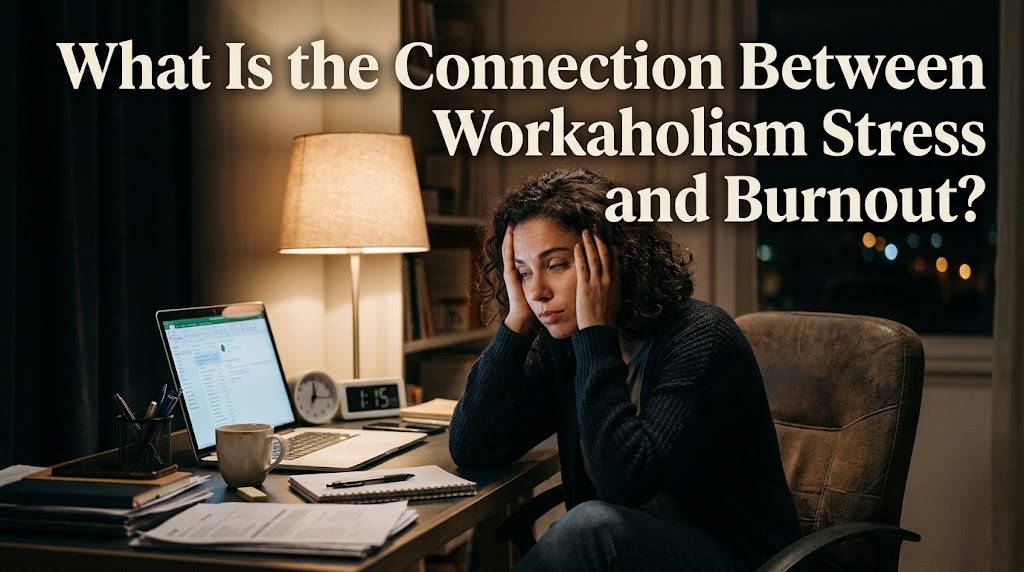
Workaholism, stress, and burnout are closely related but describe different experiences. Workaholism involves a strong and persistent need to work excessively, while work stress can occur when work demands feel difficult to manage. Burnout is a state of physical and emotional exhaustion that can develop after prolonged exposure to demanding or stressful situations. When excessive working continues without enough recovery, these problems can become connected. Understanding their relationship can help people recognize unhealthy work patterns earlier.
UNDERSTANDING WORKAHOLISM AND WORK STRESS
Workaholism can encourage people to spend excessive amounts of time and energy on professional responsibilities. A person may continue working even when they are already tired because they feel uncomfortable stopping. This behavior can increase the amount of pressure they experience throughout the day. Long working hours and constant work demands may therefore contribute to higher levels of work-related stress.
Stress is not always harmful because short-term pressure can sometimes motivate people to complete important tasks. However, problems may arise when stress becomes frequent or difficult to manage. A workaholic may repeatedly create or accept additional responsibilities without allowing enough time for recovery. Over time, this pattern can make everyday work feel increasingly demanding.
HOW CHRONIC STRESS CAN LEAD TO EXHAUSTION
When stress continues for a long period, the body and mind may have fewer opportunities to recover. A person may experience persistent tiredness, difficulty concentrating, irritability, or reduced motivation. These experiences can make normal responsibilities feel more challenging. Insufficient recovery from work stress can contribute to ongoing exhaustion.
The situation can become more difficult when someone responds to tiredness by working even longer. Instead of taking a break, they may believe that completing more tasks will solve the problem. This can create a cycle in which excessive work increases stress and stress leads to greater exhaustion. Breaking this cycle requires sufficient recovery and realistic work boundaries.
THE ROLE OF BURNOUT
Burnout is commonly associated with prolonged or excessive workplace stress and can involve emotional exhaustion, mental distance from work, and reduced effectiveness. It is not simply the same as having a tiring day or feeling temporarily stressed. Burnout generally develops over time when demanding conditions continue without adequate recovery or effective changes.
Workaholic habits may increase the risk of reaching a state of severe exhaustion because the person may have difficulty reducing their workload. They may continue working despite warning signs that they need recovery. However, workaholism is not the only possible contributor to burnout. Workplace conditions, workload, lack of control, and other factors can also play important roles.
WHY REST AND RECOVERY MATTER
Recovery gives the mind and body an opportunity to regain energy after demanding activities. Without enough recovery, fatigue can accumulate and make it harder to maintain concentration and emotional balance. Taking regular breaks, getting sufficient sleep, and spending time away from work can support healthy recovery. These activities can be especially important for people who regularly experience high work demands.
Recovery also requires mental distance from work. A person may technically stop working but continue thinking about emails, deadlines, or unfinished tasks. Creating boundaries around work communication can make it easier to mentally disconnect. A healthier routine should include enough time when professional responsibilities are not the main focus.
RECOGNIZING WARNING SIGNS EARLY
Recognizing warning signs can help people address unhealthy work patterns before they become more disruptive. Persistent exhaustion, declining motivation, difficulty concentrating, increased irritability, and feeling unable to disconnect from work may indicate that a person needs to reassess their routine. Ignoring these warning signs and continuing to work at the same pace can make recovery more difficult.
People can start by reviewing their workload, working hours, sleep, breaks, and personal activities. Setting reasonable priorities and discussing unrealistic demands with a manager may also help when workplace conditions contribute to stress. If exhaustion or distress becomes persistent and difficult to manage, seeking support from a qualified professional can be appropriate. Early attention can help prevent unhealthy patterns from continuing unchecked.
CONCLUSION
Workaholism, stress, and burnout can become connected when excessive working and prolonged work pressure leave insufficient time for recovery. Workaholism can encourage people to continue working despite fatigue, while ongoing stress can contribute to exhaustion and other difficulties. Burnout is a more serious state associated with prolonged workplace stress and can involve emotional exhaustion and reduced effectiveness. Understanding these differences can make it easier to recognize warning signs. Healthy boundaries, sufficient rest, realistic workloads, and appropriate support can help promote a more sustainable approach to work.
Tentang Penulis
Gusti Ayu Tita P
Penulis — Universitas STEKOM
Penulis aktif yang berfokus pada isu-isu akademik, teknologi pendidikan, dan pengembangan sumber daya manusia di lingkungan kampus.