What Is The Difference Between FIVB And National Volleyball Organizations?
Gusti Ayu Tita P
29 September 2026
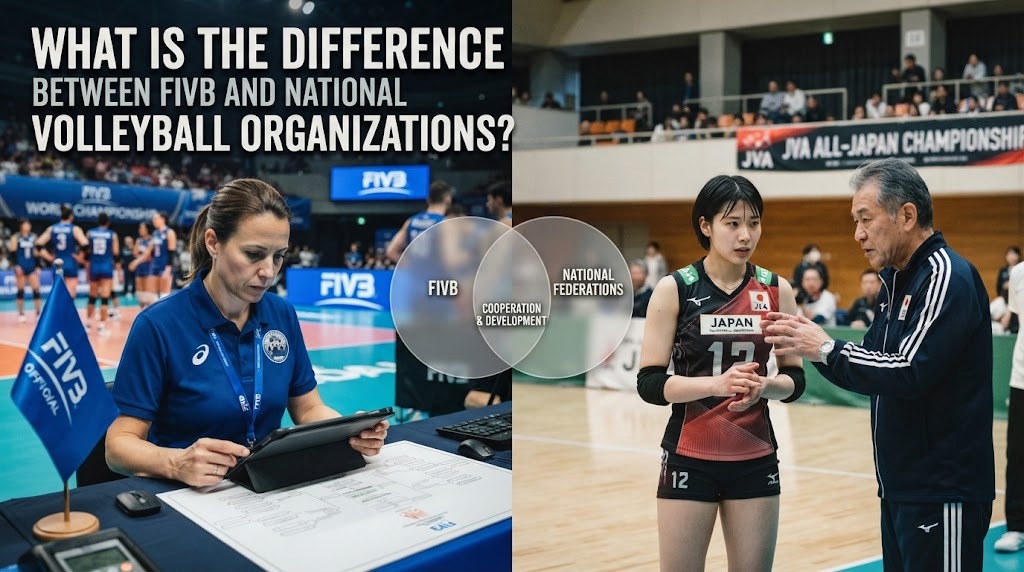
Volleyball is played in many countries, but the sport needs different levels of organizations to operate effectively. The Fédération Internationale de Volleyball or FIVB is responsible for volleyball at the global level, while National Federations manage and govern the sport within their own countries. Both have important responsibilities, but their areas of authority are different. Understanding this difference helps explain how international and national volleyball systems work together.
FIVB provides a global framework for volleyball, including official rules, international competitions, regulations, and development programmes. National volleyball organizations apply these frameworks within their own countries while managing national activities. The two levels are connected through a formal international structure. FIVB currently works with 222 National Federations through five continental confederations. (FIVB)
WHAT IS FIVB?
FIVB is the international governing body responsible for all forms of volleyball at the global level. It was founded in 1947 and is based in Lausanne, Switzerland. Its legal framework includes the FIVB Constitution and various regulations covering volleyball activities worldwide. The FIVB Congress is the organization's supreme authority, while the Board of Administration manages its overall activities. (FIVB)
FIVB works with national federations and continental confederations to develop volleyball internationally. It establishes global standards and organizes or regulates major international competitions. It also supports the development of athletes, coaches, officials, and national volleyball systems. Therefore, its responsibilities extend beyond one country.
WHAT ARE NATIONAL VOLLEYBALL ORGANIZATIONS?
A National Federation is the organization responsible for administering and governing volleyball at the national level. Under the FIVB Constitution, a National Federation must be legally established and recognized by the relevant sports authorities as the organization competent to govern volleyball in its country or territory. This gives the federation responsibility for managing volleyball activities within its national area. (FIVB)
National volleyball organizations can manage national competitions, national teams, athlete registration, domestic development, and other volleyball activities. They also work with clubs, coaches, players, and other organizations involved in volleyball. Their activities are more focused on the needs of their own country. At the same time, affiliated National Federations must respect FIVB rules, regulations, and decisions.
DIFFERENCE IN LEVEL OF AUTHORITY
The biggest difference between FIVB and a National Federation is their level of authority. FIVB operates at the global level, while a National Federation operates within a particular country or territory. FIVB creates the international framework that connects volleyball organizations around the world. National Federations implement and manage volleyball activities at the national level.
For example, FIVB establishes the official international volleyball rules and regulations. A National Federation then uses those rules as part of its national volleyball system. This creates greater consistency when national teams participate in international competitions. The FIVB Constitution also requires affiliated National Federations to respect and implement FIVB rules and decisions. (FIVB)
DIFFERENCE IN COMPETITIONS
FIVB and National Federations also have different responsibilities when it comes to competitions. FIVB is responsible for the international volleyball framework and major global competitions. Continental confederations organize competitions within their geographical areas and support their National Federations. National Federations focus mainly on competitions and activities within their own countries. (FIVB)
A National Federation may organize a national league, national championship, youth competition, or other domestic events. FIVB, meanwhile, deals with international competitions involving teams or players from different countries. Continental competitions sit between these levels and are organized by the relevant confederations. This creates a structure from national to continental to global volleyball.
DIFFERENCE IN RULES AND REGULATIONS
FIVB has an important role in establishing the official international rules of volleyball. Its legal framework includes the Constitution, General Regulations, Sports Regulations, Event Regulations, and other regulations. The FIVB Congress has authority over amendments to the Official Rules of Volleyball. (FIVB)
National Federations must respect and implement these rules within their own systems. They may have national regulations for domestic competitions, but those regulations cannot conflict with applicable FIVB requirements when FIVB rules apply. This relationship helps maintain a consistent understanding of volleyball. It also allows national competitions and international competitions to operate within a connected framework.
DIFFERENCE IN ATHLETE AND TEAM DEVELOPMENT
FIVB focuses on global volleyball development, while National Federations focus on developing volleyball within their countries. FIVB provides programmes and resources that can help National Federations improve their national teams and administration. For example, FIVB's Volleyball Empowerment initiatives can provide coaching, technical resources, equipment, and knowledge transfer. (FIVB)
National Federations use their own structures to identify and develop players within the country. They can organize training programmes, national team camps, domestic competitions, and youth development activities. This creates a connection between international support and local development. In this way, FIVB and National Federations can work together to improve the quality of volleyball.
DIFFERENCE IN GLOBAL AND NATIONAL RESPONSIBILITIES
FIVB has responsibilities that affect the entire international volleyball community. It manages global governance, international regulations, development programmes, and relationships between National Federations and continental confederations. Its decisions can influence volleyball activities across many countries. This makes its role broader than that of an individual National Federation. (FIVB)
A National Federation has more direct responsibility for volleyball within its country. It may manage domestic competitions, national teams, player development, and relationships with clubs and local volleyball stakeholders. It must also ensure that its members follow applicable FIVB requirements. The FIVB Constitution states that affiliated National Federations have the same rights and duties within the FIVB system. (FIVB)
HOW FIVB AND NATIONAL ORGANIZATIONS WORK TOGETHER
FIVB and National Federations are not separate systems that work independently. They are part of a connected volleyball structure. FIVB establishes global standards and provides international programmes, while National Federations manage volleyball activities at the national level. Continental confederations also play an important role by organizing continental competitions and providing technical support to National Federations. (FIVB)
This cooperation can help countries develop stronger volleyball programmes. FIVB may provide resources or technical assistance, while the National Federation understands the specific needs of athletes and volleyball communities in its country. FIVB's targeted support, for example, can include high-performance coaches, trainers, managers, and physiotherapists for selected National Federations. (FIVB)
WHY BOTH LEVELS ARE IMPORTANT
Both FIVB and National Federations are important because volleyball requires global coordination and local management. FIVB creates a common international framework, while National Federations turn that framework into activities within their countries. Without national organizations, it would be difficult to manage domestic volleyball and develop national teams. Without an international governing structure, cooperation between countries would be less consistent.
The two levels also support the development of volleyball in different ways. National organizations understand local athletes, clubs, competitions, and facilities, while FIVB can provide international standards, resources, and opportunities. Their cooperation helps connect local volleyball development with the international game.
CONCLUSION
The main difference is that FIVB governs volleyball at the global level, while National Volleyball Organizations or National Federations govern the sport at the national level. FIVB establishes international rules, regulations, competitions, and development frameworks. National Federations manage domestic volleyball, develop national teams, organize national activities, and represent volleyball within their countries. (FIVB)
Even though their responsibilities are different, they are closely connected. National Federations must follow applicable FIVB rules and decisions, while FIVB works with National Federations to develop volleyball around the world. Together with the five continental confederations, these organizations create a global volleyball structure that connects national activities with international competition. (FIVB)
Tentang Penulis
Gusti Ayu Tita P
Penulis — Universitas STEKOM
Penulis aktif yang berfokus pada isu-isu akademik, teknologi pendidikan, dan pengembangan sumber daya manusia di lingkungan kampus.