What Is The Role Of FIVB In Organizing World Championships?
Gusti Ayu Tita P
29 September 2026
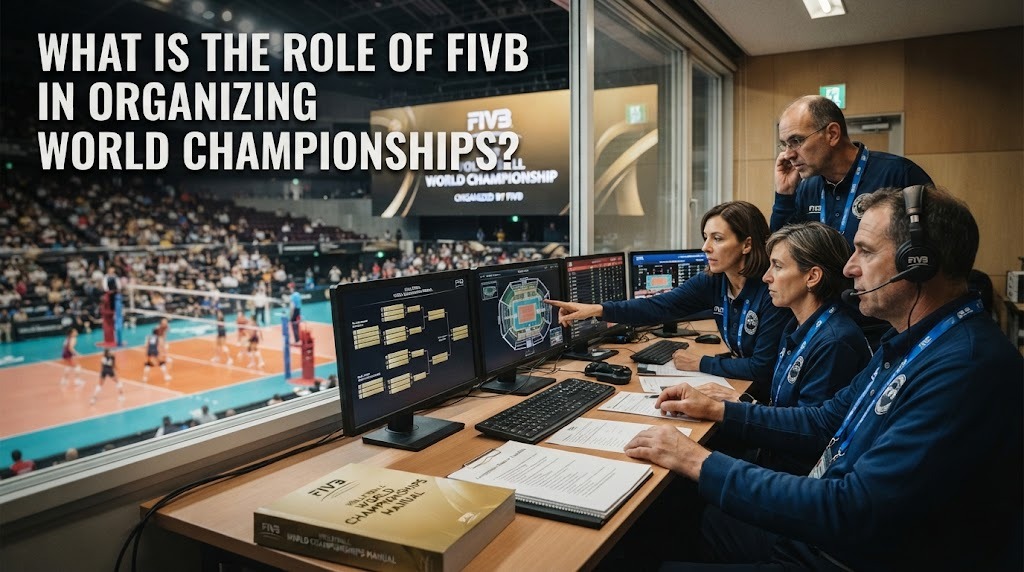
The FIVB has an important role in organizing the Volleyball World Championships, one of the biggest international volleyball competitions. As the global governing body for volleyball, FIVB establishes regulations, qualification systems, competition formats, and organizational standards. It also works with National Federations and local organizers to make sure the tournament runs according to international requirements. Since 2025, the World Championships have featured 32 teams per gender and are scheduled every two years. (FIVB)
SETTING THE WORLD CHAMPIONSHIP FORMAT
One of FIVB's main responsibilities is deciding the competition format used in the World Championships. Starting in 2025, the men's and women's tournaments expanded from 24 to 32 teams. The teams are divided into eight groups of four during the first phase. The top two teams from each group then advance to the knockout stage, including the Round of 16, quarterfinals, semifinals, and medal matches. (FIVB)
This format allows more national teams to participate on the world stage. FIVB also changed the World Championship cycle from every four years to every two years. The change is part of a broader international calendar designed to provide more opportunities while also considering athlete recovery and preparation. (FIVB)
ESTABLISHING THE QUALIFICATION SYSTEM
FIVB is responsible for establishing the qualification pathway for the World Championships. Under the current system, the host country and defending World Champion receive automatic qualification. Other places are allocated through Continental Championships and the FIVB World Ranking. This system creates several routes for national teams from different regions to reach the tournament. (FIVB)
The 2025 championships demonstrated how this system works in practice. Fifteen places were allocated through the Continental Championships, with three places coming from each of the five continental confederations. The remaining places went to the highest-ranked teams that had not already qualified. This creates a combination of continental representation and world ranking performance. (FIVB)
SELECTING AND WORKING WITH HOST ORGANIZERS
FIVB also has an important role in the hosting process for World Championships. Host countries and organizers must meet FIVB requirements for competition facilities, organization, and other operational areas. FIVB regulations define responsibilities between FIVB, its owned companies, the local organizer, and the National Federation in the host territory. These responsibilities are established through agreements for the specific competition. (FIVB)
The requirements can cover many parts of the event. For senior World Championships, FIVB regulations include standards for competition halls, media facilities, medical services, team areas, security, warm-up courts, and other operational spaces. These requirements help create a consistent environment for athletes, officials, media, and spectators. (FIVB)
ORGANIZING THE COMPETITION SCHEDULE
FIVB helps establish the competition calendar and match structure for the World Championships. The organization determines important tournament principles, including the competition period, number of participating teams, and progression from group play to the knockout stage. Match schedules are then developed within this overall framework. This helps teams prepare for the tournament and allows organizers to manage venues and daily matches efficiently.
The 2025 men's World Championship is an example of this structure. The tournament in the Philippines featured 32 teams, eight groups, and a total of 64 matches across two venues in Manila. Pool play was followed by the Round of 16, quarterfinals, semifinals, and medal matches. (FIVB)
APPLYING OFFICIAL VOLLEYBALL RULES
Another major responsibility of FIVB is maintaining the official rules of volleyball used in international competitions. The current Official Volleyball Rules edition covers the 2025–2028 period. These rules establish standards for areas such as the court, equipment, teams, scoring, service, rotations, substitutions, and officials. (FIVB)
Applying common rules is important because teams from different countries need to compete under the same conditions. FIVB regulations also provide specific requirements for international events. By establishing these standards, FIVB helps maintain consistency across World Championship matches and other major international competitions. (FIVB)
COORDINATING WITH NATIONAL FEDERATIONS
FIVB works closely with National Federations during the World Championship process. National Federations are responsible for representing their countries and preparing their teams for international competition. They also work with FIVB and local organizers when their country participates in the tournament. This cooperation helps connect the global governing body with teams and volleyball organizations at the national level.
The qualification system also demonstrates this international cooperation. Continental Confederations have an important role in the qualification pathway, while FIVB establishes the overall requirements and approves relevant systems. This structure allows the World Championships to involve volleyball organizations from different regions around the world. (FIVB)
MANAGING THE GLOBAL COMPETITION STANDARD
FIVB helps maintain a consistent international competition standard throughout the World Championships. This includes regulations for venues, competition areas, technical organization, media facilities, medical services, and other event requirements. The organization also establishes regulations that define the responsibilities of the different bodies involved in an FIVB competition. (FIVB)
A consistent standard is important because the World Championships bring together teams from many different volleyball regions. In 2025, for example, 43 different countries were represented across the men's and women's World Championships. The tournaments therefore require common rules and organizational standards so that all participating teams can compete within the same international framework. (FIVB)
PROMOTING GLOBAL VOLLEYBALL
The World Championships also help FIVB promote global volleyball development. The expanded 32-team format gives more national teams an opportunity to compete at the highest international level. FIVB has stated that the new calendar is intended to provide more opportunities for qualified teams and increase the visibility of national teams and volleyball. (FIVB)
By bringing teams from different continents into one major tournament, the World Championships create an important global platform for the sport. Players can gain international experience, while fans can watch national teams compete against opponents from different volleyball regions. This makes the World Championships an important part of FIVB's international volleyball programme.
CONCLUSION
The role of FIVB in organizing World Championships includes establishing competition formats, managing qualification pathways, setting official rules, coordinating with National Federations, and defining organizational standards. FIVB also works with host organizers to ensure venues and event operations meet international requirements. Since 2025, the World Championships have used a 32-team format and a biennial schedule. Through these responsibilities, FIVB provides the framework that allows the world's national volleyball teams to compete in an organized and consistent global championship. (FIVB)
Tentang Penulis
Gusti Ayu Tita P
Penulis — Universitas STEKOM
Penulis aktif yang berfokus pada isu-isu akademik, teknologi pendidikan, dan pengembangan sumber daya manusia di lingkungan kampus.