What Is the Role of Student Demonstrations in Expressing Aspirations in Public Spaces?
Gusti Ayu Tita P
28 September 2026
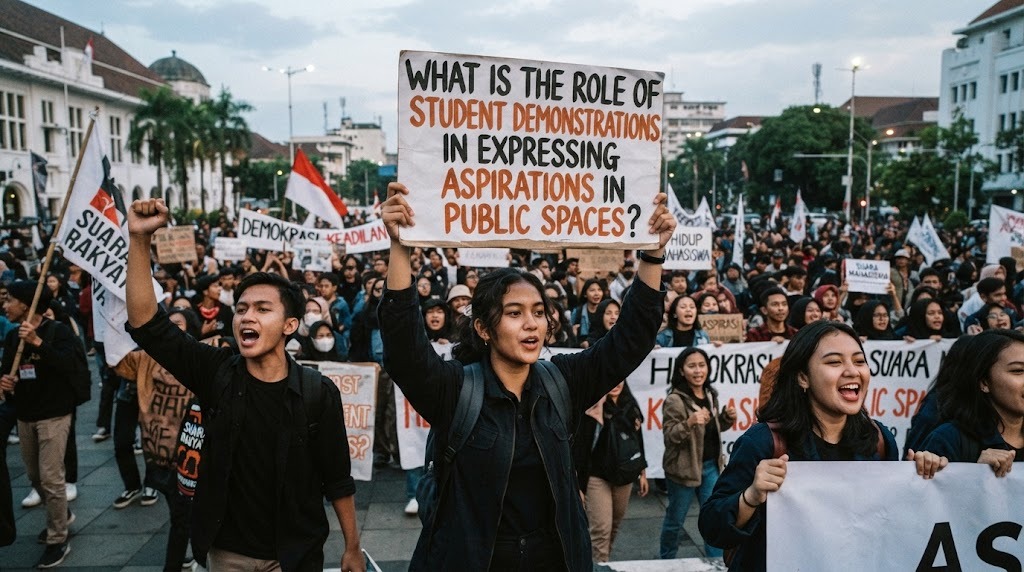
Student demonstrations can provide a way for students to communicate aspirations about educational, social, and community issues in public spaces. Through peaceful and organized activities, students can present concerns that they believe should receive attention. Public demonstrations can also create opportunities for dialogue between students, institutions, and society. However, participation should be supported by accurate information, respectful communication, and awareness of applicable rules. When conducted responsibly, demonstrations can become a practical form of civic participation.
PROVIDING A PUBLIC SPACE FOR EXPRESSION
Public spaces can provide opportunities for students to communicate their concerns to a broader audience. Demonstrations allow participants to present messages through speeches, posters, discussions, and other peaceful forms of expression. Public Expression can make certain issues more visible to people who may not have previously understood them. Students can explain why an issue matters and what changes they hope to see. Clear messages can help prevent misunderstandings about the purpose of an activity.
A public demonstration can also bring together students who share concerns about a particular issue. Participants may exchange ideas and develop common points before presenting their aspirations. This process encourages Student Participation in matters related to education and society. Students can learn how to organize their thoughts and communicate them collectively. Such experiences can strengthen their confidence in expressing opinions respectfully.
INCREASING PUBLIC AWARENESS
Student demonstrations can help bring attention to issues that students consider important. Public communication may encourage other people to learn more about the background of an issue. Students can contribute to this process by presenting accurate information and explaining their concerns clearly. Public Awareness can grow when information is communicated responsibly and supported by relevant evidence. This can encourage wider discussion about possible solutions.
However, raising awareness requires students to avoid misleading information. Before communicating an issue, participants should check facts and consider different perspectives. Reliable Information can help make an aspiration more credible and easier to understand. Students should distinguish between verified facts and personal opinions when preparing their messages. This habit can also strengthen their critical thinking skills.
ENCOURAGING DIALOGUE WITH INSTITUTIONS
Demonstrations can provide an opportunity for students to communicate concerns directly to relevant institutions or decision-makers. A clear message can help institutions understand what students are concerned about. Dialogue may become more productive when students present specific issues and reasonable proposals. Constructive Dialogue allows different parties to discuss concerns without relying on personal attacks. Communication can also help identify areas where further discussion is needed.
Students can prepare questions and proposed solutions before participating in a demonstration. This preparation allows them to communicate more systematically and respond to different perspectives. They can also listen to responses from institutions and consider whether additional clarification is needed. Student Communication can become stronger when students practice both speaking and listening. These skills are valuable in academic organizations and future professional settings.
PROMOTING RESPONSIBLE PARTICIPATION
Expressing aspirations in public spaces requires students to respect other people's rights and safety. Participants should avoid violence, intimidation, vandalism, and behavior that could endanger others. They should also understand and follow applicable regulations concerning public activities. Responsible Participation helps protect both participants and the wider community. Peaceful behavior can support a more constructive atmosphere.
Students should also consider people who are not participating in the demonstration. Public spaces may be used by workers, residents, pedestrians, and other members of society. Respecting these people can reduce unnecessary disruption and conflict. Peaceful Demonstrations should therefore balance the right to express opinions with responsibility toward others. This balance is an important part of responsible civic participation.
DEVELOPING STUDENT SKILLS
Participating in a demonstration can provide practical opportunities for students to develop several skills. They may practice Critical Thinking when analyzing an issue and evaluating different arguments. They can also develop communication skills by preparing speeches, discussing ideas, and presenting their aspirations. Working with other participants can strengthen cooperation and organizational abilities. These experiences can complement skills learned through classroom activities.
Students can reflect on their experiences after participating in a public activity. They can evaluate whether their message was clear, whether they listened to other perspectives, and whether they acted responsibly. Reflective Learning can help students recognize what they have learned and what they should improve. These skills can be useful in student organizations, academic projects, and future workplaces. Therefore, responsible participation can have educational value beyond the demonstration itself.
CONCLUSION
Student demonstrations can play a role in expressing aspirations in public spaces by providing opportunities for Public Expression, awareness, dialogue, and civic participation. Students can communicate concerns while developing Critical Thinking, communication, teamwork, and organizational skills. Responsible participation requires accurate information, respectful communication, attention to safety, and respect for other people's rights. Constructive dialogue can also help turn public concerns into opportunities for discussion and possible solutions. When conducted peacefully and responsibly, demonstrations can become a meaningful learning experience for students.
Tentang Penulis
Gusti Ayu Tita P
Penulis — Universitas STEKOM
Penulis aktif yang berfokus pada isu-isu akademik, teknologi pendidikan, dan pengembangan sumber daya manusia di lingkungan kampus.