What Is Workaholism and Why Do Some People Experience It?
Gusti Ayu Tita P
24 September 2026
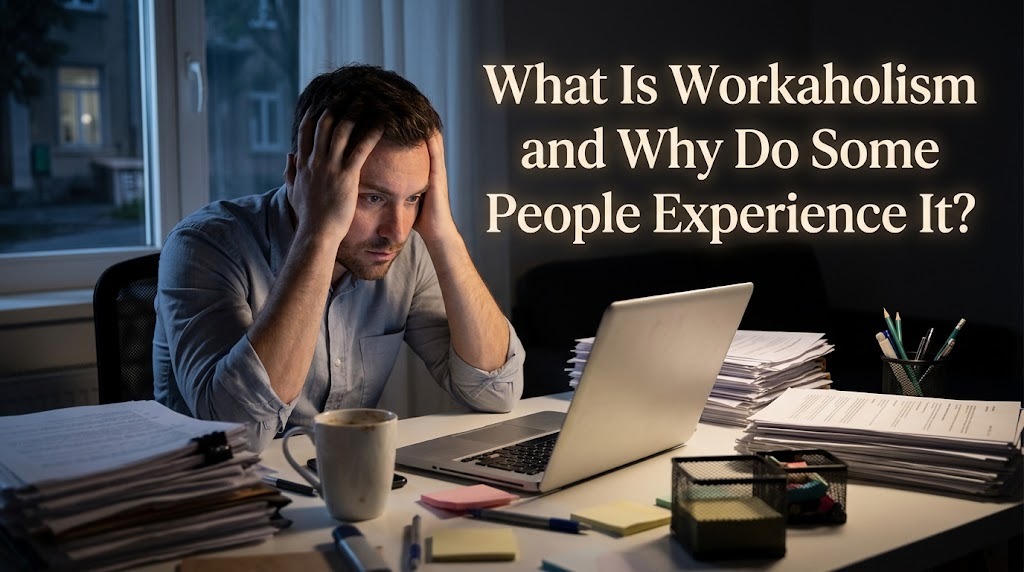
Workaholism refers to a strong and difficult-to-control need to work excessively. A person experiencing workaholism may spend a large amount of time working even when there is no urgent task that needs to be completed. Unlike normal dedication to work, this habit can make it difficult for someone to disconnect from work and enjoy personal time. Workaholism can also affect rest, relationships, and overall well-being when it continues for a long period. Understanding what causes this behavior can help people recognize unhealthy work patterns and develop more balanced habits.
UNDERSTANDING WORKAHOLISM
Workaholism is commonly associated with excessive involvement in work and a strong psychological urge to keep working. A workaholic may think about work frequently, continue working beyond reasonable hours, or feel uncomfortable when taking a break. The behavior is not simply about having a busy schedule because someone can work hard for a specific goal without feeling unable to stop. Workaholism becomes concerning when work starts to control a person's daily life and reduces time for other important activities.
Another important characteristic is the difficulty of mentally switching away from work. Someone may be physically at home but continue thinking about unfinished tasks, emails, deadlines, or workplace problems. Over time, this pattern can make work and personal life difficult to separate. Recognizing these patterns is an important first step toward healthier working habits.
WHY DO SOME PEOPLE BECOME WORKAHOLICS?
Several factors can contribute to workaholism, and they can be different for each person. Some people may have perfectionist tendencies and feel that their work is never good enough. Others may connect their self-worth with professional achievements and believe they need to accomplish more to feel valuable. Workplace expectations, financial pressure, competition, and a culture that praises constant availability can also encourage excessive working.
Personal habits can strengthen the pattern over time. For example, someone who regularly responds to work messages late at night may gradually consider this behavior normal. Fear of falling behind or disappointing others can also make it harder to stop working. Therefore, workaholism is often influenced by a combination of personal and environmental factors rather than a single cause.
HOW WORKAHOLISM CAN AFFECT DAILY LIFE
Excessive work can gradually reduce the time available for sleep, hobbies, family, friends, and other meaningful activities. A person may continue working even when feeling tired because unfinished tasks seem more important than taking a break. This can create a cycle in which insufficient rest affects concentration and energy, making everyday responsibilities more difficult.
Workaholism can also affect relationships. When work consistently receives more attention than personal connections, family members or friends may feel neglected. Social activities may be canceled because of work responsibilities, while personal interests may be pushed aside. Maintaining healthy boundaries can help prevent work from taking over too much of a person's daily life.
WORKAHOLISM AND PRODUCTIVITY
Working longer does not automatically mean producing better results. Long working hours can reduce concentration, increase mistakes, and make it harder to think clearly when a person does not get enough recovery time. Productivity depends not only on the amount of time spent working but also on focus, planning, energy, and the quality of rest.
A healthier approach is to focus on important tasks and take appropriate breaks. Setting clear working hours can help create a stronger separation between professional responsibilities and personal time. When people have enough time to recover, they may return to their tasks with better concentration and energy. This shows why healthy productivity requires balance, rather than simply increasing working hours.
HOW TO RECOGNIZE UNHEALTHY WORK HABITS
Recognizing workaholic behavior can begin by observing how a person reacts to rest and free time. Feeling extremely uncomfortable whenever work stops, constantly checking work messages, or regularly sacrificing sleep for work can be warning signs of an unhealthy pattern. Another sign is continuing to work even when there is no immediate need to do so. These behaviors become more concerning when they consistently interfere with health, relationships, or everyday responsibilities.
Keeping a simple record of working hours and personal activities can help reveal patterns that may otherwise go unnoticed. People can also ask themselves whether they are working because a task is genuinely necessary or because they feel unable to stop. Self-awareness can help identify unhealthy routines early. If excessive work is causing significant distress or interfering with daily functioning, talking with a trusted person or qualified professional can provide additional support.
CONCLUSION
Workaholism is more than simply being hardworking or committed to a career. It involves a persistent need to work excessively that can interfere with rest, relationships, and personal well-being. People may experience workaholism because of perfectionism, workplace pressure, personal expectations, or difficulty separating work from personal life. Understanding these factors can make it easier to recognize unhealthy patterns. Building clear boundaries, allowing sufficient rest, and focusing on meaningful productivity can support a healthier relationship with work.
Tentang Penulis
Gusti Ayu Tita P
Penulis — Universitas STEKOM
Penulis aktif yang berfokus pada isu-isu akademik, teknologi pendidikan, dan pengembangan sumber daya manusia di lingkungan kampus.