
What Leadership Skills Should Every Startup Founder Master?
Gusti Ayu Tita P
23 September 2026
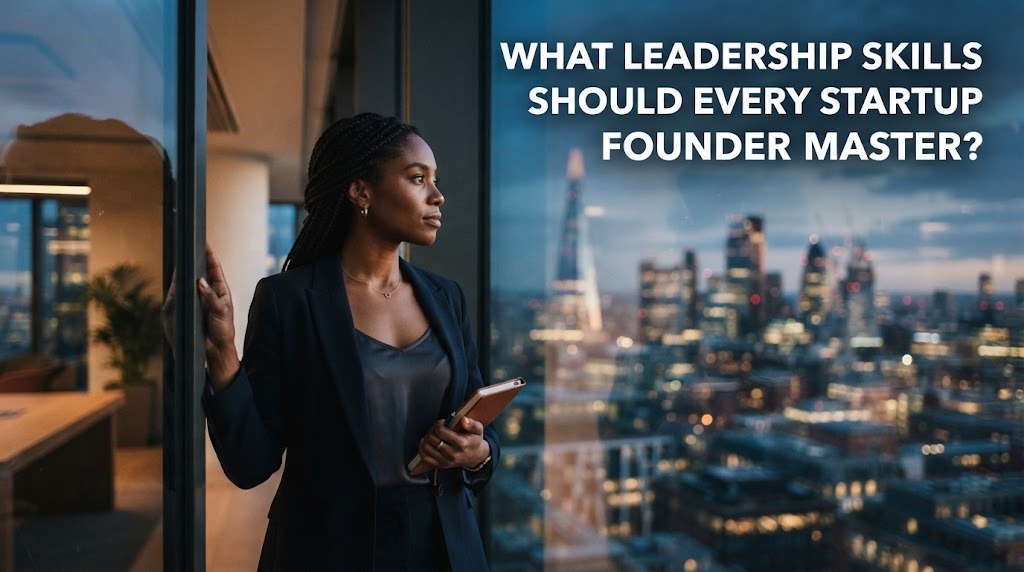
Startup founders face unique challenges because they often need to build a business while leading a small team, managing limited resources, and responding to rapid changes. Strong leadership can help founders create a clear direction, build trust, and keep employees focused on shared goals. However, being a founder does not automatically mean being an effective leader. Leadership skills need to be developed through experience, self awareness, and continuous learning.
CLEAR VISION AND STRATEGIC THINKING
A startup founder needs a clear vision to explain where the business is going and why it matters. A strong vision helps employees understand how their daily responsibilities contribute to larger business goals. Founders also need strategic thinking to identify opportunities, evaluate risks, and decide which priorities deserve attention. Without clear direction, a startup can quickly waste time and resources on activities that do not support its main objectives.
Strategic thinking also requires founders to remain flexible. Startup conditions can change because of customer behavior, competitors, technology, or financial circumstances. A founder should therefore be willing to review plans and make adjustments when reliable information shows that a different approach is necessary. Having a clear vision does not mean refusing to change the strategy.
EFFECTIVE COMMUNICATION
Communication is one of the most important leadership skills for a startup founder. Founders need to explain goals, responsibilities, expectations, and changes in a way that employees can understand. Clear communication can reduce confusion and help teams coordinate their work more effectively. It also gives employees opportunities to ask questions and raise concerns before small problems become larger ones.
Good communication involves listening as well as speaking. Founders should pay attention to feedback from employees, customers, investors, and other relevant stakeholders. Listening can reveal problems that may not be visible from a leadership position. Open and respectful communication can also contribute to greater trust within the organization.
DECISION MAKING
Startup founders often need to make decisions with incomplete information and limited time. They must evaluate available evidence, consider potential consequences, and determine which risks are reasonable. Delaying every decision can slow down the business, while making decisions without sufficient consideration can create unnecessary problems. Effective founders learn to balance speed with careful judgment.
Decision making can improve when founders establish clear priorities. Not every problem requires the same level of attention or urgency. Founders can focus their energy on decisions that have a significant effect on customers, employees, finances, or the long term direction of the company. After making a decision, they should also review the results and learn from the outcome.
DELEGATION AND TEAM BUILDING
Founders cannot effectively manage every task as a startup grows. Delegation allows them to distribute responsibilities according to employees' skills and areas of expertise. Effective delegation involves clearly explaining the expected outcome while giving team members enough independence to complete their responsibilities. It also helps founders focus on strategic issues that require their direct attention.
Team building is equally important because startup employees often work closely together under changing conditions. Founders should understand employees' strengths and create opportunities for collaboration. Recognizing good work and providing constructive feedback can also support a healthier team environment. A capable team can help a startup operate more effectively without depending on the founder for every decision.
ADAPTABILITY AND PROBLEM SOLVING
Startups frequently face uncertainty, unexpected expenses, changing customer needs, and operational challenges. Because of this, founders need to remain adaptable rather than becoming overly attached to one plan. Adaptability allows leaders to respond to new information and adjust their approach when circumstances change. It is especially important in industries where technology and customer expectations develop quickly.
Problem solving requires founders to identify the underlying cause of an issue instead of only treating its visible symptoms. They can gather relevant information, consider different solutions, and evaluate the possible consequences of each option. When appropriate, involving employees in problem solving can provide perspectives that the founder may not have considered. This approach can also encourage employees to take greater responsibility for the business.
EMOTIONAL INTELLIGENCE
Emotional intelligence helps founders understand and manage their own emotions while responding appropriately to the emotions of others. Startup environments can involve stress, uncertainty, long working hours, and disagreements. A founder who understands these emotional dynamics may communicate more effectively during difficult situations. Emotional intelligence can also help leaders recognize when employees need clarification, support, or constructive feedback.
Self awareness is an important part of emotional intelligence. Founders should recognize how their behavior and communication style affect the people around them. They should also learn how to respond to criticism without immediately becoming defensive. Developing emotional awareness can support stronger professional relationships and a more respectful workplace.
FINANCIAL AND RESOURCE MANAGEMENT
Although financial management is often considered a business skill rather than a leadership skill, founders need enough financial understanding to make responsible decisions. They should know how revenue, expenses, cash flow, budgets, and funding affect the company's operations. This knowledge helps founders understand the practical consequences of their strategic choices. It also allows them to communicate more effectively with financial professionals and investors.
Resource management extends beyond money. Time, employee capacity, technology, and operational resources are also limited in many startups. Founders need to determine which activities deserve priority and avoid unnecessarily spreading their teams too thin. Responsible resource management can help a startup maintain its operations while pursuing sustainable growth.
CONCLUSION
Every startup founder can benefit from developing leadership skills that support both people and business performance. Clear vision, communication, decision making, delegation, adaptability, emotional intelligence, and resource management can help founders navigate the challenges of building a company. These skills are not developed instantly and often improve through experience, feedback, and continuous learning. Strong leadership ultimately involves guiding people toward shared goals while remaining willing to learn and adapt.
Tentang Penulis
Gusti Ayu Tita P
Penulis — Universitas STEKOM
Penulis aktif yang berfokus pada isu-isu akademik, teknologi pendidikan, dan pengembangan sumber daya manusia di lingkungan kampus.



