What Safety Procedures Should a New SAR Team Follow During Missions?
Gusti Ayu Tita P
29 September 2026
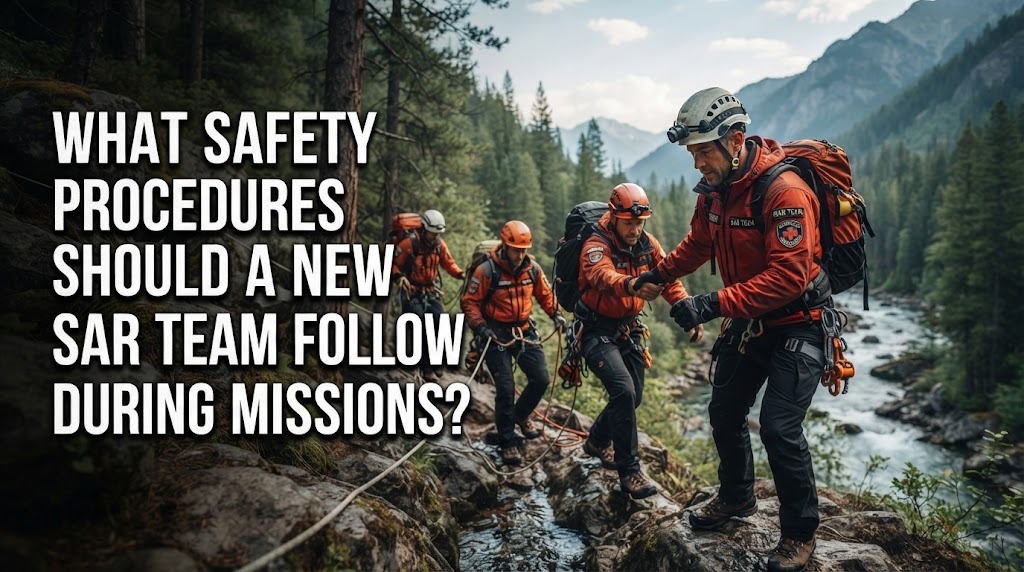
A new SAR team must follow clear safety procedures during every rescue mission because emergency environments can change rapidly and contain serious hazards. Rescuers may face unstable structures, difficult terrain, dangerous water, severe weather, debris, or other threats depending on the incident. Indonesia's Indonesia SAR Manual 2025 emphasizes professional operations, standardized procedures, communication, and safety as important elements of search and rescue activities.
Safety procedures are designed to protect both rescuers and victims while keeping the operation organized. INSARAG guidance includes dedicated Safety and Security Plans, Evacuation Plans, Worksite Triage, and Structural Evaluation resources for USAR operations. A new team should therefore understand safety procedures before deployment and continue applying them throughout the mission. Regular training and exercises are also important because preparedness includes training, reviewing lessons learned, and updating standard operating procedures.
CONDUCT A SAFETY ASSESSMENT BEFORE DEPLOYMENT
Before entering an emergency area, a new SAR team should assess the situation and identify possible hazards. The assessment should consider the location, terrain, weather, access routes, structures, available resources, and known risks. INSARAG operational resources include wide-area assessment, worksite triage, and structural evaluation to support informed operational decisions. This initial assessment gives team leaders a basis for deciding how personnel and equipment should be deployed.
The assessment should not be treated as a one-time activity. Conditions at a disaster site can change after the team arrives, so members need to continue monitoring hazards throughout the operation. Situational awareness helps rescuers recognize when a route, worksite, or rescue method is no longer safe. If the risk changes significantly, the team should communicate the information and adjust its operation through the appropriate command structure.
USE APPROPRIATE PERSONAL PROTECTIVE EQUIPMENT
Personal protective equipment or PPE is an essential part of SAR safety. Depending on the mission, rescuers may require helmets, gloves, protective footwear, eye protection, protective clothing, respiratory protection, or other specialized equipment. FEMA's US&R safety guidance requires appropriate PPE and ongoing attention to safety during operations.
PPE should be selected according to the hazards and responsibilities of the mission rather than using exactly the same equipment for every situation. A flood operation, for example, may create different hazards from a collapsed-building operation. Team members should know how to wear, inspect, and maintain their protective equipment properly before entering the field. Damaged or unsuitable equipment should not be used during rescue work.
MAINTAIN ACCOUNTABILITY AND COMMUNICATION
A new SAR team should always know where its members are during an operation. FEMA safety guidance includes maintaining personnel accountability as an important responsibility of the safety function. The team should establish clear reporting procedures so leaders can monitor personnel and respond quickly if someone becomes separated or encounters a problem.
Communication is equally important because rescuers need to report hazards, victim conditions, locations, and operational changes. INSARAG resources include assignment briefing packages, incident situation reports, and safety and security plans that support organized coordination. Radios and other communication systems should be tested before deployment, while backup communication methods should be available when normal systems are unreliable.
FOLLOW SAFE WORK AND REST CYCLES
Rescue work can be physically demanding, especially during long operations. A new SAR team should organize work and rest cycles so members have sufficient recovery time while maintaining operational capability. INSARAG guidance identifies work-period scheduling, adequate rest, flexibility, and reserve personnel as considerations for USAR team management.
Fatigue can make it harder for rescuers to maintain attention and follow procedures accurately. Team leaders should monitor working hours, environmental conditions, and signs that personnel need a break. FEMA safety guidance also includes work and rest cycles, climatic condition monitoring, and rehabilitation within safety planning. Proper scheduling allows a new team to balance operational demands with personnel safety.
CONTROL ACCESS TO DANGEROUS AREAS
A new SAR team should control access to areas where hazards may threaten rescuers or other people. Restricted areas, work zones, evacuation points, and safe routes should be identified according to the incident and the team's operational plan. INSARAG provides dedicated resources for safety and security planning, evacuation plans, and worksite assessment. These measures help prevent untrained people from entering dangerous locations.
Access control also becomes important when structures or terrain are unstable. Team members should avoid entering areas without understanding the relevant risks and required protective measures. Only trained and authorized personnel should perform specialized rescue tasks. When a hazard exceeds the team's capabilities, additional specialized support should be requested rather than attempting an unsafe solution.
PREPARE FOR EVACUATION AND EMERGENCY CHANGES
A new SAR team should know how to respond if conditions suddenly become unsafe. An evacuation procedure should identify possible routes, assembly points, communication methods, and responsibilities before the operation begins. INSARAG specifically includes an Evacuation Plans resource within its operational field guidance. Having a plan in advance can help members react more systematically during an unexpected emergency.
Emergency conditions can include structural instability, rapidly changing weather, rising water, fire, hazardous materials, or other sudden threats. Team leaders should continuously monitor conditions and communicate changes to personnel. Prepared evacuation procedures can help the team move away from danger in an organized way when necessary. Every member should know the relevant signals and instructions before beginning field activities.
PROTECT VICTIMS DURING RESCUE AND EVACUATION
Safety procedures also apply to the way rescuers handle victims. Once a person is located, the team needs to consider the victim's condition, environment, route, and available equipment before beginning evacuation. A rescue should be carried out according to the team's training and operational capabilities rather than through improvised techniques.
Rescuers should provide medical assistance only within their level of training and coordinate with qualified medical personnel when further care is required. INSARAG includes medical guidance and patient treatment resources within its wider USAR technical guidance framework. Careful victim handling can reduce additional risks while the team moves the person toward a safer location or appropriate medical support.
REVIEW SAFETY PERFORMANCE AFTER THE MISSION
Safety procedures should continue after the rescue operation has ended. A new SAR team should review injuries, near misses, equipment problems, communication issues, and other safety concerns after each exercise or mission. INSARAG's post-mission process requires teams to complete reporting and conduct lessons-learned reviews to improve future effectiveness and efficiency.
The findings should be used to improve future training and operating procedures. INSARAG's preparedness framework encourages teams to conduct exercises, review previous experience, and update Standard Operating Procedures when necessary. This continuous improvement helps a new team strengthen its safety practices instead of repeating preventable mistakes.
CONCLUSION
A new SAR team should follow safety procedures that cover risk assessment, PPE, accountability, communication, work and rest cycles, access control, evacuation planning, victim protection, and post-mission evaluation. These procedures help rescuers understand hazards and maintain an organized response during difficult emergency missions. Current BASARNAS and INSARAG guidance both emphasize structured operations, preparedness, coordination, and safety as important elements of rescue work.
Safety should remain part of every stage of the mission, from preparation and deployment to rescue, evacuation, and evaluation. Regular training and realistic exercises can help new members become familiar with safety procedures before they face real emergencies. By following established procedures and working within their capabilities, a new search and rescue team can support victims while reducing unnecessary risks to rescuers.
Tentang Penulis
Gusti Ayu Tita P
Penulis — Universitas STEKOM
Penulis aktif yang berfokus pada isu-isu akademik, teknologi pendidikan, dan pengembangan sumber daya manusia di lingkungan kampus.