What Skills Should a New SAR Team Have for Rescue Missions?
Gusti Ayu Tita P
29 September 2026
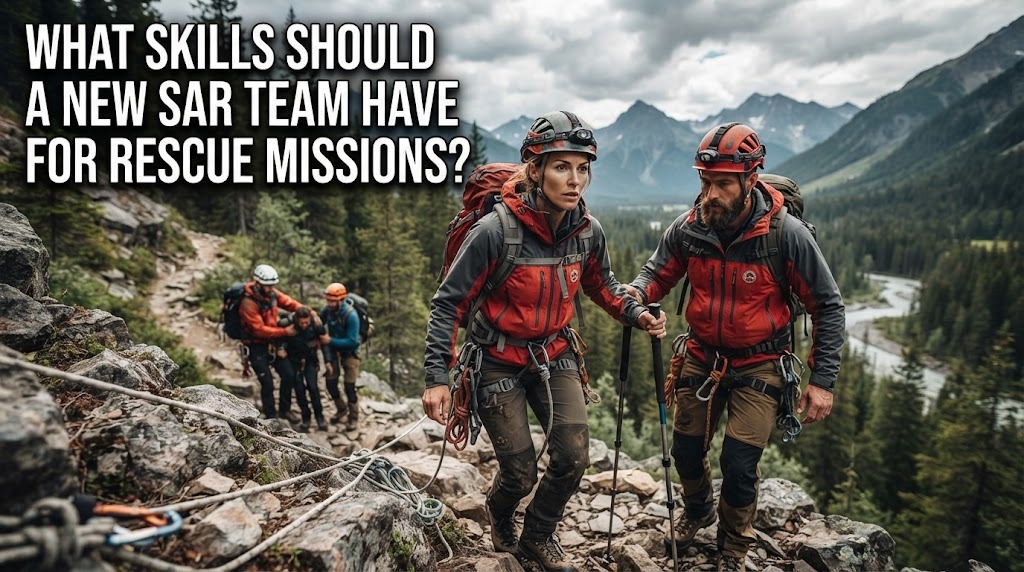
A new SAR team needs a combination of practical knowledge, physical ability, communication skills, and teamwork to carry out rescue missions safely. Search and rescue operations can take place in mountains, forests, rivers, urban areas, or disaster zones, where conditions may change quickly. Because of these challenges, every team member needs to understand basic rescue skills before joining an actual mission. Proper preparation also helps rescuers protect themselves while assisting people in danger.
The required skills can vary depending on the team's mission and operating environment. However, several core abilities are useful for almost every search and rescue team, including first aid, navigation, communication, risk assessment, and emergency response. Regular training allows new members to practice these skills in controlled situations. With consistent preparation, a new SAR team can become more organized and ready to respond to emergencies.
BASIC FIRST AID AND MEDICAL SKILLS
First aid skills are essential for SAR members because victims may have injuries before professional medical personnel arrive. Team members should understand how to provide basic assistance for wounds, bleeding, fractures, shock, and other common emergency conditions. They also need to recognize when a victim requires urgent medical attention. These skills can help rescuers provide appropriate initial support while waiting for further medical assistance.
New SAR members should practice first aid through realistic training rather than relying only on theoretical knowledge. They should also learn how to handle victims carefully during evacuation to avoid making an injury worse. Medical safety must remain a priority throughout the rescue process. Regular practice can help members respond more calmly and correctly during stressful situations.
NAVIGATION AND LOCATION SKILLS
Navigation is another important skill for a SAR team, especially when operations take place in forests, mountains, or remote areas. Rescuers need to understand maps, coordinates, compass use, GPS devices, and other navigation methods relevant to their environment. Finding and recording locations accurately can make the search process more organized. Good navigation skills also help rescuers identify safer routes for reaching and evacuating victims.
Technology can support navigation, but team members should not depend entirely on electronic devices. Batteries can run out, signals can become unavailable, and equipment may be damaged in difficult environments. Therefore, map reading and basic navigation remain valuable skills for new rescuers. Teams should regularly practice navigation in different terrains so members become familiar with real field conditions.
COMMUNICATION AND INFORMATION SHARING
Clear communication is essential during rescue missions because team members often work in different locations. Rescuers need to report their position, findings, hazards, victim conditions, and changes in the situation. Information should be delivered clearly and accurately to reduce confusion. Radio communication and other approved communication systems should be practiced regularly.
Good communication also involves listening carefully to instructions from team leaders and other emergency personnel. A rescuer should confirm important information when necessary rather than making assumptions. Emergency communication skills become especially important when visibility is poor or teams are separated. Consistent communication helps the entire team maintain a better understanding of the operation.
TEAMWORK AND COORDINATION
Rescue operations usually require several people to work together, so teamwork is one of the most important skills for a new SAR member. Each person may have a different responsibility, such as searching, navigation, medical support, communication, or equipment management. Members need to understand their roles and cooperate with others throughout the mission. Strong coordination can make the rescue process more organized.
New SAR teams should regularly conduct group exercises to improve cooperation. These exercises can teach members how to follow instructions, share information, support teammates, and adjust when conditions change. Trust and discipline are important, but team members should also communicate concerns when they identify a safety risk. Good teamwork helps reduce unnecessary mistakes during complex rescue situations.
PHYSICAL FITNESS AND ENDURANCE
SAR missions can require rescuers to walk long distances, climb difficult terrain, carry equipment, or work for extended periods. Therefore, physical fitness is an important part of SAR preparation. Training should develop endurance, strength, balance, and mobility according to the team's operational requirements. Good physical condition can help members perform their responsibilities more safely and consistently.
Physical preparation should also include learning how to work while carrying rescue equipment. Members need to understand their own limitations and avoid unnecessary physical risks. Endurance training can prepare rescuers for demanding field conditions, but physical fitness alone does not replace technical rescue training. Both physical and practical preparation are needed for effective rescue work.
RISK ASSESSMENT AND DECISION MAKING
A new SAR member must learn how to identify hazards before and during a rescue operation. Possible risks can include unstable structures, strong water currents, extreme weather, difficult terrain, fire, falling objects, or other environmental dangers. Risk assessment helps rescuers determine how to approach a situation while protecting themselves and victims. Entering a dangerous area without proper assessment can create additional emergencies.
Decision making is also important because conditions can change quickly during a rescue. Team members should follow established procedures and communicate new risks to the appropriate leader. They should understand when a situation requires additional resources or a different approach. Safety should remain a central consideration when making operational decisions.
RESCUE EQUIPMENT AND TECHNICAL SKILLS
New SAR members should know how to use the equipment required for their specific missions. Depending on the team's responsibilities, this may include ropes, stretchers, protective clothing, lighting equipment, communication devices, medical kits, or navigation tools. Members should understand the purpose and limitations of their equipment before using it in an emergency. Regular inspections can also help identify damaged or missing equipment.
Some rescue environments require specialized technical skills, such as rope rescue, water rescue, confined-space rescue, or urban search and rescue. These techniques require specialized training and supervised practice rather than simple self-learning. Team members should only perform tasks that match their training and authorization. Proper equipment knowledge combined with appropriate training can improve operational safety.
CONCLUSION
A new SAR team needs several important skills to prepare for rescue missions. First aid, navigation, communication, teamwork, physical fitness, risk assessment, and equipment handling form an important foundation for many search and rescue activities. Some missions may also require specialized technical skills based on the environment and operational responsibilities. Continuous practice is necessary because rescue skills can become less effective without regular training.
The strongest preparation comes from combining classroom knowledge with realistic exercises and field experience. New members should learn their roles, follow safety procedures, communicate clearly, and understand the limits of their training. Through continuous SAR training, teams can improve coordination and become better prepared to respond to emergencies while protecting both rescuers and victims.
Tentang Penulis
Gusti Ayu Tita P
Penulis — Universitas STEKOM
Penulis aktif yang berfokus pada isu-isu akademik, teknologi pendidikan, dan pengembangan sumber daya manusia di lingkungan kampus.