What Skills Should Senior Employees Develop in the Digital Era?
Gusti Ayu Tita P
25 September 2026
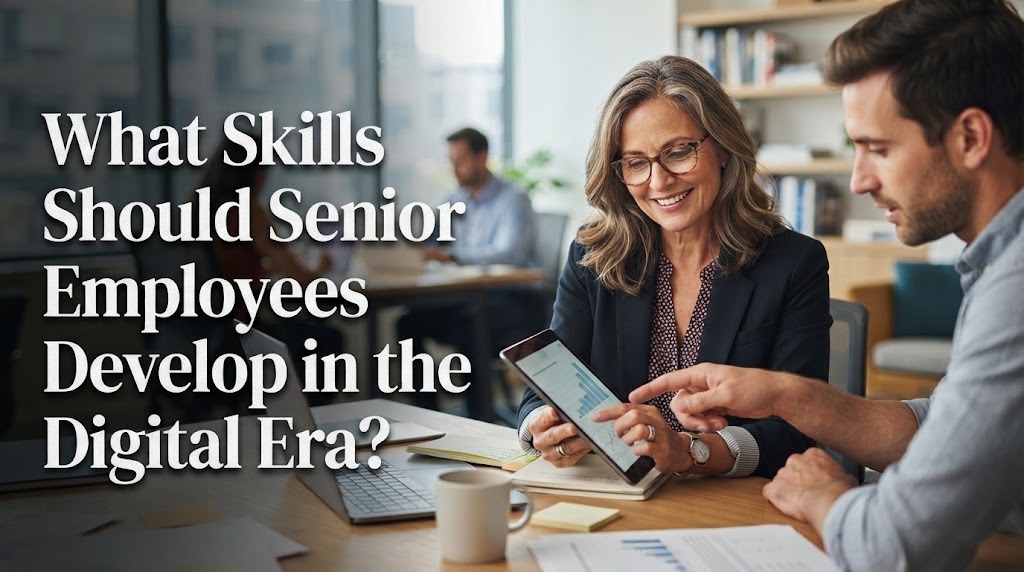
The digital era has changed how companies communicate, manage information, serve customers, and complete daily tasks. For senior employees, these changes can create new learning opportunities as well as challenges. Years of professional experience remain valuable, but employees also need current skills to work effectively with modern tools and systems. Developing digital workplace skills can help senior employees remain productive, confident, and relevant in a changing professional environment.
DEVELOP DIGITAL LITERACY
Digital literacy is one of the most important skills senior employees should develop in the digital era. It includes understanding common digital tools, online platforms, communication applications, cloud systems, and basic digital processes. Employees do not necessarily need to become technology experts, but they should be comfortable using the tools required for their jobs. This can make daily work more efficient and reduce dependence on others for basic digital tasks.
Senior employees can improve digital literacy through workplace training, online courses, tutorials, and regular practice. It is often easier to begin with tools that are directly related to their responsibilities. Consistent practice can gradually make unfamiliar technology feel more natural. When digital literacy is combined with professional experience, senior employees can contribute effectively to modern workplace operations.
IMPROVE DATA AND INFORMATION SKILLS
Modern companies generate large amounts of information through customers, employees, operations, sales, and digital platforms. Senior employees can benefit from developing basic data literacy so they can understand and evaluate important information. This does not always require advanced programming or statistics. It may involve reading reports, understanding charts, identifying patterns, and using information to support workplace decisions.
Senior employees should also learn how to distinguish reliable information from inaccurate or misleading content. Critical thinking is especially important when employees receive information from multiple digital sources. By developing stronger information skills, senior workers can combine their professional judgment with current data. This can support more informed and practical decisions.
LEARN TO USE ARTIFICIAL INTELLIGENCE TOOLS
Artificial intelligence is becoming increasingly common in many professional environments. Senior employees can benefit from understanding how AI tools can support tasks such as research, writing, data analysis, customer service, and administrative work. They do not need to become AI specialists to benefit from the technology. Learning the basic capabilities and limitations of AI can help them use these tools more responsibly.
Senior employees should also understand that AI-generated information may require verification. Human judgment remains important when evaluating results, especially for sensitive or important workplace decisions. Employees can begin by using AI for appropriate tasks and learning how to review its output. Combining AI tools with professional experience can improve productivity while maintaining quality.
STRENGTHEN DIGITAL COMMUNICATION
Communication has changed significantly because of email, video meetings, instant messaging, project management platforms, and other digital tools. Senior employees should develop strong digital communication skills to work effectively with colleagues, customers, and managers. This includes writing clear messages, choosing the appropriate communication channel, and responding professionally online.
Digital communication also requires awareness of tone and context. A short message that seems efficient to one person may appear unclear or too direct to another. Senior employees can improve their communication by being concise, respectful, and clear about expectations. Effective digital communication can strengthen teamwork, especially in remote and hybrid workplaces.
DEVELOP CYBERSECURITY AWARENESS
As workplaces become more digital, employees also need basic knowledge of cybersecurity. Senior employees may handle confidential company information, customer data, financial documents, or internal communications. Understanding common risks such as phishing messages, suspicious links, weak passwords, and unauthorized access can help protect both employees and organizations.
Cybersecurity awareness should become part of everyday work rather than a one-time training activity. Senior employees can follow company security policies and remain cautious when receiving unexpected digital requests. Safe digital habits can reduce avoidable security risks. Companies should also provide regular training so employees understand current threats and appropriate security practices.
STRENGTHEN ADAPTABILITY AND CONTINUOUS LEARNING
Technology will continue to change, so senior employees need more than technical skills. They also need adaptability and a willingness to learn throughout their careers. A tool that is important today may be replaced by another system in the future. Employees who are comfortable learning new methods can respond more effectively to these changes.
Continuous learning can include professional courses, workshops, webinars, mentoring, and self-directed study. Senior employees can also learn from younger colleagues who may have experience with newer technologies. Intergenerational learning creates opportunities for employees to exchange knowledge in both directions. This can make digital adaptation more collaborative and less intimidating.
IMPROVE PROBLEM SOLVING AND COLLABORATION
Digital transformation does not eliminate the importance of human skills. Senior employees should continue developing problem-solving, teamwork, decision-making, and leadership skills alongside their technical abilities. Technology can provide information and automate certain tasks, but employees still need to understand business needs and make appropriate decisions.
Collaboration is also increasingly important because teams may work across different locations and departments. Senior employees can contribute their professional experience while remaining open to new perspectives from younger colleagues. Combining experience with digital skills can help teams respond to workplace challenges more effectively. This balance allows senior employees to remain valuable contributors in the digital era.
CONCLUSION
Senior employees should develop digital literacy, data skills, AI awareness, digital communication, cybersecurity awareness, adaptability, and collaboration skills to remain effective in the digital era. These abilities can help them use modern technology while continuing to benefit from their professional experience. Learning new skills does not mean abandoning traditional expertise, but rather combining it with current workplace requirements.
The most important approach is continuous learning. Senior employees can gradually improve their digital abilities through training, practice, collaboration, and practical experience. When professional knowledge is combined with modern digital skills, senior employees can continue contributing confidently and effectively to the changing workplace.
Tentang Penulis
Gusti Ayu Tita P
Penulis — Universitas STEKOM
Penulis aktif yang berfokus pada isu-isu akademik, teknologi pendidikan, dan pengembangan sumber daya manusia di lingkungan kampus.