Why Are Hobby Communities Useful for Personal Development?
Gusti Ayu Tita P
29 September 2026
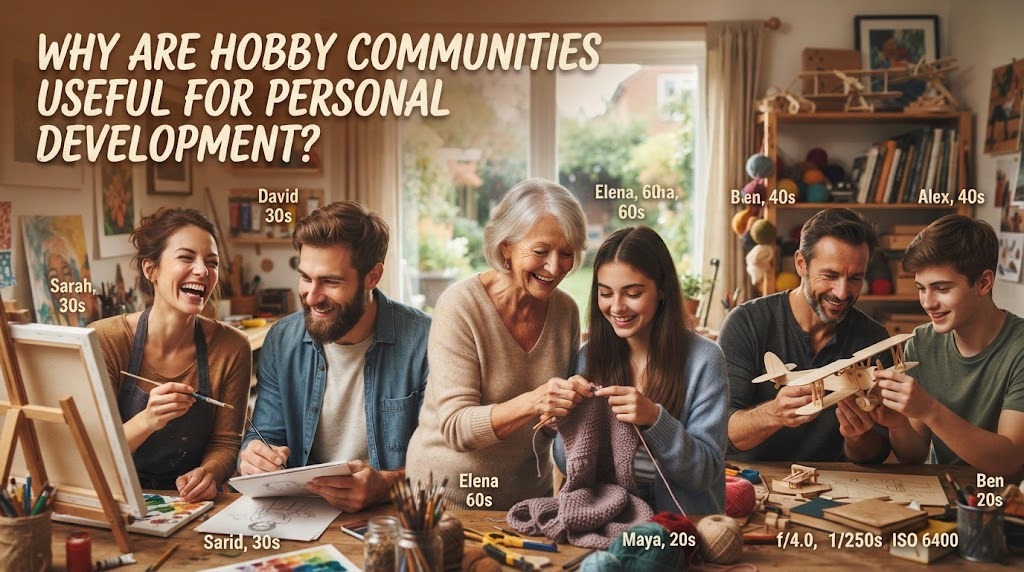
Hobby communities are groups of people who share similar interests, such as photography, sports, reading, music, gaming, cooking, or creative activities. Joining a hobby community is not only a way to have fun but can also support personal development. Through regular interaction, members can learn new skills, build confidence, improve communication, and discover new perspectives. A supportive community can also encourage people to become more active and consistent in pursuing their interests.
DEVELOPING NEW SKILLS
Hobby communities provide opportunities to learn skills through practice and interaction with other members. People can exchange knowledge, share techniques, and give useful feedback based on their experiences. For example, someone who joins a photography community may learn about composition, lighting, and photo editing from more experienced members. This learning process can happen naturally because members are usually interested in the same activity. As a result, hobbies can become a practical environment for continuous learning.
Being part of a community can also encourage members to try activities that they have never attempted before. A beginner may feel more comfortable learning when surrounded by people with similar interests. Mistakes can become part of the learning process rather than something to fear. Over time, regular practice can improve both technical abilities and problem solving skills.
IMPROVING COMMUNICATION SKILLS
Hobby communities encourage people to communicate with others who have different backgrounds and experiences. Members may discuss ideas, ask questions, share opinions, or collaborate on activities. These interactions help individuals practice expressing their thoughts clearly and listening to other people. Regular communication can gradually make social interactions feel more natural and comfortable.
Communication skills are useful not only within the community but also in education, work, and everyday life. Someone who becomes accustomed to participating in discussions may become more confident when speaking in front of others. Community activities can also teach members how to respond respectfully when opinions are different. These experiences help develop healthy communication habits.
BUILDING SELF CONFIDENCE
Participating in a hobby community can help people become more confident in their abilities. Members can receive positive feedback when they share their work, participate in activities, or contribute ideas. Even small achievements can create a sense of progress and encourage people to continue learning. This experience can be especially valuable for beginners who may initially doubt their abilities.
Confidence can also grow when individuals take responsibility within the community. For example, a member may organize an event, lead a discussion, or help a beginner learn a skill. These responsibilities provide opportunities to recognize personal strengths. As confidence develops, individuals may become more willing to take on challenges in other areas of life.
EXPANDING SOCIAL CONNECTIONS
Hobby communities make it easier for people to meet others with similar interests. Shared interests can provide a natural starting point for conversations and friendships. Members can develop relationships through regular meetings, online discussions, group projects, or community events. These connections can reduce feelings of social isolation and create a stronger sense of belonging.
Social connections within a hobby community can also introduce people to different perspectives. Members may have different ages, professions, cultures, and life experiences despite sharing the same hobby. Learning from these differences can help individuals become more open minded. In some cases, community relationships can also lead to valuable professional or educational opportunities.
ENCOURAGING DISCIPLINE AND CONSISTENCY
Personal development often requires consistent effort rather than sudden changes. Hobby communities can encourage members to practice regularly by providing activities, schedules, challenges, or group projects. Having other people who share similar goals can make it easier to stay motivated. Community participation can therefore help individuals develop better habits related to time management and commitment.
Consistency in a hobby can also teach important lessons about patience. Progress may not happen immediately, especially when someone is learning a difficult skill. Members can learn to evaluate their progress and continue improving even when results are not perfect. These habits can be applied to studying, working, exercising, and pursuing other personal goals.
SUPPORTING CREATIVITY AND PERSONAL EXPRESSION
Hobby communities can provide a safe environment for people to explore their creativity. Members can share ideas, experiment with different approaches, and receive feedback from others. Seeing the work of different people can also inspire new ideas and encourage individuals to explore their own style. This process can make hobbies more meaningful and enjoyable.
Creative activities can also help people understand their interests and preferences. Someone may discover a new talent after trying an activity suggested by other community members. The freedom to experiment allows individuals to learn more about themselves without focusing only on results. In this way, hobby communities can become an important space for self expression and creative growth.
CONCLUSION
Hobby communities are useful for personal development because they combine learning, social interaction, creativity, and practical experience. Members can develop new skills, improve communication, build confidence, expand social connections, and practice consistency. The benefits may become stronger when people actively participate and remain open to learning from others. Therefore, joining a hobby community can be a simple but meaningful step toward continuous personal growth.
Tentang Penulis
Gusti Ayu Tita P
Penulis — Universitas STEKOM
Penulis aktif yang berfokus pada isu-isu akademik, teknologi pendidikan, dan pengembangan sumber daya manusia di lingkungan kampus.