
Why Are Industry Partners Important for Vocational Education?
Gusti Ayu Tita P
29 September 2026
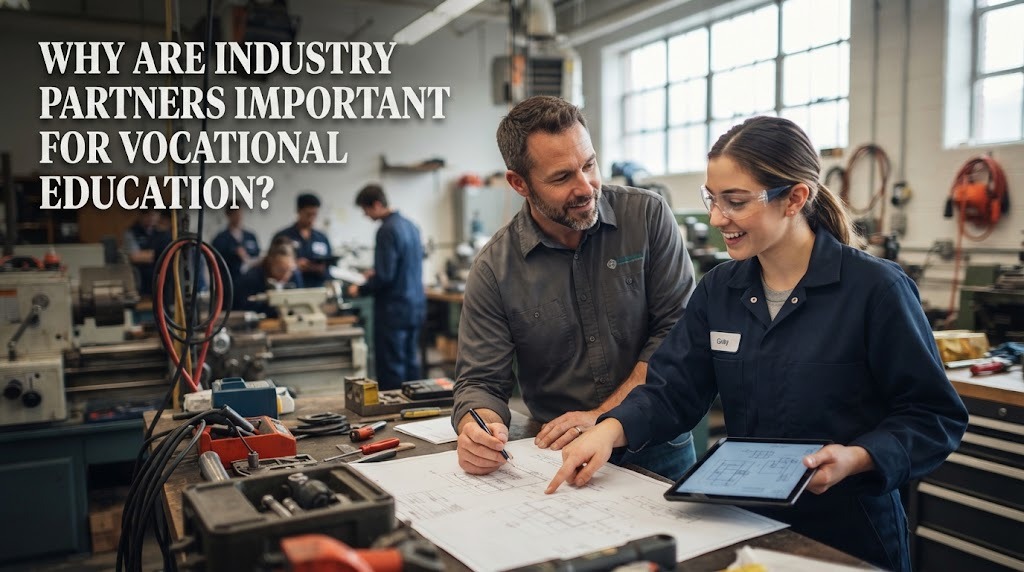
Vocational education is designed to prepare students with practical skills for the workplace. However, classroom learning alone may not always provide enough experience to understand real industry conditions. This is why industry partners play an important role in supporting vocational education. Through cooperation between schools or colleges and companies, students can gain practical knowledge, workplace experience, and a better understanding of professional expectations.
CONNECTING EDUCATION WITH INDUSTRY NEEDS
Industry partners help vocational education providers understand the skills that companies currently need. Industries can share information about new technologies, workplace procedures, professional standards, and changing job requirements. This information can help educational institutions adjust their learning programs to become more relevant. As a result, students can learn skills that have a clearer connection to real employment opportunities.
This cooperation also helps reduce the gap between what students learn and what employers expect. Teachers can use industry input when developing learning activities and practical assignments. Students therefore have opportunities to understand how their knowledge is applied outside the classroom. This connection makes vocational education more closely related to real workplace conditions.
PROVIDING PRACTICAL WORK EXPERIENCE
One of the main benefits of industry partnerships is the opportunity for students to gain practical experience. Companies can provide internships, workplace training, industrial visits, or project-based learning opportunities. During these activities, students can observe professional workflows and practice skills in real working environments. They can also learn how employees communicate, follow procedures, solve problems, and manage responsibilities.
Practical experience can help students become more familiar with workplace expectations before graduation. It can also help them identify the strengths and skills they still need to improve. By experiencing real tasks, students may develop greater confidence in applying their technical knowledge. This experience can become valuable preparation for entering the workforce.
SUPPORTING CURRICULUM DEVELOPMENT
Industry partners can contribute information that helps vocational institutions improve their curriculum. Employers understand the tools, technologies, and processes commonly used in their sectors. Their input can help schools and colleges identify subjects or practical skills that should receive greater attention. Curriculum updates based on relevant industry developments can make vocational education more responsive to changes in the labor market.
However, industry input does not mean that companies completely determine the curriculum. Educational institutions still need to consider academic principles, learning objectives, student development, and applicable educational standards. Collaboration works best when both sides contribute their expertise. This approach allows vocational programs to remain educationally sound while staying connected to industry needs.
DEVELOPING TECHNICAL AND SOFT SKILLS
Vocational students need more than technical abilities to succeed in the workplace. Industry partnerships can help students develop communication, teamwork, problem solving, time management, and professional responsibility. These skills are often practiced naturally when students participate in workplace projects or internships. Students can learn how to communicate with colleagues and respond to real work situations.
Technical skills can also improve when students use equipment, software, or procedures that are commonly found in industry. Exposure to current technology gives students a clearer understanding of professional practices. It can also encourage students to continue learning as technology changes. Combining technical and soft skills can provide stronger preparation for employment.
IMPROVING STUDENT EMPLOYABILITY
Industry partnerships can support student employability by providing opportunities to understand recruitment and workplace expectations. Students may learn how companies evaluate skills, professional behavior, portfolios, and work experience. Some partnerships may also create opportunities for companies to identify potential employees through internships or collaborative projects. However, employment is not guaranteed simply because a student participates in an industry program.
Students still need to demonstrate relevant skills and professional behavior. They should use industry experience as an opportunity to build a stronger portfolio and improve their abilities. Feedback from workplace supervisors can help students recognize areas that need improvement. This preparation can make the transition from vocational education to employment more informed and realistic.
ENCOURAGING TECHNOLOGY AND INNOVATION
Industries often adopt new technologies faster than educational institutions can update their learning resources. Through partnerships, vocational schools and colleges can gain better information about technological developments in their sectors. Companies may also contribute equipment, demonstrations, training, or project opportunities. These activities can expose students to current technologies and professional applications.
Industry collaboration can also encourage innovation among teachers and students. Students may work on practical projects based on real industry problems. Instead of only studying concepts, they can explore how those concepts can be used to create useful solutions. This approach can strengthen creativity while maintaining a clear connection to workplace needs.
STRENGTHENING THE CONNECTION BETWEEN EDUCATION AND EMPLOYMENT
A strong relationship between vocational education and industry creates a continuous connection between learning and employment. Educational institutions can receive feedback from companies, while industries can communicate their changing skill requirements. This two way relationship allows both sides to identify areas where cooperation can be improved. It can also create more opportunities for students to understand different career paths.
Successful partnerships require clear objectives and regular communication. Both institutions and companies need to define responsibilities, training activities, evaluation methods, and expected outcomes. When cooperation is managed properly, industry partnerships can provide long term value for students, educators, and employers.
CONCLUSION
Industry partners are important for vocational education because they help connect classroom learning with real workplace needs. Through internships, practical projects, curriculum input, technology exposure, and professional training, students can gain broader preparation for their future careers. Industry cooperation can also help educational institutions keep their programs relevant as technology and job requirements change. With clear goals and effective communication, strong industry partnerships can support a more practical, responsive, and employment oriented vocational education system.
Tentang Penulis
Gusti Ayu Tita P
Penulis — Universitas STEKOM
Penulis aktif yang berfokus pada isu-isu akademik, teknologi pendidikan, dan pengembangan sumber daya manusia di lingkungan kampus.