
Why Can Bookworms Have Wide Knowledge?
Gusti Ayu Tita P
23 September 2026
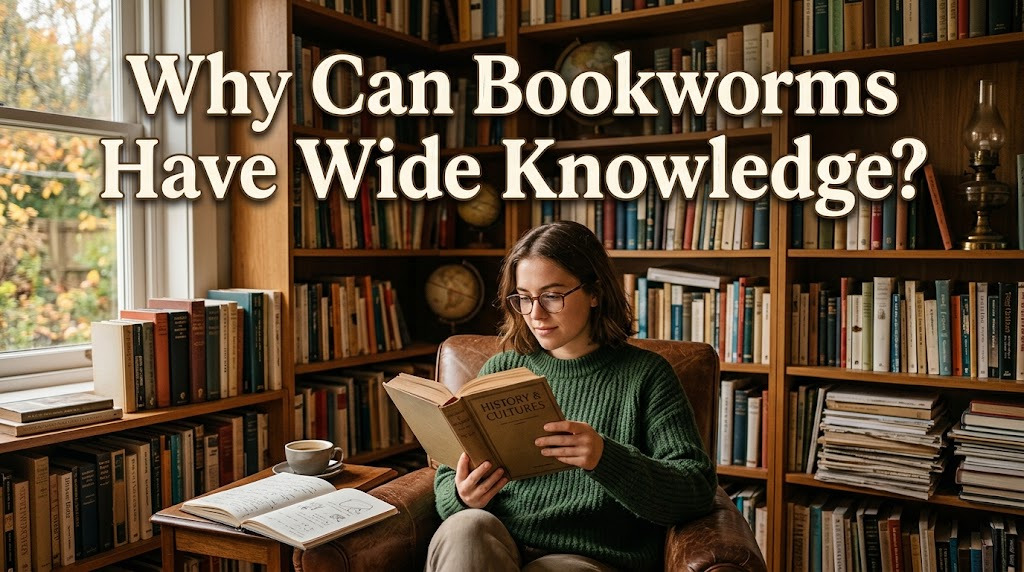
Bookworms are often associated with people who enjoy spending a lot of time reading. Their interest in books gives them opportunities to encounter information from many different subjects, perspectives, and experiences. Through regular reading, a person can gradually collect new ideas and develop a broader understanding of various topics. This is one reason bookworms can have wide knowledge.
However, having broad knowledge does not simply depend on the number of books someone reads. The type of books, consistency of reading, curiosity, and willingness to understand new information also play important roles. A person who reads regularly and explores different subjects may have more opportunities to expand their knowledge through reading.
READING DIFFERENT TYPES OF BOOKS
One reason bookworms have wide knowledge is that they may read books from different genres and fields. A reader might enjoy novels while also reading history, science, psychology, technology, or biographies. Each type of book can introduce different information and ways of thinking. Exploring various subjects allows readers to encounter knowledge beyond their everyday experiences.
Reading different types of books can also help readers connect information between subjects. For example, a historical book may provide context for understanding a novel, while a science book may explain concepts mentioned in another type of reading. These connections can make the learning process more interesting. Over time, diverse reading materials can contribute to a broader knowledge base.
DISCOVERING NEW INFORMATION AND PERSPECTIVES
Books provide opportunities for readers to discover information that they may not encounter in their daily activities. Through reading, someone can learn about different cultures, places, historical events, professions, and ideas. This exposure can help develop general knowledge and encourage curiosity about unfamiliar subjects.
Reading can also introduce perspectives that differ from a person's usual point of view. Fiction can present experiences through characters, while nonfiction can explain events or concepts from particular perspectives. Understanding different viewpoints does not mean accepting every idea as true, but it can encourage readers to think more carefully about information. This process can support the development of a more open and informed way of thinking.
BUILDING KNOWLEDGE THROUGH CONSISTENT READING
Regular reading gives bookworms repeated opportunities to learn new information. A single book may provide useful knowledge, but reading several books over time allows information to accumulate. Readers can remember important ideas, connect them with previous knowledge, and use them to understand new topics. This gradual process contributes to knowledge development.
Consistency also helps make learning a natural part of daily life. A person does not need to finish a book quickly to gain something from reading it. Even a few pages each day can introduce new information and encourage further curiosity. When this habit continues for a long period, consistent reading can become a valuable way to support lifelong learning.
FOLLOWING CURIOSITY INTO NEW TOPICS
Curiosity can encourage bookworms to explore subjects they previously knew little about. After discovering an interesting idea in one book, a reader may look for another book that explains the topic in greater detail. One question can therefore lead to another area of learning. This creates a continuous process of exploring new topics.
Bookworms may also use their curiosity to move beyond their usual reading preferences. Someone who normally reads fiction, for example, may become interested in history after encountering a historical theme in a novel. This willingness to explore can gradually expand both interests and knowledge. As a result, reading curiosity can play an important role in developing a broad understanding of the world.
CONCLUSION
Bookworms can have wide knowledge because regular reading gives them many opportunities to encounter information, ideas, and perspectives. Reading different subjects, discovering new viewpoints, and maintaining consistent reading habits can gradually expand what a person knows. Curiosity can also encourage readers to explore topics outside their usual interests.
The value of reading is not only measured by how many books someone finishes. What matters is the information gained, the connections made between ideas, and the willingness to continue learning. Through reading habits that are consistent and varied, anyone can gradually develop broader knowledge and a stronger interest in learning.
Tentang Penulis
Gusti Ayu Tita P
Penulis — Universitas STEKOM
Penulis aktif yang berfokus pada isu-isu akademik, teknologi pendidikan, dan pengembangan sumber daya manusia di lingkungan kampus.



