Why Can Workaholism Affect Social Relationships?
Gusti Ayu Tita P
24 September 2026
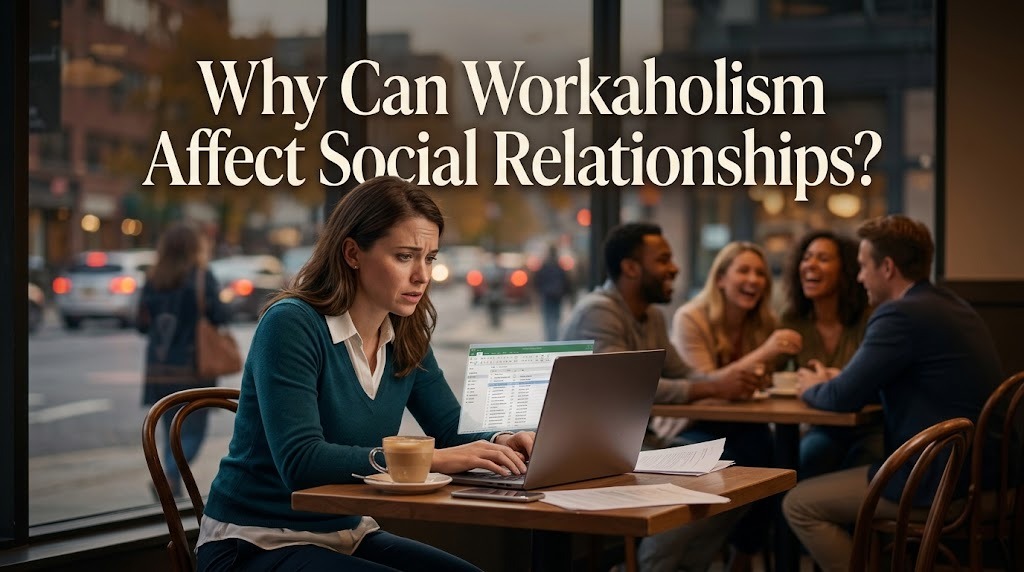
Workaholism can affect more than a person's professional life. When someone spends excessive amounts of time and energy on work, there may be less time available for family, friends, and other social activities. Over time, this imbalance can make personal relationships more difficult to maintain. The effects may not always appear immediately, but repeated neglect of social connections can create problems. Understanding how workaholism affects relationships can help people recognize the importance of maintaining a healthy balance.
REDUCED TIME WITH FAMILY AND FRIENDS
One of the clearest effects of workaholism is having less time for people outside work. A person may regularly work late, respond to messages during personal hours, or continue completing tasks during weekends. This can reduce opportunities to have conversations, share activities, or spend meaningful time together. Limited personal time can gradually weaken social connections.
Family members and friends may also become accustomed to receiving less attention from the person. Important events or planned activities may be canceled because of work responsibilities. While occasional changes are understandable, repeated cancellations can create frustration or disappointment. Making time for important relationships is therefore an essential part of a balanced lifestyle.
DIFFICULTY BEING PRESENT
Workaholism can affect relationships even when a person is physically present. Someone may sit with family or friends but continue checking emails, thinking about deadlines, or discussing workplace problems. As a result, the person may not be fully engaged in the conversation or activity. Being physically present is not always the same as being emotionally present.
This behavior can make others feel that work is receiving more attention than they are. Frequent phone checking or responding to work messages during social activities can interrupt meaningful interactions. Creating periods without work-related devices or notifications can help people focus on the people around them. Full attention can make ordinary social moments more meaningful.
COMMUNICATION CAN BECOME LIMITED
Excessive work can also reduce opportunities for regular communication. A busy person may have little energy to talk about personal experiences or listen to other people's concerns. Conversations may become shorter because the person is tired or focused on the next task. Reduced communication can make relationships feel less connected over time.
Good relationships require consistent communication, even when schedules are busy. People do not always need to spend many hours together to maintain a strong connection. Simple conversations, regular check-ins, and shared activities can help maintain closeness. Setting aside dedicated personal time can make communication easier and more consistent.
WORK STRESS CAN AFFECT INTERACTIONS
Workaholism can sometimes cause stress and exhaustion that influence how a person interacts with others. Someone who is constantly tired may become more impatient, distracted, or less interested in social activities. This does not mean that every stressed person will behave negatively, but ongoing exhaustion can make communication more challenging. Work-related stress can therefore affect personal interactions.
When a person brings work pressure into their personal life, social time may no longer feel relaxing. They may continue talking about problems at work or thinking about unfinished responsibilities. Taking time to mentally disconnect from work can help create a healthier transition into personal activities. Relaxation and social support can also provide valuable opportunities for recovery.
WHY SOCIAL CONNECTIONS MATTER
Healthy social relationships can provide companionship, emotional support, and opportunities to enjoy activities outside work. Family and friends can also offer different perspectives when someone is experiencing pressure or difficult situations. Maintaining these connections can help prevent life from becoming completely centered around professional responsibilities. Social connection is an important part of overall well-being.
A balanced routine does not require completely separating work from personal life. Instead, it means giving appropriate attention to both areas. Scheduling time for family, friends, hobbies, and other meaningful activities can help protect important relationships. Even small but consistent efforts can make a significant difference in maintaining social connections.
CONCLUSION
Workaholism can affect social relationships by reducing personal time, limiting communication, making it difficult to be fully present, and allowing work stress to influence personal interactions. These effects can gradually create distance between a person and the people who matter to them. Working hard is not automatically harmful, but relationships can suffer when work consistently receives more attention than personal life. Setting boundaries around working hours and digital communication can help create more time for meaningful interactions. A balanced life allows professional responsibilities and social relationships to receive appropriate attention.
Tentang Penulis
Gusti Ayu Tita P
Penulis — Universitas STEKOM
Penulis aktif yang berfokus pada isu-isu akademik, teknologi pendidikan, dan pengembangan sumber daya manusia di lingkungan kampus.