Why Decentralization Is Important for Increasing Public Participation?
Gusti Ayu Tita P
4 Oktober 2026
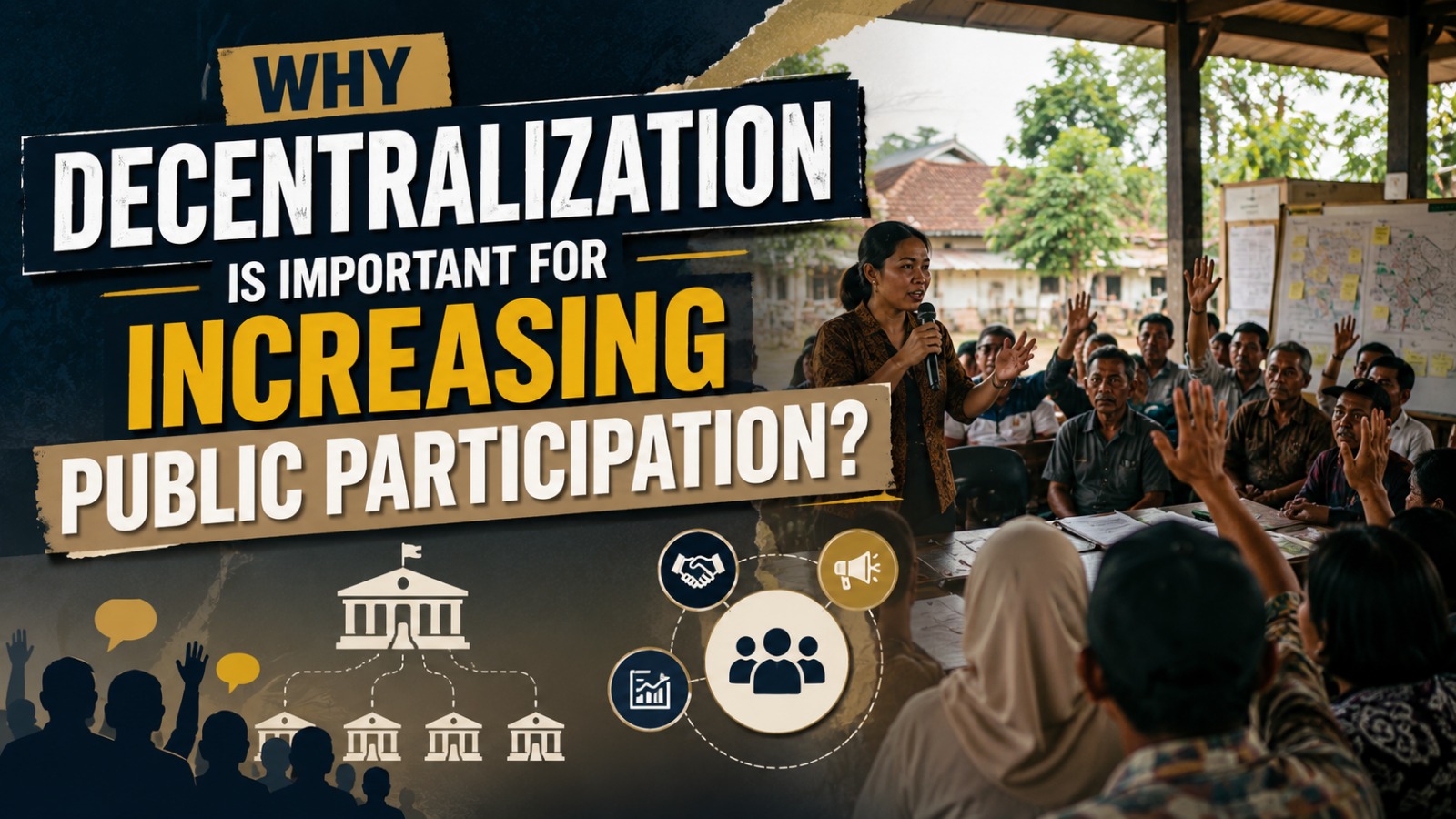
Decentralization is an important approach to public administration that gives local governments greater authority to manage regional affairs. By moving certain decision-making powers closer to communities, decentralization can create more opportunities for citizens to express their needs and influence public policies. This system is especially important because people are more likely to participate when government decisions directly affect their daily lives. Therefore, decentralization can become an important foundation for strengthening public participation and improving the quality of governance.
BRINGING GOVERNMENT CLOSER TO THE COMMUNITY
One of the main reasons decentralization is important for increasing public participation is that it brings government closer to citizens. Local governments generally understand the social, economic, and cultural conditions of their communities better than distant central authorities. This closer relationship makes it easier for citizens to communicate their concerns, ideas, and expectations. As a result, people can have more opportunities to contribute to discussions about policies and regional development.
When decision-making takes place closer to the community, citizens may also feel that their opinions have a greater impact. Local officials can respond more directly to issues raised by residents and adjust programs according to local priorities. This interaction can strengthen the relationship between government institutions and society. Over time, closer communication can encourage more people to become actively involved in public affairs.
CREATING MORE OPPORTUNITIES FOR PUBLIC PARTICIPATION
Decentralization can create wider opportunities for citizens to participate in government processes. Local governments can organize public consultations, community meetings, development planning forums, and other activities that allow residents to express their opinions. These activities give citizens a formal space to discuss problems and propose solutions based on their experiences.
Public participation is more meaningful when citizens are involved before important decisions are finalized. Local governments can use community feedback to identify priorities and improve public programs. When people see that their input is considered, they may become more motivated to participate in future decision-making processes. This can create a stronger culture of participation at the local level.
IMPROVING TRANSPARENCY AND ACCOUNTABILITY
Decentralization can also encourage greater transparency and accountability in local government. Because local officials operate closer to the communities they serve, their actions and performance can be more easily observed by citizens. People can monitor public programs, question government decisions, and provide feedback about the quality of services they receive.
Greater public oversight can encourage officials to manage public resources responsibly. Local governments that openly share information about budgets, policies, and development programs can build stronger public trust. At the same time, citizens need access to accurate and understandable information to participate effectively. Therefore, transparency and access to information are essential for making decentralization a meaningful tool for public participation.
ENCOURAGING COMMUNITY INVOLVEMENT IN DEVELOPMENT
Regional development becomes more effective when communities are involved in identifying their own needs. Decentralization allows local governments to consider the unique conditions of different regions when planning development programs. Citizens can contribute local knowledge that may not be fully understood by central authorities. This can help governments create policies that are more relevant and responsive.
Community involvement can also increase a sense of ownership toward development programs. When people participate in planning and implementation, they may be more willing to support and protect the results. For example, communities can contribute ideas about infrastructure, education, healthcare, environmental management, and social programs. This collaborative approach can make development more sustainable and better aligned with local priorities.
STRENGTHENING LOCAL DEMOCRACY
Decentralization plays an important role in strengthening local democracy. It provides citizens with more opportunities to interact with elected representatives and local government institutions. Through elections, public discussions, community organizations, and civic activities, people can become more familiar with democratic processes.
Active participation at the local level can also help citizens develop greater awareness of their rights and responsibilities. People learn how government decisions are made and how they can contribute to public policy. This experience can strengthen democratic values and encourage responsible citizenship. In the long term, strong local participation can contribute to a healthier democratic system at the national level.
USING DIGITAL TECHNOLOGY TO EXPAND PARTICIPATION
The development of digital technology has created new opportunities for decentralized governments to engage with citizens. Local governments can use websites, social media, online surveys, and digital consultation platforms to collect public feedback. These tools can make participation more accessible, especially for people who cannot attend traditional face-to-face meetings.
However, digital participation must be supported by equal access to technology and reliable internet connectivity. Governments should also ensure that online feedback is properly managed and considered in decision-making. Digital platforms should complement, rather than completely replace, traditional forms of community engagement. By combining digital and offline approaches, local governments can reach a broader range of citizens.
CHALLENGES IN INCREASING PUBLIC PARTICIPATION
Although decentralization provides opportunities for greater participation, it does not automatically guarantee that all citizens will become involved. Some communities may face barriers such as limited access to information, low digital literacy, lack of confidence, or limited time. There is also a risk that participation may be dominated by certain groups while vulnerable or marginalized communities remain underrepresented.
To address these challenges, local governments need to create inclusive participation mechanisms. They should provide clear information, encourage diverse groups to participate, and ensure that public input is genuinely considered. Officials must also demonstrate how community feedback influences policies and programs. When citizens see real results from their participation, public engagement is more likely to grow.
CONCLUSION
Decentralization is important for increasing public participation because it moves decision-making closer to the people affected by government policies. It can create more opportunities for citizens to express their needs, monitor government performance, and contribute to regional development. Through transparency, accountability, local democracy, and community involvement, decentralization can strengthen the relationship between governments and citizens.
However, successful decentralization requires more than simply transferring authority from the central government to local governments. It must be supported by inclusive policies, accessible information, capable institutions, and meaningful participation mechanisms. When local governments actively listen to their communities and respond to public input, decentralization can become a powerful tool for creating responsive governance and stronger public participation.
Tentang Penulis
Gusti Ayu Tita P
Penulis — Universitas STEKOM
Penulis aktif yang berfokus pada isu-isu akademik, teknologi pendidikan, dan pengembangan sumber daya manusia di lingkungan kampus.