Why Do Recommended Employees Need to Prove Their Abilities at Work?
Gusti Ayu Tita P
25 September 2026
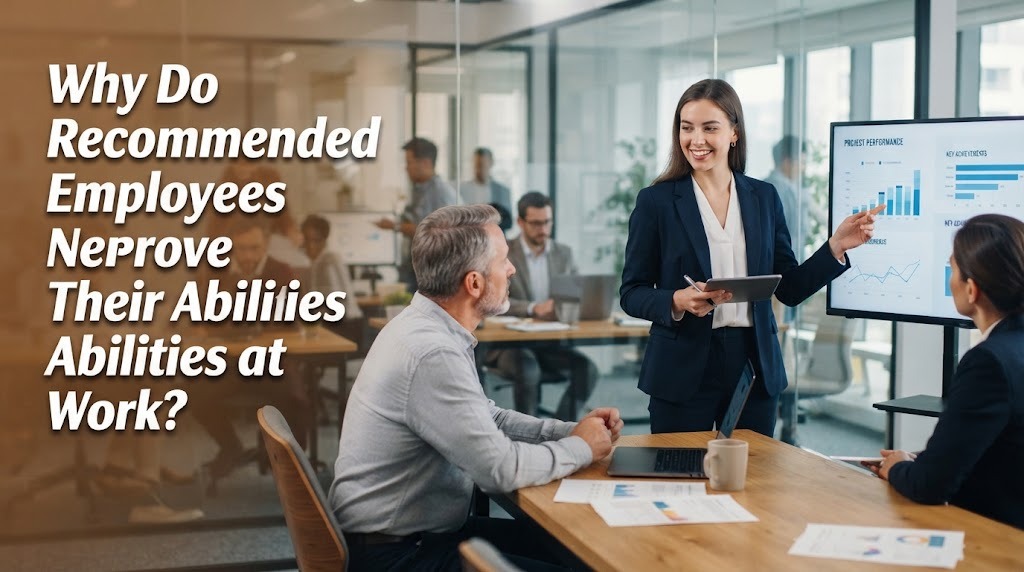
Recommended employees may receive an opportunity because someone trusts their background, skills, or potential. However, a recommendation does not automatically prove that an employee can perform every responsibility successfully. Once they enter the workplace, their daily performance becomes an important way to demonstrate their actual abilities. Proving their capabilities can help them build trust, maintain credibility, and develop a stronger professional reputation.
RECOMMENDATION DOES NOT REPLACE COMPETENCE
A recommendation can help an employee gain access to a job opportunity, but competence is still necessary to perform the role effectively. Every position has specific responsibilities that require appropriate knowledge, skills, and professional judgment. If an employee cannot meet those requirements, the recommendation alone cannot ensure good results.
For this reason, recommended employees should focus on demonstrating what they can actually contribute. Completing tasks accurately, meeting reasonable deadlines, and handling responsibilities professionally can show that their abilities match the expectations of the position.
BUILDING TRUST WITH MANAGERS AND COWORKERS
Trust is usually developed through repeated actions and consistent performance. Managers and coworkers need to see that an employee can be relied upon when completing important responsibilities. Recommended employees can build this trust by keeping commitments, communicating clearly, and responding responsibly to problems.
Trust can become especially important when employees receive larger responsibilities. When their previous work demonstrates reliability, others may have greater confidence in their ability to handle new assignments. This creates a professional reputation based on actual workplace behavior.
ESTABLISHING AN INDEPENDENT PROFESSIONAL REPUTATION
Recommended employees may initially be associated with the person who recommended them. Over time, however, they need to establish their own professional identity. Their skills, work ethic, attitude, and achievements can determine how they are viewed within the organization.
Building an independent reputation is beneficial because it shows that an employee's value is not based solely on external support. Their colleagues and managers can recognize them for their own contributions and professional qualities.
REDUCING DOUBTS ABOUT THEIR CAPABILITIES
Employees who receive recommendations may sometimes face questions about whether their position was based primarily on personal connections or genuine qualifications. Such assumptions can vary between workplaces and individuals, but consistent performance provides concrete evidence of an employee's abilities.
Instead of focusing excessively on these perceptions, employees can concentrate on producing quality work. Demonstrating competence through measurable results, responsible behavior, and professional cooperation can help shift attention toward their actual contributions.
SHOWING RESPONSIBILITY FOR WORK RESULTS
Proving abilities also means being willing to take responsibility for the results of one's work. Employees should acknowledge mistakes, communicate problems, and make reasonable efforts to correct them. Avoiding responsibility can make it harder for others to trust their professional judgment.
Responsible employees also evaluate their own performance. They can identify areas that need improvement and use feedback to develop better working methods. This demonstrates that they take their professional development seriously.
SUPPORTING CAREER DEVELOPMENT
Strong performance can create a foundation for future professional development. Employees who demonstrate relevant skills and consistent results may become better prepared for additional responsibilities, projects, or career opportunities within their field.
However, career development is not based only on performing well once. Employees should continue learning and adapting as workplace requirements change. Building new skills and maintaining professional standards can help them remain capable of handling evolving responsibilities.
DEMONSTRATING PROFESSIONAL INTEGRITY
Ability should be accompanied by integrity and ethical behavior. Employees should be honest about their work, give proper credit to others, protect confidential information, and follow applicable workplace policies. These behaviors help ensure that professional achievements are earned responsibly.
Integrity also matters when employees encounter difficult situations. Choosing responsible actions instead of taking shortcuts can protect their credibility over the long term. A strong reputation is more sustainable when it is supported by both competence and ethical conduct.
CREATING A POSITIVE WORKPLACE CONTRIBUTION
Employees are part of a broader organization, so their abilities should contribute to team and organizational goals. Recommended employees can demonstrate their value by cooperating with coworkers, sharing useful knowledge, and helping projects progress effectively.
This does not mean that employees must constantly prove themselves or compete with colleagues. The goal is to contribute meaningfully while maintaining professional relationships. A balanced approach allows employees to demonstrate their abilities without creating unnecessary workplace tension.
CONCLUSION
Recommended employees need to prove their abilities because a recommendation provides an opportunity, while actual performance demonstrates professional competence. Consistent results, responsibility, teamwork, integrity, and continuous learning can help establish trust with managers and coworkers. By developing an independent professional reputation, employees can show that their value comes from their own capabilities and contributions. Ultimately, genuine performance provides a stronger foundation for long-term professional growth.
Tentang Penulis
Gusti Ayu Tita P
Penulis — Universitas STEKOM
Penulis aktif yang berfokus pada isu-isu akademik, teknologi pendidikan, dan pengembangan sumber daya manusia di lingkungan kampus.