Why Do Trust Issues Make Someone Easily Suspicious?
Gusti Ayu Tita P
26 September 2026
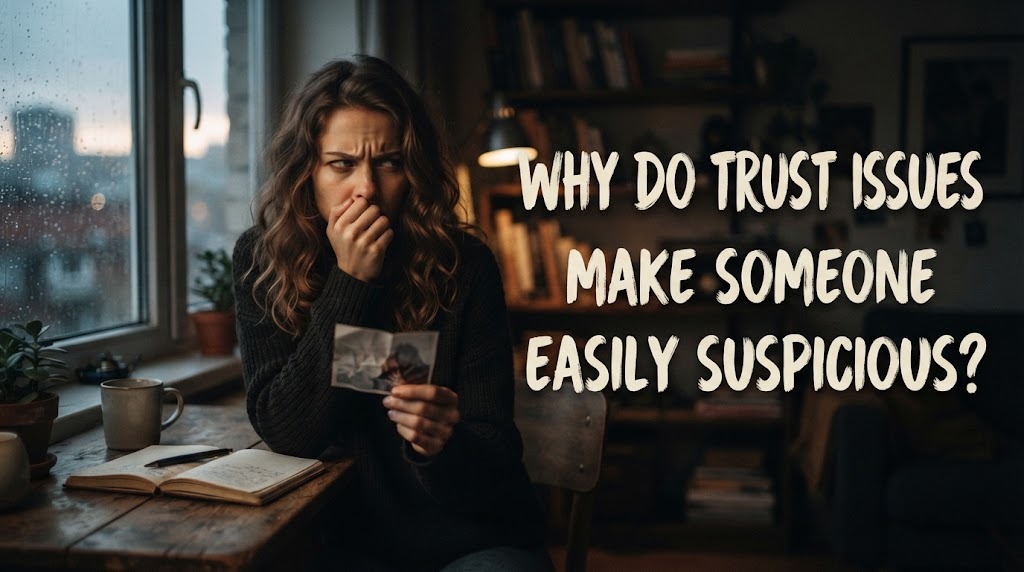
Trust is an important foundation for healthy relationships. When someone has trust issues, they may find it difficult to believe that other people have honest and positive intentions. As a result, ordinary situations can sometimes create suspicion, even when there is no clear evidence that something is wrong.
Being easily suspicious is often connected to past experiences, fear of betrayal, insecurity, and negative assumptions. Understanding why trust issues can create suspicion may help someone recognize their emotional patterns and respond to situations more calmly.
PAST BETRAYAL CREATES FEAR
Past betrayal can make someone more cautious about trusting others. Experiences such as being lied to, cheated on, manipulated, or repeatedly disappointed may create a fear that the same thing will happen again. Because of this, a person may become highly alert to possible signs of dishonesty.
When a current situation resembles something painful from the past, the person may react with suspicion before considering other explanations. Even a small change in someone's behavior can feel significant. Past betrayal can therefore influence how a person interprets new relationships and interactions.
THE MIND TRIES TO PREVENT FUTURE HURT
Suspicion can sometimes function as a form of emotional protection. Someone who has been hurt may believe that expecting problems will help them avoid being surprised or disappointed again. They may constantly look for warning signs in other people's behavior.
This protective response can become excessive when the person begins seeing danger where there is little evidence of it. Instead of waiting for reliable information, they may assume that something negative is happening. In this way, fear of being hurt again can strengthen suspicious thinking.
INSECURITY CAN INCREASE SUSPICION
Insecurity can also make trust more difficult. Someone who frequently doubts their own value may worry that other people will leave them, replace them, or lose interest in them. These fears can make ordinary interactions feel threatening.
For example, a person may become suspicious when their partner spends time with someone else or responds slowly to a message. The behavior itself may have a harmless explanation, but insecurity can influence how it is interpreted. Building self confidence can help reduce this type of unnecessary suspicion.
OVERTHINKING CREATES NEGATIVE INTERPRETATIONS
People with trust issues may spend a great deal of time analyzing small details. A short message, unusual tone, or delayed response can lead to multiple negative possibilities. The more someone thinks about the situation, the more convincing those possibilities may feel.
This can make it difficult to distinguish facts from assumptions. Instead of asking what is actually known, a person may focus on what could possibly be happening. Learning to pause and evaluate evidence can help reduce overthinking and create more balanced interpretations.
PREVIOUS EXPERIENCES INFLUENCE PRESENT REACTIONS
A person's previous experiences can influence how they respond to new situations. Someone who was repeatedly lied to may become uncomfortable when another person is less communicative, even if there is no actual dishonesty. The present situation can activate memories and emotions connected to the past.
This does not mean every suspicious feeling is irrational. There can be genuine reasons to question someone's behavior in certain circumstances. However, recognizing the difference between current evidence and past emotional triggers can help a person respond more appropriately.
LACK OF COMMUNICATION CAN STRENGTHEN DOUBTS
Poor communication can make trust issues worse. When people do not clearly explain their intentions, plans, or feelings, someone who already struggles with trust may fill the information gap with negative assumptions. Unclear situations can therefore increase suspicion.
Open communication can provide more accurate information and reduce unnecessary misunderstandings. Asking a respectful question is often more useful than immediately assuming the worst. Healthy communication can gradually create greater emotional security between people.
SUSPICION CAN BECOME A REPEATED PATTERN
If suspicion happens repeatedly, it can become a habitual response. A person may automatically question others whenever something feels slightly unusual. Over time, this pattern can affect relationships, friendships, and emotional well-being.
Constant suspicion can also create tension with people who feel they are not trusted. This may lead to arguments, emotional distance, or reduced communication, which can then create even more uncertainty. Recognizing this cycle is an important step toward developing healthier trust patterns.
CONCLUSION
Trust issues can make someone easily suspicious because past betrayal, fear of being hurt, insecurity, overthinking, and negative assumptions can influence how they interpret other people's behavior. A person may become highly alert to possible problems because they are trying to protect themselves from experiencing emotional pain again.
However, suspicion does not always reflect what is actually happening. By separating facts from assumptions, improving communication, developing self confidence, and recognizing past emotional triggers, someone can gradually respond to uncertain situations in a calmer and more balanced way.
Tentang Penulis
Gusti Ayu Tita P
Penulis — Universitas STEKOM
Penulis aktif yang berfokus pada isu-isu akademik, teknologi pendidikan, dan pengembangan sumber daya manusia di lingkungan kampus.