Why Does Being a Workaholic Not Always Mean Being Productive?
Gusti Ayu Tita P
24 September 2026
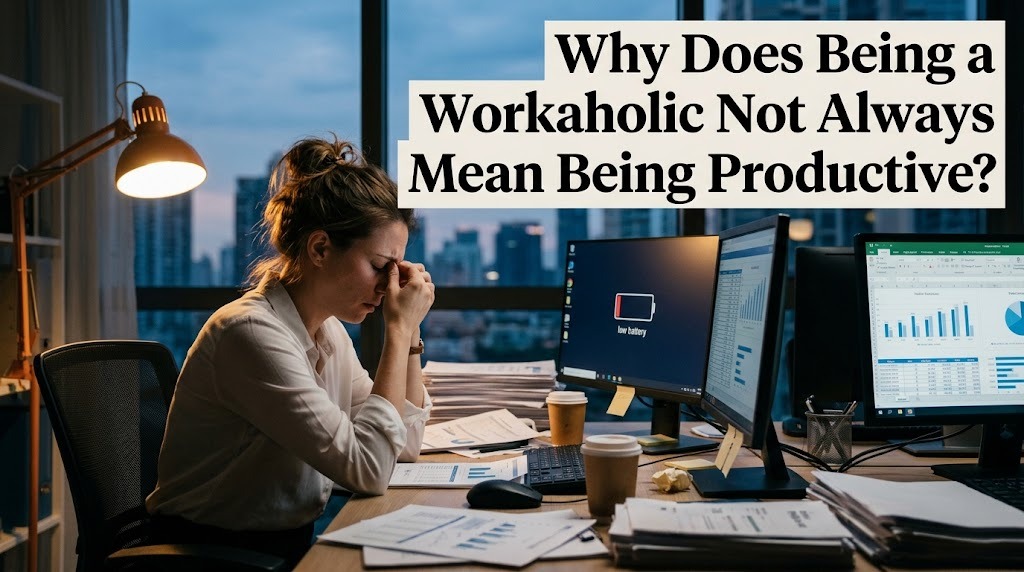
Being busy at work does not always mean being productive. Some people spend long hours completing tasks, checking messages, or thinking about work, but the results may not always match the amount of time they spend. This habit can be related to workaholism, a pattern in which a person feels a strong and difficult-to-control need to keep working. Understanding the difference between working hard and working excessively can help people develop healthier and more effective work habits.
UNDERSTANDING WORKAHOLISM AND PRODUCTIVITY
Workaholism refers to a strong tendency to work excessively and feel a persistent need to keep working. A workaholic may continue working even when important tasks have already been completed or when rest is necessary. Unlike healthy dedication, workaholism can make it difficult for someone to mentally disconnect from work. As a result, spending more hours working does not automatically produce better results.
Productivity is more closely related to achieving meaningful results efficiently. A productive person focuses on priorities, manages time well, and uses energy appropriately to complete important tasks. Productivity is therefore not simply measured by the number of hours spent working. Quality, focus, efficiency, and results are also important factors.
LONG WORKING HOURS DO NOT GUARANTEE BETTER RESULTS
Working for many hours can sometimes create the impression that someone is highly productive. However, excessive working can lead to fatigue, reduced concentration, and slower decision making. When the body and mind become tired, even simple tasks may require more time and effort. This means that additional working hours can eventually provide less useful output.
Long working hours can also encourage people to spend time on tasks that are less important. Without clear priorities, a person may constantly switch between activities, answer unnecessary messages, or repeatedly check completed work. These behaviors can make a working day feel extremely busy without producing significant progress. Being busy and being productive are not always the same thing.
HOW WORKAHOLISM CAN REDUCE FOCUS AND EFFICIENCY
Workaholism can make it difficult for people to recognize when their energy is running low. When someone continues working despite exhaustion, attention and concentration can decline. Mistakes may become more common, and tasks that should be completed quickly can take much longer. The person may then need additional time to correct those mistakes.
Another problem is that workaholics may have difficulty setting boundaries. They might continue checking work notifications during breaks or think about unfinished tasks outside working hours. This prevents the mind from getting enough recovery time. Regular breaks and sufficient rest can support concentration and help people return to work with better focus.
PRODUCTIVE WORK REQUIRES SMART TIME MANAGEMENT
Healthy productivity depends on using working time effectively rather than simply increasing the number of working hours. One useful approach is to identify important priorities before starting work. Tasks can be organized according to urgency and importance so that energy is directed toward activities that have the greatest impact. Clear goals can also make it easier to measure actual progress.
Time management should also include planned breaks and a reasonable stopping point. Turning off unnecessary notifications, limiting distractions, and focusing on one task at a time can improve efficiency. When people manage their time properly, they can complete important responsibilities without constantly extending their working hours. Smart work means making effective use of time, energy, and attention.
THE IMPORTANCE OF REST FOR SUSTAINABLE PRODUCTIVITY
Rest is not the opposite of productivity. Instead, adequate rest helps the body and mind recover after demanding activities. Without sufficient recovery, continued work can contribute to tiredness and difficulty concentrating. Over time, constantly ignoring the need for rest may make work feel increasingly difficult.
A balanced routine allows people to work seriously while still having time for sleep, personal activities, family, and hobbies. This balance can support sustainable productivity, meaning a person can maintain good performance over time without constantly exhausting themselves. Taking a break should therefore not automatically be viewed as laziness. Rest can be an important part of maintaining effective work habits.
CONCLUSION
Being a workaholic does not always mean being productive because long working hours are not a direct measure of meaningful results. Excessive work can contribute to fatigue, reduced concentration, mistakes, and poor work boundaries. In contrast, healthy productivity focuses on priorities, efficiency, quality, and appropriate use of time. By combining focused work, effective time management, and sufficient rest, people can achieve their responsibilities without turning constant work into a harmful habit.
Tentang Penulis
Gusti Ayu Tita P
Penulis — Universitas STEKOM
Penulis aktif yang berfokus pada isu-isu akademik, teknologi pendidikan, dan pengembangan sumber daya manusia di lingkungan kampus.