Why Does the Strawberry Generation Face Different Challenges From Previous Generations
Gusti Ayu Tita P
26 September 2026
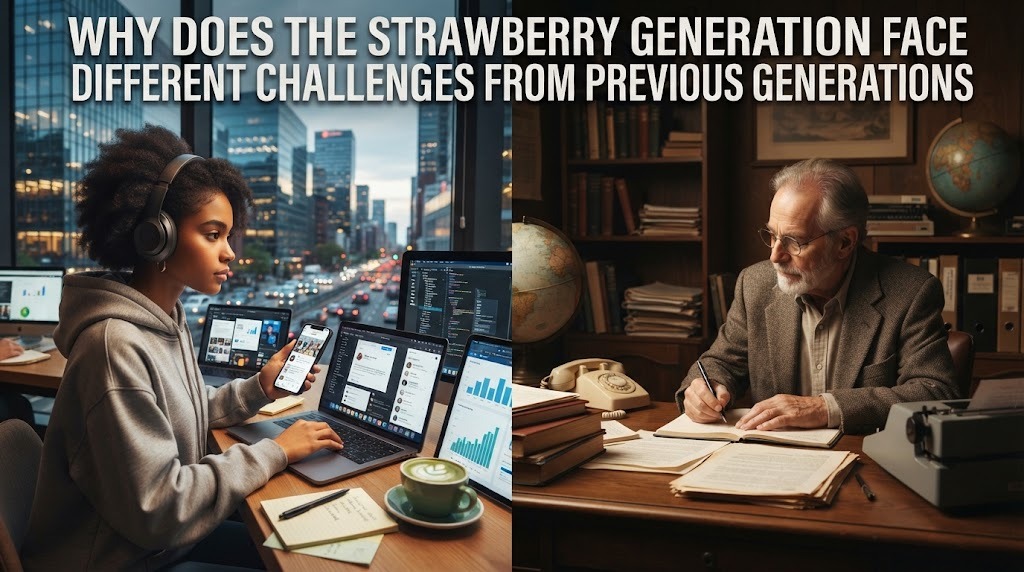
The Strawberry Generation is often discussed in relation to young people who experience modern pressures in different ways from earlier generations. Education, employment, technology, relationships, financial expectations, and social communication have all changed significantly over time. As a result, young people today may encounter challenges that previous generations did not experience in exactly the same form.
This does not necessarily mean that today's young people face greater difficulties than previous generations. Each generation grows up under different social, economic, technological, and cultural conditions. Understanding these differences can explain why the experiences and coping strategies of the Strawberry Generation may look different.
RAPID TECHNOLOGICAL DEVELOPMENT CHANGES DAILY LIFE
Technology is one of the clearest differences between today's young people and many previous generations. Smartphones, social media, digital education, artificial intelligence, and online communication are now integrated into many aspects of daily life. Young people need to continuously adapt to technologies that can change education, communication, and employment.
This constant development can create both opportunities and pressure. Young people can access information and learning resources more easily, but they may also feel the need to keep developing new digital skills. Previous generations experienced technological changes as well, but the speed and scale of today's digital environment create a different set of demands.
SOCIAL MEDIA CREATES CONSTANT SOCIAL COMPARISON
Previous generations generally had fewer opportunities to observe the daily activities and achievements of large numbers of other people. Today, social media can expose young people to career achievements, lifestyles, relationships, education, and personal milestones throughout the day. Constant exposure to other people's achievements can increase social comparison and create pressure about personal progress.
Online content can also create unrealistic expectations because people often share selected and carefully presented parts of their lives. A young person may compare their everyday struggles with someone else's most successful moments. Learning to recognize this difference is an important challenge of modern digital life.
EDUCATION AND CAREER EXPECTATIONS ARE CHANGING
Education is increasingly connected to career preparation and skill development. Young people may feel pressure not only to obtain good academic results but also to develop communication, digital, technical, and professional skills. The expectation to become highly competitive can create pressure during both education and the transition into employment.
Career paths are also becoming more varied and dynamic. New industries and job roles continue to emerge while technology changes the requirements of existing positions. Young people may therefore need to think about continuous learning rather than preparing for only one fixed career.
ECONOMIC CONDITIONS CAN AFFECT YOUNG ADULTS
Financial independence can be challenging when young people are dealing with education costs, living expenses, competitive employment markets, and changing career opportunities. Economic conditions can influence how easily young adults can establish financial independence and plan their futures.
Previous generations also experienced economic difficulties, including unemployment and financial crises. However, the specific combination of modern employment patterns, digital transformation, and changing living costs can create different pressures. Therefore, generational comparisons should consider the economic conditions surrounding each period.
FAMILY AND SOCIAL EXPECTATIONS HAVE EVOLVED
Family structures, communication styles, and expectations about education and careers can change over time. Some young people today may have greater freedom to discuss personal goals, emotional wellbeing, relationships, and career preferences with their families. Greater openness can change how young people understand personal choices and responsibilities.
At the same time, young people may receive expectations from several directions simultaneously. Families, schools, workplaces, and online communities can all influence ideas about success. Managing these different expectations can create challenges that are expressed differently from those experienced by previous generations.
MENTAL WELLBEING IS DISCUSSED MORE OPENLY
Young people today may be more willing to discuss stress, emotional difficulties, boundaries, burnout, and personal wellbeing. This can make emotional struggles more visible than they were in environments where such topics were discussed less openly. Greater awareness of emotional wellbeing can change how young people recognize and respond to pressure.
This does not necessarily mean previous generations experienced fewer emotional difficulties. Differences in language, social attitudes, and willingness to seek support can affect how problems are reported and discussed. The Strawberry Generation should therefore not be judged simply by how openly its members talk about emotional challenges.
THE PACE OF CHANGE REQUIRES GREATER ADAPTABILITY
Modern society can change quickly because of technology, economic developments, global communication, and shifting workplace expectations. Young people may need to adapt to new tools, new forms of employment, and new ways of learning within relatively short periods. Adaptability has therefore become an important skill for navigating modern education and careers.
At the same time, constant change can create uncertainty. Plans that seem suitable today may need to be adjusted later as circumstances change. Learning how to remain flexible while maintaining clear personal goals can help young people handle this uncertainty more effectively.
CONCLUSION
The Strawberry Generation faces different challenges from previous generations because technology, social media, education, employment, economic conditions, family expectations, and attitudes toward emotional wellbeing have changed. These differences create a modern environment with its own opportunities and pressures.
However, comparing generations should not be reduced to deciding which generation has faced greater hardship. Each generation develops its coping strategies within the conditions of its own time. Understanding the specific challenges faced by young people today can help families, educators, and communities provide more appropriate support while encouraging independence, adaptability, and resilience.
Tentang Penulis
Gusti Ayu Tita P
Penulis — Universitas STEKOM
Penulis aktif yang berfokus pada isu-isu akademik, teknologi pendidikan, dan pengembangan sumber daya manusia di lingkungan kampus.