Why Does the Strawberry Generation Need Strong Adaptability Skills?
Gusti Ayu Tita P
26 September 2026
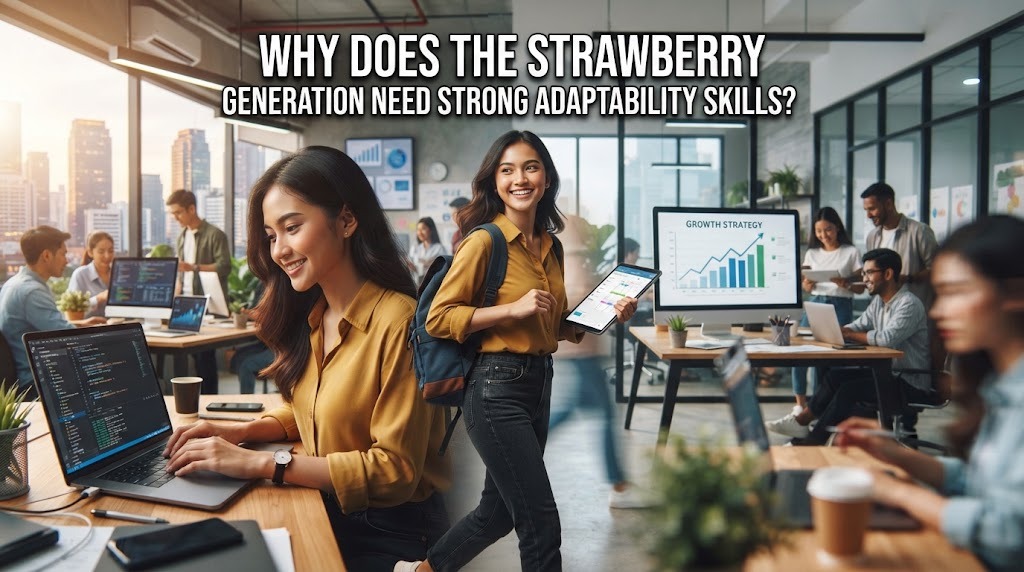
The Strawberry Generation grows up in a world that changes quickly because of technology, social media, education, workplace trends, and shifting social expectations. These changes can create new opportunities, but they can also make young people face situations that are difficult to predict. Strong adaptability skills can help the Strawberry Generation respond to change without becoming easily overwhelmed.
Adaptability does not mean accepting every change without thinking. It means being willing to learn, adjust strategies, and find appropriate ways to deal with new circumstances. For young people preparing for education, careers, and adult responsibilities, adaptability can become an important skill for long-term personal and professional development.
ADAPTING TO RAPID TECHNOLOGICAL CHANGE
Technology continues to influence how people study, communicate, work, and access information. New digital tools, artificial intelligence, and online platforms can change the skills expected from students and employees. The Strawberry Generation needs adaptability skills to keep learning when technology changes instead of depending only on familiar methods.
Being adaptable allows young people to explore new applications, understand unfamiliar systems, and develop relevant digital skills. They do not need to master every new technology immediately, but they should be willing to learn when it becomes useful. This mindset can make technological changes feel more manageable and encourage continuous learning.
HANDLING CHANGES IN EDUCATION
Education can also involve unexpected changes, such as different learning systems, new assignments, online classes, group projects, or changing academic expectations. Students who are comfortable with only one learning method may find these changes challenging. Adaptability can help the Strawberry Generation adjust their learning strategies according to different academic situations.
For example, students may need to combine independent study with classroom discussions, digital resources, presentations, and collaborative projects. Instead of becoming frustrated when a familiar method does not work, adaptable students can experiment with other approaches. This can improve both learning efficiency and confidence when facing academic changes.
PREPARING FOR AN UNCERTAIN JOB MARKET
The modern workplace can change as industries adopt new technologies, business models, and job requirements. Some roles may require skills that were not emphasized when a person first started studying. Adaptability can help the Strawberry Generation remain prepared for changing career expectations.
Young professionals may need to learn new software, improve communication skills, understand artificial intelligence, or develop abilities outside their original field of study. A willingness to learn can make career development more flexible. Rather than relying entirely on one qualification, young people can continue building skills that remain relevant to changing professional environments.
RESPONDING TO UNEXPECTED PROBLEMS
Life rarely follows a completely predictable plan. Students and young professionals may experience failed projects, rejected applications, difficult assignments, workplace conflicts, or sudden changes in responsibilities. Strong adaptability helps individuals focus on possible solutions instead of remaining stuck when their original plans do not work.
An adaptable person can evaluate the situation, identify available options, and change their approach when necessary. This does not mean ignoring disappointment or pretending that problems are easy. Instead, it means allowing enough flexibility to consider another strategy and continue moving forward.
BUILDING RESILIENCE AND INDEPENDENCE
Adaptability is closely connected to resilience because both involve responding to challenges and recovering from difficult experiences. Young people who can adjust their expectations and strategies may find it easier to continue after setbacks. Learning to adapt can gradually strengthen independence because individuals become more capable of handling situations without always relying on others.
Parents, teachers, and mentors can provide guidance while still allowing young people to solve manageable problems themselves. Experiencing small challenges can teach them how to make decisions, evaluate consequences, and adjust their actions. Over time, these experiences can create greater confidence in dealing with unfamiliar situations.
IMPROVING COMMUNICATION AND TEAMWORK
Adaptability is also important when working with people who have different personalities, communication styles, backgrounds, and expectations. Group projects and workplaces often require individuals to adjust how they communicate depending on the situation. Young people who can adapt their communication style may find it easier to collaborate with different types of people.
For example, a person may need to communicate differently with a lecturer, teammate, manager, customer, or colleague. Being adaptable does not mean changing personal values simply to satisfy others. It means understanding the situation and choosing communication methods that can make cooperation clearer and more effective.
DEVELOPING A MINDSET FOR CONTINUOUS LEARNING
One of the strongest foundations of adaptability is a willingness to keep learning. Knowledge and skills can become outdated, particularly in fields affected by rapid technological development. The Strawberry Generation can benefit from viewing learning as an ongoing process rather than something that ends after graduation.
Continuous learning can involve reading, taking courses, practicing new skills, joining organizations, attending workshops, or learning directly from practical experiences. Mistakes can also become valuable sources of learning when individuals reflect on what happened and identify ways to improve. With this mindset, change can become an opportunity for growth rather than something that should always be feared.
CONCLUSION
The Strawberry Generation needs strong adaptability skills because technology, education, careers, relationships, and everyday life continue to change. Adaptability can help young people respond to new situations, manage unexpected problems, develop resilience, communicate effectively, and remain prepared for changing professional demands.
Adaptability does not mean being perfect at handling every change. It means being willing to learn, adjust, and try another approach when circumstances require it. By developing this skill early, the Strawberry Generation can become more flexible, independent, resilient, and prepared to face an increasingly dynamic future.
Tentang Penulis
Gusti Ayu Tita P
Penulis — Universitas STEKOM
Penulis aktif yang berfokus pada isu-isu akademik, teknologi pendidikan, dan pengembangan sumber daya manusia di lingkungan kampus.