Why Is a Campus Email Important for Sending Academic Documents?
Gusti Ayu Tita P
28 September 2026
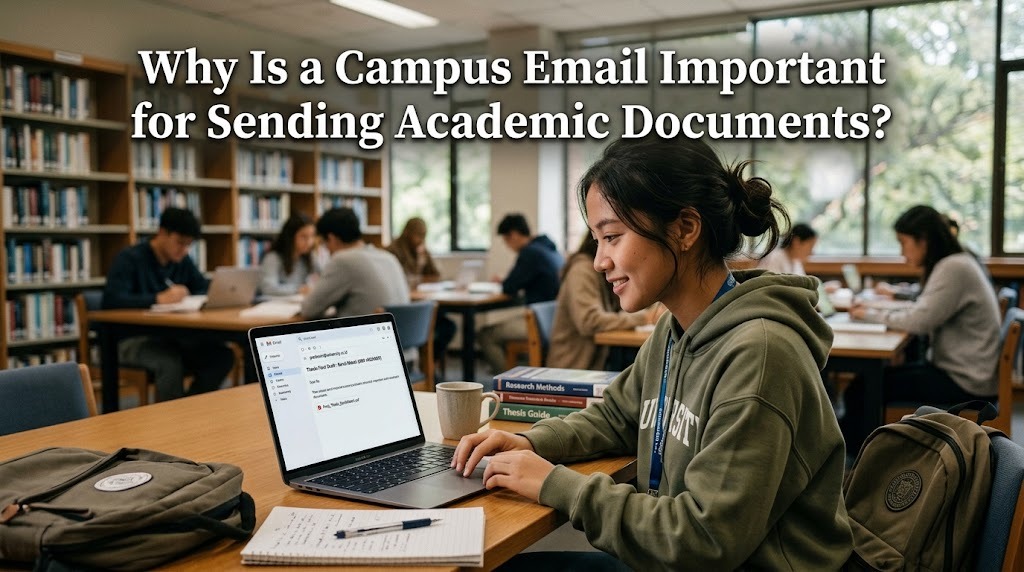
Students regularly need to send academic documents such as assignments, reports, proposals, forms, and other files. A campus email provides an official communication channel for sending these documents to lecturers, academic staff, or other authorized recipients. Using an institutional account can make academic correspondence more organized and easier to identify. It can also help students develop responsible habits when handling digital files.
PROVIDES AN OFFICIAL CHANNEL FOR DOCUMENTS
A campus email gives students an official way to send academic files to people within or connected to their institution. Students can use it when submitting assignments, reports, or documents requested by lecturers and academic departments. The university-related email address can help recipients recognize the sender more easily. This makes email useful for formal academic communication.
Students should make sure that the message contains enough information about the attached document. A clear subject line can explain the purpose of the email without requiring the recipient to open the attachment first. The body of the email can briefly mention the student's name, class, course, and document being submitted when appropriate. These details can make the submission easier to process.
MAKES DOCUMENT SUBMISSIONS MORE ORGANIZED
Sending documents through campus email can help students maintain an organized record of their academic submissions. Email services usually keep sent messages and received replies, allowing students to review previous communication when necessary. Students can search for a particular message using keywords, dates, or sender information. This can be useful when they need to confirm when a document was submitted.
Organization also depends on how students name their files. A document should have a clear and relevant file name instead of a confusing combination of letters or numbers. Students should check that the attached file is the correct version before clicking send. These simple steps can reduce confusion and help prevent avoidable submission errors.
SUPPORTS DIFFERENT TYPES OF ACADEMIC DOCUMENTS
Campus email can be used to send various types of files required for academic activities. These may include assignments, reports, presentations, proposals, and administrative forms. The appropriate file format depends on the instructions provided by the lecturer or university department. Students should always follow the requested format and submission requirements.
When a file is too large for an email attachment, students may need to use an approved cloud storage service and share the appropriate access link. Before sending the link, they should check whether the recipient has permission to open the file. Students should also avoid sharing documents publicly when they contain private or restricted information. Careful file handling is an important part of responsible digital communication.
REDUCES MISUNDERSTANDINGS DURING SUBMISSION
A well-written email can provide important context about an academic document. Students can explain what the file contains and why they are sending it. If there are specific submission instructions, they should follow them instead of assuming that the recipient will understand the purpose of the attachment. Clear communication can make the submission process smoother.
Students should also check the recipient's email address before sending a document. Sending an assignment to the wrong person can create privacy and academic problems. It is also important to verify that the attachment has been uploaded successfully and can be opened. Reviewing the message before sending it takes only a short time but can prevent common mistakes.
HELPS PROTECT ACADEMIC INFORMATION
Academic documents can sometimes contain personal information, student work, research materials, or other information that should not be shared widely. Using a campus email according to university policies can help students handle such information more carefully. Students should avoid forwarding documents to people who are not authorized to receive them. They should also protect their email account with secure login practices.
Students need to be cautious when opening or sending attachments as well. Unexpected files or suspicious links should be checked carefully before being accessed. When sharing documents through cloud storage, students should review the access settings and avoid unnecessary public access. These practices support better academic information security.
BUILDS RESPONSIBLE DIGITAL HABITS
Sending academic documents through campus email teaches students important digital responsibility. They learn to organize files, follow submission instructions, communicate clearly, and protect information. These habits are useful not only for assignments but also for academic organizations, internships, and other formal activities. Students can gradually become more confident in managing digital documents.
Good document submission habits also show attention to detail. Students who consistently check recipients, attachments, file names, and message content are less likely to make simple communication errors. Although campus email is primarily an academic tool, the skills developed through its proper use can be useful in many professional situations.
CONCLUSION
A campus email is important for sending academic documents because it provides an official, organized, and practical communication channel. Students can use it to submit assignments, reports, proposals, forms, and other required files while maintaining a record of their correspondence. Proper use also encourages students to pay attention to file organization, information security, and email etiquette. By developing these habits, students can manage academic documents more responsibly and effectively.
Tentang Penulis
Gusti Ayu Tita P
Penulis — Universitas STEKOM
Penulis aktif yang berfokus pada isu-isu akademik, teknologi pendidikan, dan pengembangan sumber daya manusia di lingkungan kampus.