Why Is a Campus Email Important for Students in the Digital Era?
Gusti Ayu Tita P
28 September 2026
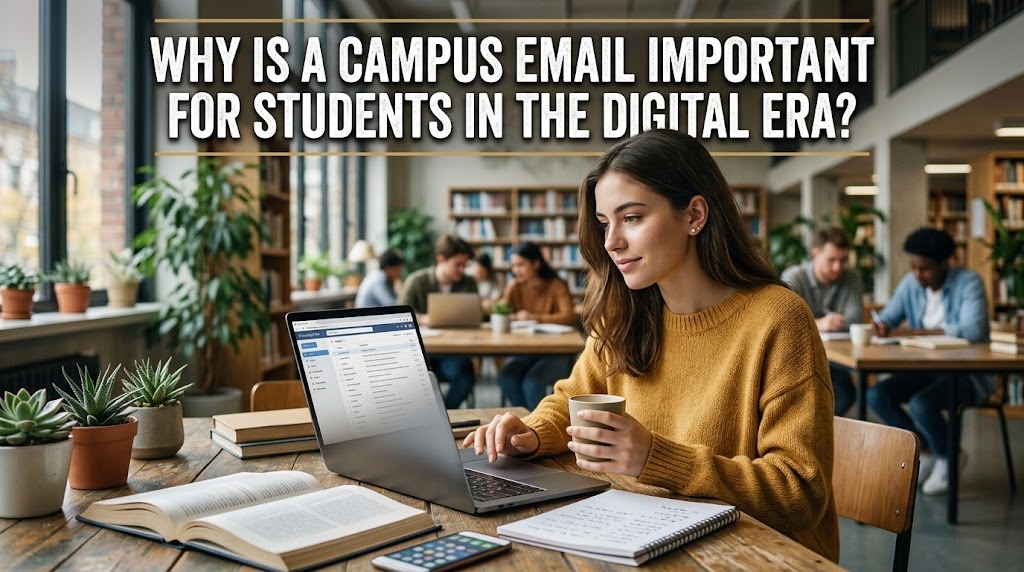
In the digital era, students use online platforms for almost every part of their academic life. One of the most useful tools is a campus email, an email account provided by a university or educational institution. This account can be used to communicate with lecturers, receive academic announcements, submit documents, and access certain digital services. Unlike an ordinary personal email, a campus email is closely connected to a student's academic identity. Understanding its importance can help students manage their studies more effectively and professionally.
SUPPORTS PROFESSIONAL ACADEMIC COMMUNICATION
A campus email provides students with an official channel for communicating with lecturers, academic staff, and university departments. Using an institutional email address can make a message easier to identify because it shows the student's connection with the university. Students can use it when asking questions about assignments, schedules, academic procedures, or other educational matters. A clear subject line and polite language can also make communication more organized and professional.
Students should still follow proper email etiquette when using their campus accounts. They should introduce themselves when necessary, explain their purpose clearly, and avoid sending messages with unclear or overly casual language. Attachments should be named appropriately and checked before an email is sent. These simple habits can help create better communication between students and university staff.
MAKES ACADEMIC INFORMATION EASIER TO MANAGE
Universities often use email to distribute important information to students. A campus email may receive class announcements, schedule changes, registration information, examination notices, or messages from academic departments. Having these messages in one official account can make it easier for students to distinguish academic information from personal communication. Students can also organize important messages by using folders, labels, or search functions.
Regularly checking a campus email is therefore an important academic habit. Students who ignore their institutional inbox may miss deadlines or important announcements. It is useful to check the account consistently and respond to messages that require action. This habit can help students stay informed and manage their academic responsibilities more effectively.
HELPS STUDENTS ACCESS DIGITAL CAMPUS SERVICES
A campus email can sometimes be connected to various digital campus services provided by an institution. Depending on the university, students may use their institutional account to access learning platforms, online libraries, cloud storage, academic applications, or other educational systems. This can make access more convenient because students may not need to create separate accounts for every service. The exact services available depend on the policies and technology used by each institution.
Institutional accounts can also help students keep their academic activities connected within the university's digital environment. Students should use these accounts according to university rules and protect their login information carefully. They should never share passwords with other people or use unfamiliar links without checking them first. Good account security is important because academic accounts may contain valuable information and access to university resources.
SUPPORTS DOCUMENT SHARING AND COLLABORATION
Students frequently need to exchange documents for assignments, presentations, research projects, and other academic activities. A campus email can provide a formal way to send academic documents to lecturers or classmates. Students can attach files, share relevant information, and keep a record of previous communication. This can be particularly useful when working on group assignments or communicating with members of an academic organization.
Email can also support collaboration when students need to discuss tasks or exchange project materials. However, students should make sure that the correct recipients receive the message and that attachments are appropriate. Large files may need to be shared through an approved cloud storage service instead of being attached directly. Using email carefully can reduce misunderstandings and make academic teamwork more organized.
BUILDS A STUDENT'S DIGITAL AND PROFESSIONAL IDENTITY
A campus email can become part of a student's professional identity during college. An institutional address presents a connection between the student and their university when communicating with lecturers, organizations, event committees, or other academic contacts. This can be useful when students participate in seminars, competitions, internships, or other educational opportunities. It also encourages students to practice communication habits that may be useful in future professional environments.
Students can strengthen this identity by writing emails clearly and responsibly. A professional message should have a relevant subject, an appropriate greeting, concise information, and a polite closing. Students should also avoid using inappropriate usernames, excessive abbreviations, or careless language when communicating through official channels. These practices help students become more familiar with professional digital communication.
CONCLUSION
A campus email is an important tool for students living and studying in the digital era. It can support academic communication, help students receive important information, provide access to digital campus services, and make document sharing easier. It can also help students develop a more professional approach to online communication. By checking their campus email regularly and using it responsibly, students can manage their academic activities more effectively. For these reasons, students should treat their campus email as an important part of their academic life.
Tentang Penulis
Gusti Ayu Tita P
Penulis — Universitas STEKOM
Penulis aktif yang berfokus pada isu-isu akademik, teknologi pendidikan, dan pengembangan sumber daya manusia di lingkungan kampus.