Why Is Continuous Learning Important for Ministry Civil Servants?
Gusti Ayu Tita P
26 September 2026
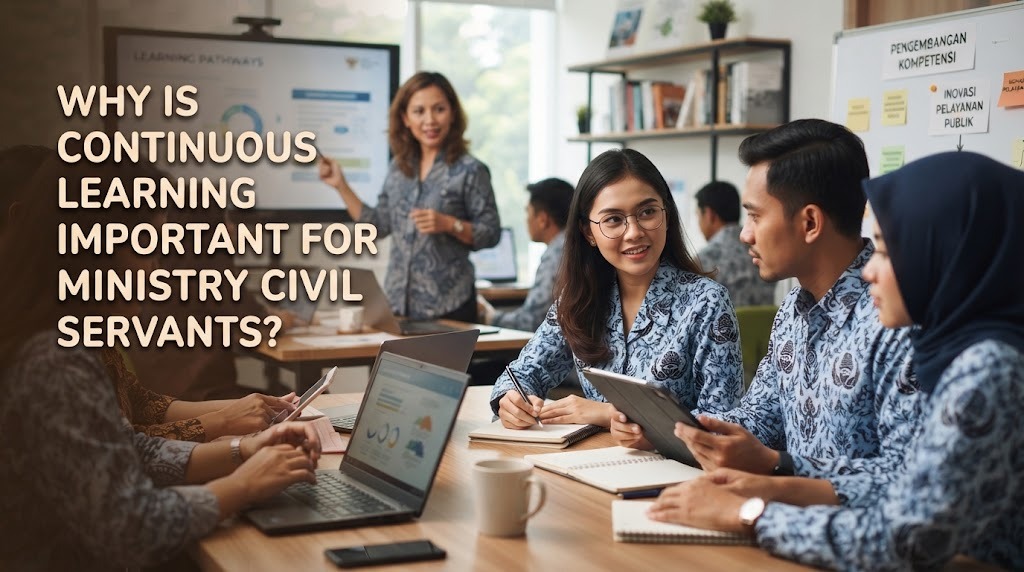
Government institutions operate in an environment that continues to change because of new technology, regulations, public needs, and social conditions. Ministry Civil Servants need to update their knowledge and skills so they can perform their responsibilities effectively. Continuous learning helps employees understand new developments and adapt to changes in their work. It can also support better public services and professional development.
ADAPTING TO CHANGES IN GOVERNMENT WORK
Government work can change when new policies, regulations, or administrative systems are introduced. Civil servants need to understand these changes and apply them correctly in their daily responsibilities. Continuous Learning helps employees keep their knowledge relevant to current requirements. Without regular learning, employees may find it more difficult to adjust to new procedures.
Technology is also changing how government institutions manage information and provide services. Digital platforms can make administrative processes faster, but employees need appropriate skills to use them effectively. Digital Skills can help civil servants work with new systems and manage information more efficiently. Learning therefore becomes an ongoing part of adapting to the modern public sector.
IMPROVING PROFESSIONAL COMPETENCE
Continuous learning can help civil servants strengthen the knowledge and skills required for their positions. Training may cover areas such as communication, administration, leadership, data management, or technical responsibilities. Professional Development allows employees to improve their capabilities based on changing organizational needs. This can also help them perform tasks with greater accuracy and confidence.
Learning does not always have to take place through formal training. Employees can learn through workshops, online courses, mentoring, professional discussions, and practical experience. Skill Development becomes more effective when employees regularly apply what they have learned. Combining knowledge with practical experience can create stronger professional competence.
SUPPORTING BETTER PUBLIC SERVICES
Civil servants have responsibilities that directly or indirectly affect public services. They need to understand the needs of citizens and provide services according to applicable standards. Public Service can improve when employees have updated knowledge and appropriate professional skills. Continuous learning can help them identify better ways to handle administrative and service-related challenges.
New knowledge can also encourage employees to evaluate existing procedures. They may discover opportunities to simplify processes, improve communication, or use technology more effectively. Service Quality depends not only on regulations but also on how employees apply them in practice. Continuous learning can therefore support more responsive and efficient public services.
PREPARING FOR DIGITAL TRANSFORMATION
Digital transformation is becoming increasingly important in government administration. Civil servants may need to work with electronic documents, digital databases, online services, and other technology-based systems. Digital Transformation requires employees to understand both the benefits and responsibilities associated with digital tools. Learning helps employees become more prepared for changes in their work environment.
Technology also creates new concerns related to data protection and information security. Employees need to understand appropriate procedures for handling government and public information. Information Security is an important part of modern government work because digital systems can involve sensitive data. Continuous learning can help employees use technology responsibly and securely.
BUILDING A CULTURE OF LEARNING
Continuous learning becomes more effective when it is supported by a positive organizational culture. Ministries can encourage employees to participate in training, share knowledge, and discuss professional challenges. Learning Culture can create an environment where employees view improvement as a normal part of their careers. This approach can benefit both individual employees and the institution.
Employees also have an important role in taking responsibility for their own development. They can identify areas that need improvement and actively seek relevant learning opportunities. Career Development can become more sustainable when employees continue developing their abilities throughout their professional lives. A strong learning culture can ultimately support a more adaptable and capable public sector workforce.
CONCLUSION
Continuous learning is important for Ministry Civil Servants because government responsibilities and public needs continue to change. Professional Development, digital skills, and updated knowledge can help employees perform their duties effectively. Learning can also support better public services, digital transformation, and information security. Both institutions and employees have a role in creating opportunities for continuous development. By maintaining a strong learning culture, civil servants can remain prepared to meet changing demands in the public sector.
Tentang Penulis
Gusti Ayu Tita P
Penulis — Universitas STEKOM
Penulis aktif yang berfokus pada isu-isu akademik, teknologi pendidikan, dan pengembangan sumber daya manusia di lingkungan kampus.