Why Is PPE Important for Workers in High Risk Environments?
Gusti Ayu Tita P
29 September 2026
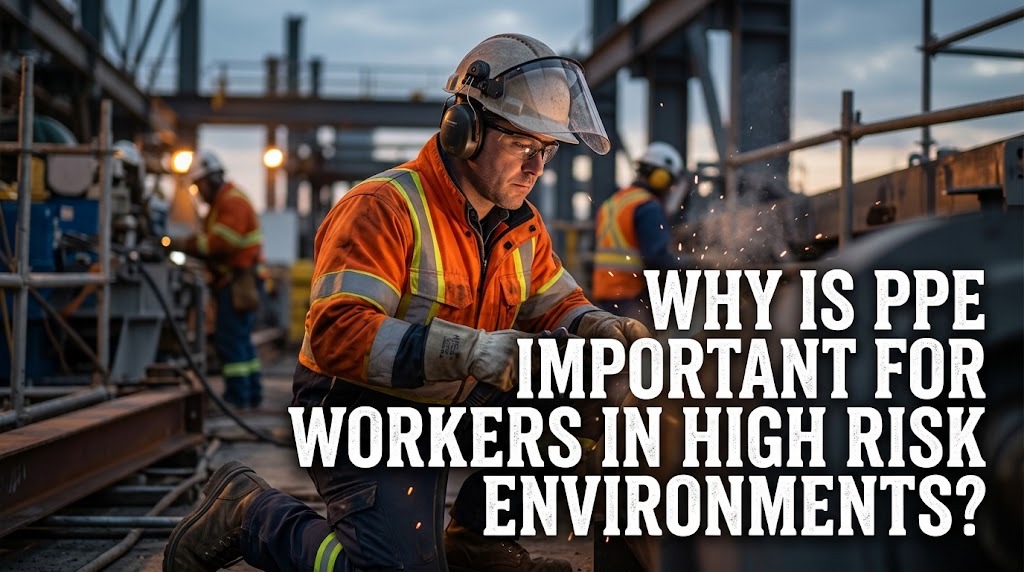
Personal Protective Equipment or PPE is an important part of workplace safety, especially in environments where workers may face serious hazards. High risk workplaces can include construction sites, factories, laboratories, healthcare facilities, mining areas, and other industrial settings. Workers in these environments may be exposed to falling objects, chemicals, excessive noise, dust, heat, electrical hazards, or biological agents. Appropriate PPE can provide an additional layer of protection when workers are exposed to these risks. However, PPE should be used together with other measures designed to control hazards.
WHAT MAKES A WORKPLACE HIGH RISK?
A workplace is considered high risk when workers may be exposed to hazards that could cause significant injury, illness, or other harm. These hazards can come from machinery, hazardous substances, electricity, extreme temperatures, heights, noise, or airborne particles. The level and type of risk depend on the work activity and environment. A single workplace may also contain several hazards at the same time. Identifying these hazards is therefore an important part of workplace safety planning.
Employers should assess the risks associated with different jobs and work areas. The results can help determine which hazards need to be eliminated, controlled, or managed through appropriate protective equipment. Risk assessment should consider how workers perform their tasks and how frequently they may be exposed to hazards. Changes in equipment, processes, or working conditions may also require the assessment to be reviewed. This approach helps ensure that safety measures remain appropriate.
HOW DOES PPE PROTECT WORKERS IN HIGH RISK AREAS?
PPE works by creating a protective barrier between workers and certain workplace hazards. For example, helmets can help protect the head from specific impact hazards, while safety glasses can protect the eyes from certain flying particles or splashes. Gloves may provide protection against particular cuts, chemicals, heat, or contamination depending on their design. Respiratory protection can reduce exposure to certain airborne hazards when correctly selected and used. Each type of PPE has a specific purpose and limitations.
In high risk environments, PPE can serve as an additional layer of protection when hazards cannot be completely eliminated. However, PPE should not be treated as the first or only solution when other effective controls are available. Engineering controls, administrative controls, and safer work practices may also be necessary. Workers need to understand what their PPE protects against and what it does not protect against. This knowledge can help prevent misuse and overreliance on protective equipment.
WHAT TYPES OF PPE ARE COMMONLY USED?
The type of PPE required depends on the hazards present in a particular workplace. Hard hats may be required where there is a risk of head impact or falling objects. Eye and face protection can help reduce exposure to particles, splashes, or other hazards, while hearing protection can reduce exposure to excessive workplace noise. Safety footwear can provide protection against certain foot hazards such as impacts, punctures, or slips. Protective clothing may also be necessary in environments involving particular chemicals, heat, or contamination.
Respiratory protection is used in situations where workers may be exposed to certain airborne hazards and other controls are insufficient. Gloves are selected based on the specific hazard because different glove materials provide different types of protection. PPE must be matched to the hazard, rather than selected simply because it is available. Employers should provide suitable equipment and instructions for its use. Workers should follow established safety procedures whenever PPE is required.
WHY ARE TRAINING AND PROPER USE IMPORTANT?
PPE cannot provide its intended protection if workers do not know how to use it correctly. Workers should receive training on selection, fitting, wearing, inspection, cleaning, storage, and replacement of relevant PPE. They should also understand the hazards associated with their tasks and the limitations of the equipment. Correct fit is particularly important because poorly fitted equipment may not provide the expected protection. Training should be appropriate to the equipment and workplace conditions.
Workers should inspect PPE before use and report equipment that is damaged or unsuitable. They should also follow manufacturer instructions and workplace safety requirements when putting on, adjusting, removing, and maintaining the equipment. Consistent PPE use is especially important in high risk environments because exposure can occur quickly and unexpectedly. Regular safety reminders can help reinforce correct practices. Good training and supervision can support safer behavior across the workplace.
WHAT ARE THE BENEFITS OF CONSISTENT PPE USE?
Consistent PPE use can help reduce exposure to workplace hazards and provide another layer of protection when workers perform potentially hazardous tasks. It can also reinforce awareness of workplace risks and encourage employees to follow established safety procedures. When workers understand why particular PPE is required, they may be more prepared to use it correctly. PPE can therefore contribute to a broader safety management system. Its effectiveness still depends on suitable selection, proper use, and regular maintenance.
A strong safety program also requires employers to review workplace risks and improve controls when necessary. PPE should be inspected and replaced when it becomes damaged or no longer provides the required protection. Safety is a shared responsibility between employers and workers, with each having important roles in maintaining safe working conditions. Regular training, communication, and risk assessment can strengthen these efforts. Together, these practices can help create a safer environment for workers facing higher levels of occupational risk.
CONCLUSION
PPE is especially important in high risk environments because it provides an additional layer of protection against specific workplace hazards. Different jobs require different equipment, so PPE should always be selected according to the risks identified through workplace assessment. Workers also need proper training to wear, inspect, maintain, and replace PPE correctly. Employers should combine PPE with other effective hazard-control measures rather than relying on protective equipment alone. With proper selection and consistent use, PPE can support safer working practices in high risk workplaces.
Tentang Penulis
Gusti Ayu Tita P
Penulis — Universitas STEKOM
Penulis aktif yang berfokus pada isu-isu akademik, teknologi pendidikan, dan pengembangan sumber daya manusia di lingkungan kampus.