Why Is Teamwork Important for a New SAR Team?
Gusti Ayu Tita P
29 September 2026
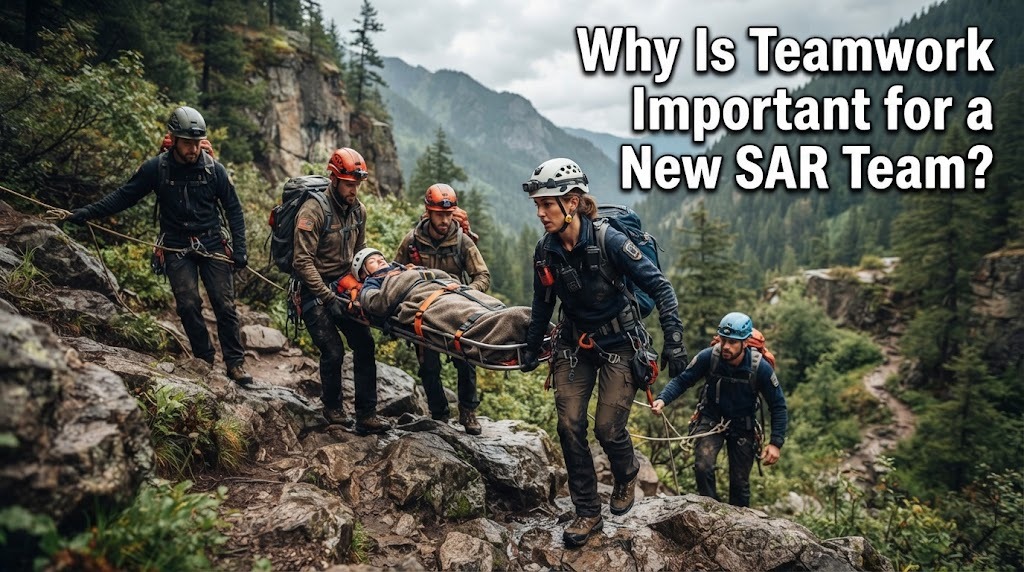
Teamwork is one of the most important foundations for a new SAR team because search and rescue operations rarely depend on one person. A rescue mission may involve searching for victims, assessing hazards, providing assistance, managing equipment, and communicating with other responders at the same time. When members work together according to clear roles, the operation can become more organized and easier to manage. BASARNAS emphasizes that communication and coordination are important pillars of SAR operations, while INSARAG places coordination and cooperation at the center of organized USAR response.
For a new search and rescue team, teamwork is especially important because members may still be developing experience and learning how to work together under pressure. Good cooperation allows them to share information, support one another, and respond to changing conditions without losing focus on safety. Teamwork is not only about helping each other physically, but also about following procedures and maintaining clear communication. With regular training and exercises, a new SAR team can gradually build stronger coordination and operational readiness.
CREATING CLEAR ROLES AND RESPONSIBILITIES
A new SAR team needs every member to understand their role before an emergency happens. One member may focus on navigation, another on communication, another on medical support, while others may handle searching or equipment. Clear role assignments can reduce duplicated work and confusion during stressful situations. INSARAG guidance describes structured USAR teams with defined responsibilities and coordination between different functional activities.
Role clarity also makes it easier for team leaders to coordinate operations. Members know who should make specific reports, who manages particular resources, and who should be contacted when a problem appears. Clear responsibilities can help prevent important tasks from being overlooked. For a new team, this structure creates a practical foundation for working efficiently during rescue missions.
IMPROVING COMMUNICATION DURING RESCUE OPERATIONS
Good teamwork depends heavily on clear communication. SAR members may work in different locations, so they need to exchange information about victim locations, hazards, weather, routes, and operational changes. BASARNAS has emphasized the need for stronger communication and coordination among SAR stakeholders to support solid team cooperation.
Communication should be simple, accurate, and based on agreed procedures. New members should practice using radios and other communication systems during training exercises instead of learning them only when an emergency occurs. Accurate information sharing can help the team maintain awareness of what has already been done and what tasks remain. This becomes particularly important when multiple SAR units are operating in the same incident area.
SUPPORTING FASTER AND MORE ORGANIZED ACTION
Teamwork can help a new SAR team divide responsibilities and work on several tasks in a coordinated way. One group can conduct a search while another prepares equipment or supports medical needs, depending on the operational plan. This structured division of work can help prevent unnecessary delays. INSARAG's operational methodology is built around coordinated phases and team activities rather than isolated individual actions.
However, organized teamwork does not mean rushing into a dangerous situation. Members still need to assess hazards and follow established safety procedures before taking action. Coordinated action allows the team to move with a shared understanding of priorities and available resources. For a new team, learning how to coordinate tasks is therefore just as important as learning individual rescue techniques.
HELPING MEMBERS HANDLE DIFFICULT CONDITIONS
Rescue missions can involve difficult terrain, unstable structures, severe weather, limited visibility, or other unexpected conditions. In these situations, team members can support one another by sharing observations and reporting hazards quickly. A new rescuer may notice something that another member has missed, making mutual awareness valuable during field operations. INSARAG materials emphasize information exchange and coordination as important parts of USAR response.
Team members should also know when to ask for assistance. Working as a team means recognizing that difficult tasks may require additional personnel, equipment, or specialist support. Knowing the team's limits is an important part of safe rescue operations. Cooperation can help prevent individual members from attempting tasks beyond their training or available resources.
BUILDING TRUST THROUGH TRAINING AND EXERCISES
Trust within a new SAR team is developed through repeated practice. Training exercises allow members to understand how their colleagues communicate, make reports, follow instructions, and perform assigned duties. BASARNAS conducts training and cooperation activities to improve SAR operational capability, while INSARAG uses exercises and coordinated training as part of preparedness.
Exercises can also reveal weaknesses that are difficult to notice during normal discussions. After an exercise, the team can review problems involving communication, role distribution, equipment use, or coordination. Regular evaluation gives members opportunities to improve before facing a real emergency. Over time, this process can make teamwork more consistent and predictable.
STRENGTHENING COORDINATION WITH OTHER RESPONDERS
A new SAR team may need to work with other organizations during a major emergency. These can include other SAR teams, medical services, firefighters, police, local authorities, and disaster management organizations. BASARNAS states that the success of search and rescue activities is strongly influenced by coordination between relevant agencies and SAR resources.
External coordination becomes especially important when several teams are assigned to different sectors or when additional resources are needed. INSARAG's framework includes coordination between USAR teams and affected-country authorities throughout the response cycle. A new team that understands how to coordinate across organizations can communicate its needs more effectively and reduce unnecessary overlap during complex operations.
IMPROVING SAFETY AND TEAM PERFORMANCE
Strong teamwork can support rescue safety because members can monitor conditions and remind each other about important procedures. In a difficult environment, one rescuer may identify a hazard while another checks equipment or communicates the warning to the team leader. Working together creates more opportunities to detect problems before they become more serious. INSARAG's guidance and operational materials place safety, coordination, and organized management within the wider rescue process.
Teamwork also makes post-operation evaluation more useful. Members can compare their experiences and identify what caused delays or confusion during the mission. Lessons learned can then be used to improve procedures, training, and future exercises. INSARAG's methodology includes a post-mission phase specifically as part of the overall response cycle.
CONCLUSION
Teamwork is essential for a new SAR team because rescue operations require several people to perform different tasks while sharing the same operational goals. Clear roles, communication, cooperation, and mutual support can help members work more systematically during emergencies. BASARNAS and INSARAG both emphasize coordination, communication, preparedness, and cooperation as important parts of effective search and rescue operations.
A new team can strengthen its teamwork through regular training, realistic exercises, clear procedures, and post-operation evaluation. Members should understand their responsibilities, communicate important information, and recognize when additional support is needed. By building these habits consistently, a new search and rescue team can improve coordination and maintain safer, more organized operations.
Tentang Penulis
Gusti Ayu Tita P
Penulis — Universitas STEKOM
Penulis aktif yang berfokus pada isu-isu akademik, teknologi pendidikan, dan pengembangan sumber daya manusia di lingkungan kampus.