Why Is the Strawberry Generation More Sensitive to Criticism and Pressure?
Gusti Ayu Tita P
26 September 2026
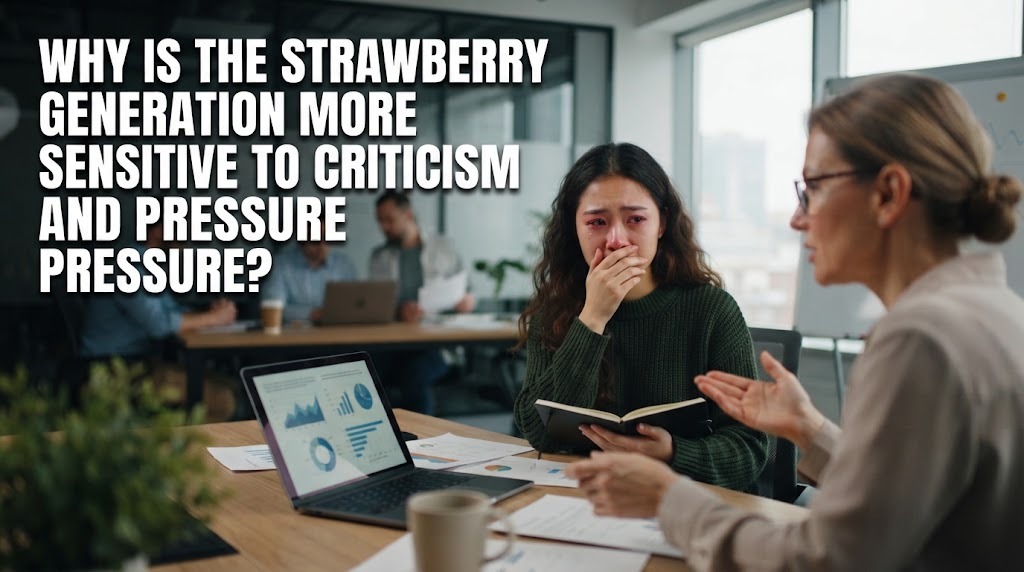
The Strawberry Generation is often described as a group of young people who may appear more sensitive to criticism, pressure, failure, and difficult situations. This perception has become common in discussions about changing attitudes toward education, careers, relationships, and emotional wellbeing. However, sensitivity is not necessarily the same as weakness, and individual experiences can vary significantly.
Several factors may influence how young people respond to criticism and pressure. Social media, high expectations, changing parenting styles, academic competition, economic uncertainty, and greater emotional awareness can all shape how challenges are experienced. Understanding these influences can provide a more balanced view of why the Strawberry Generation is sometimes perceived as more sensitive.
HIGH EXPECTATIONS CAN CREATE EMOTIONAL PRESSURE
Young people may face expectations to achieve strong academic results, build successful careers, develop useful skills, and become financially independent. These expectations can come from families, schools, workplaces, social environments, or personal ambitions. When expectations become too high, criticism may feel more threatening because it can be interpreted as evidence of personal failure.
Pressure can also increase when young people believe they must succeed quickly. A mistake or negative evaluation may then create disappointment that goes beyond the specific situation. Learning to separate constructive criticism from personal judgment can help young people respond more calmly to feedback.
SOCIAL MEDIA INCREASES COMPARISON
Social media has created an environment where young people can constantly see other people's achievements, lifestyles, careers, and relationships. This can encourage comparisons that make personal progress appear inadequate. Frequent comparison may increase sensitivity to criticism because confidence can become closely connected to external approval.
Online interactions can also make criticism feel more immediate and public. Negative comments may reach many people within seconds, creating additional emotional pressure. At the same time, social media usually presents selected parts of people's lives, so comparing everyday reality with carefully presented online content can create unrealistic standards.
CHANGING PARENTING STYLES MAY AFFECT COPING SKILLS
Some young people grow up in families where parents provide substantial protection and assistance. Supportive parenting can help children feel secure, but limited opportunities to experience manageable failure may reduce opportunities to practice independent problem-solving.
When someone has fewer chances to deal with disappointment while growing up, criticism or unexpected problems may initially feel more difficult. However, coping skills can continue to develop with age and experience. Parenting is therefore only one possible influence and cannot explain the behavior of an entire generation.
ACADEMIC AND CAREER COMPETITION CAN INCREASE STRESS
Education and employment can involve strong competition. Students may feel pressure to achieve high grades, enter respected institutions, develop professional skills, and prepare for uncertain career opportunities. Continuous competition can make criticism feel like a threat to future success.
Career uncertainty can add another layer of pressure after graduation. Young people may worry about finding suitable employment, maintaining financial stability, or keeping up with changing workplace requirements. Under these conditions, even ordinary feedback can sometimes feel more difficult when someone is already experiencing significant stress.
GREATER EMOTIONAL AWARENESS CHANGES HOW FEELINGS ARE EXPRESSED
Young people today may be more willing to talk about stress, emotional exhaustion, personal boundaries, and mental wellbeing. This greater openness can make emotional reactions more visible than they were in environments where discussing personal struggles was less common. Being more open about emotions does not automatically mean being less resilient.
In some cases, recognizing emotional discomfort can actually help people respond to problems earlier. Talking to trusted people, taking a break, or asking for appropriate support can be part of healthy coping. The difference may therefore involve how emotions are expressed rather than simply how strongly they are experienced.
RAPID SOCIAL AND TECHNOLOGICAL CHANGES ADD PRESSURE
Young people are navigating rapid changes in technology, communication, education, and employment. New digital tools and evolving workplace expectations require continuous learning and adaptation. Constant change can create uncertainty and make young people feel pressure to remain competitive.
The speed of information can also make it difficult to disconnect from external demands. Notifications, messages, news, and social media can continue throughout the day. Without healthy boundaries, this constant connection may contribute to stress and make criticism or pressure feel more overwhelming.
SENSITIVITY CAN BECOME A STRENGTH
Sensitivity should not always be viewed negatively. A person who notices criticism, emotions, or changes in their environment may also have strong awareness of other people's feelings and needs. Emotional sensitivity can become a strength when it is combined with self-awareness, communication skills, and healthy coping strategies.
The important issue is how someone responds to difficult emotions. Young people can learn to evaluate criticism objectively, distinguish useful feedback from harmful comments, and recover from disappointment. With experience, sensitivity can coexist with resilience, adaptability, and confidence.
CONCLUSION
The Strawberry Generation may be perceived as more sensitive to criticism and pressure because young people face high expectations, social media comparison, academic and career competition, changing family environments, greater emotional openness, and rapid technological change. These factors can influence how pressure is experienced and expressed.
However, sensitivity should not automatically be interpreted as weakness. Resilience can develop through experience, supportive relationships, healthy coping strategies, and opportunities to solve problems independently. Understanding these factors provides a more balanced way to discuss the Strawberry Generation without assuming that every young person responds to criticism and pressure in the same way.
Tentang Penulis
Gusti Ayu Tita P
Penulis — Universitas STEKOM
Penulis aktif yang berfokus pada isu-isu akademik, teknologi pendidikan, dan pengembangan sumber daya manusia di lingkungan kampus.