Why Should Students Learn To Live Independently Away From Home?
Gusti Ayu Tita P
29 September 2026
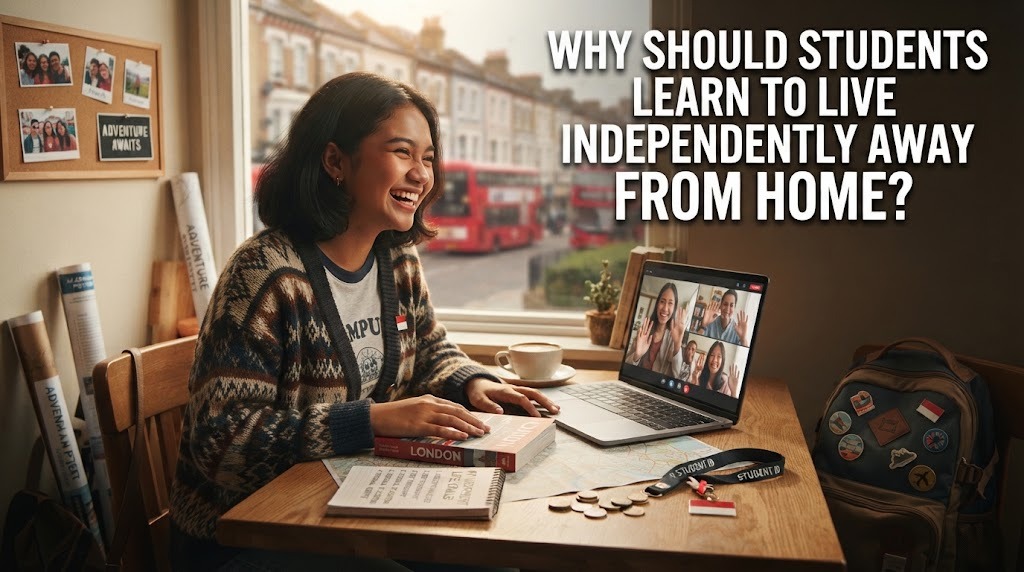
Living independently away from home can be an important experience for students. It teaches them how to manage daily responsibilities without always depending on their families. Students may need to make decisions about money, time, studies, food, and personal needs on their own. Although the experience can be challenging at first, it can provide valuable lessons for their future. Learning to live independently can also help students become more prepared for adult life.
DEVELOPING INDEPENDENCE
The main reason students should learn to live independently is that they can develop independence through everyday experiences. They have to make decisions without always asking their parents to solve problems for them. Simple activities such as preparing meals, managing schedules, and organizing personal belongings require responsibility. These activities gradually teach students how to take care of themselves.
Independence does not mean refusing help from other people. Students can still ask for advice when they face difficult situations. However, they learn to make the final decision and take responsibility for the result. This ability can become useful when students enter professional and adult life.
LEARNING TO MANAGE RESPONSIBILITIES
Living away from home gives students more responsibility for their daily lives. They may need to clean their rooms, wash clothes, prepare meals, manage expenses, and complete academic tasks. These responsibilities require students to organize their time and energy. They also learn that ignoring small tasks can create bigger problems later.
Managing responsibilities can make students more disciplined. They begin to understand the importance of completing tasks on time. This habit can also be applied to academic and professional responsibilities. Learning responsibility early can help students become more dependable in the future.
IMPROVING TIME MANAGEMENT
Students who live independently must manage their own schedules. They need to balance classes, assignments, household activities, social activities, sleep, and personal time. Without proper planning, students may forget important tasks or become overwhelmed. This encourages them to create routines and set priorities.
Good time management does not mean filling every hour with activities. Students also need enough time for rest and relaxation. Creating a realistic schedule can help them complete important tasks without unnecessary pressure. Effective time management is a useful skill for both education and future careers.
LEARNING TO MANAGE MONEY
Living independently also teaches students about financial responsibility. They may have to manage money for food, accommodation, transportation, study materials, and other personal needs. If students spend without planning, they may run out of money before the end of the month. This situation can encourage them to understand the importance of budgeting.
Students can start by creating a simple monthly budget and tracking their daily expenses. They can separate essential needs from unnecessary wants. Saving a small amount regularly can also help them prepare for unexpected expenses. Learning financial management can help students develop healthier money habits.
BUILDING PROBLEM SOLVING SKILLS
Students living away from home may encounter different problems without having their families nearby. Problems can involve transportation, accommodation, finances, academic tasks, or communication. They have to think about possible solutions instead of immediately depending on someone else. This can strengthen their ability to solve problems independently.
Students can learn to approach problems step by step. First, they can identify the main problem, consider available options, and choose a practical solution. If the problem is too difficult, they can ask a trusted person for guidance. Knowing how to solve problems and when to ask for help is an important life skill.
BUILDING SELF CONFIDENCE
Independent living can help students become more confident in their abilities. Completing tasks without constant assistance can show them that they are capable of handling responsibilities. Even small achievements, such as managing a monthly budget or solving a daily problem, can increase self-confidence. These experiences can encourage students to take on new challenges.
Confidence develops gradually through experience. Students may make mistakes, and those mistakes can become opportunities to learn. Instead of expecting perfection, they can focus on improving after each experience. Successful experiences and lessons from mistakes can both contribute to stronger confidence.
IMPROVING ADAPTABILITY
Living away from home often places students in new environments with unfamiliar people and different routines. They may need to adjust to different cultures, transportation systems, living arrangements, or social habits. These situations encourage students to become more flexible. They learn that not everything will always happen according to their expectations.
Adaptability is useful when students face changes in education, work, or personal life. Students who learn to adjust can become more comfortable with unfamiliar situations. They can also learn to remain calm when plans change. The ability to adapt can support students in many areas of their future lives.
PREPARING FOR ADULT LIFE
Independent living can prepare students for responsibilities they may face after graduation. They learn practical skills such as managing money, organizing time, communicating with others, and making decisions. These skills are not always fully learned through classroom lessons. Daily experiences provide opportunities to practice them.
Students may eventually need to live independently for work or other personal reasons. Having previous experience can make this transition more familiar. They can use the skills developed during student life when facing new responsibilities. Independent living can therefore become useful preparation for adulthood and professional life.
CONCLUSION
Students should learn to live independently away from home because the experience can develop independence, responsibility, time management, financial skills, problem solving, confidence, and adaptability. Students may face challenges during the adjustment process, but these experiences can provide valuable lessons. They can gradually learn how to make decisions and manage their daily lives. Living independently is not about doing everything alone, but about becoming capable of managing responsibilities and knowing when to seek support.
Tentang Penulis
Gusti Ayu Tita P
Penulis — Universitas STEKOM
Penulis aktif yang berfokus pada isu-isu akademik, teknologi pendidikan, dan pengembangan sumber daya manusia di lingkungan kampus.