Being an Only Child Is Not a Disadvantage Here Are the Positive Potential They Can Have
Gusti Ayu Tita P
7 September 2026
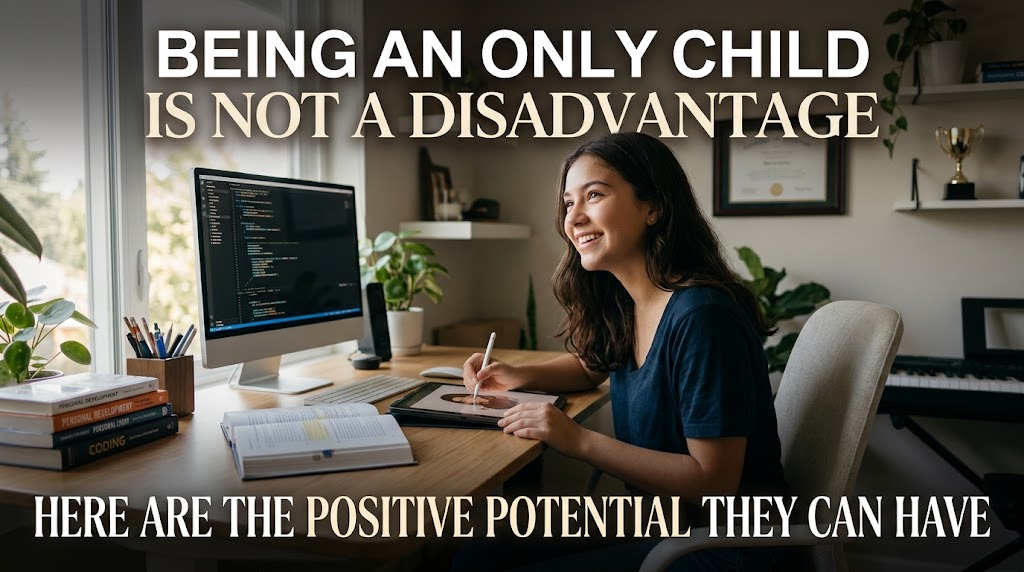
Being an only child is sometimes viewed negatively because of common stereotypes about loneliness, selfishness, or difficulty interacting with others. However, these assumptions do not represent every child who grows up without siblings. Family environment, parenting style, education, friendships, and individual personality all contribute to a child's development.
Growing up as an only child can also provide valuable opportunities. Children may develop independence, creativity, responsibility, and strong relationships with their parents. Being an only child is not automatically a disadvantage, and many positive qualities can develop when children receive balanced support and meaningful social experiences.
DEVELOPING STRONG INDEPENDENCE
One potential advantage of being an only child is the opportunity to become comfortable with independent activities. Without siblings constantly available for entertainment, some children learn to create their own games, explore hobbies, or solve simple problems on their own. These experiences can encourage self-reliance and independent thinking from an early age.
Parents can strengthen this positive quality by giving children age-appropriate responsibilities. Allowing them to organize their belongings, complete simple tasks, or make everyday choices can increase confidence. However, independence should not mean that children must handle everything alone. Healthy independence develops when freedom is balanced with appropriate parental support.
BUILDING A CREATIVE AND CURIOUS MIND
Only children may have more opportunities to spend time exploring individual interests. Reading, drawing, building projects, music, writing, or imaginative play can provide valuable opportunities for creativity. Because children can spend time following their own interests, they may discover hobbies that become important parts of their identity. Creative exploration can help children develop curiosity and problem-solving abilities.
Parents can encourage this development by providing access to books, educational materials, creative activities, and new experiences. They do not need to control every activity or expect every hobby to produce an achievement. Giving children freedom to experiment can make learning more enjoyable. Curiosity grows when children are allowed to ask questions, make mistakes, and explore different possibilities.
DEVELOPING CLOSE FAMILY RELATIONSHIPS
Only children often have frequent interaction with their parents because there are no siblings competing for attention. This can create opportunities for meaningful conversations and shared activities. Strong communication between parents and children can help children feel supported during different stages of development. A close parent-child relationship can become an important source of emotional security.
However, closeness should not become excessive dependence. Children still need opportunities to build relationships outside their immediate family. Friendships, school communities, relatives, and extracurricular groups can provide different perspectives and experiences. A balanced social environment allows an only child to maintain close family connections while developing independence.
LEARNING RESPONSIBILITY FROM AN EARLY AGE
Parents may involve an only child in household responsibilities because there are fewer children to divide certain tasks among. Simple responsibilities such as organizing personal belongings, helping with household chores, or managing school materials can teach valuable life skills. Responsibility becomes meaningful when children understand how their actions affect other people.
As children become older, these lessons can prepare them for more complex responsibilities. They may become more comfortable making decisions, managing schedules, and completing tasks without constant supervision. Nevertheless, parents should make sure responsibilities are appropriate for the child's age. Children should be encouraged to become responsible without being made to feel that they must carry the entire family's burden.
DEVELOPING SOCIAL SKILLS OUTSIDE THE HOME
Being an only child does not prevent someone from developing excellent social skills. Children can learn communication and cooperation through friendships, school projects, sports, clubs, community activities, and relationships with extended family members. These experiences can teach them how to listen, share, compromise, and solve disagreements. Social skills come from interaction and practice, not simply from having siblings.
Parents can support social development by creating regular opportunities for children to interact with others. Group activities can be particularly useful because they require children to work toward shared goals. Children may also discover that different people have different personalities and perspectives. These experiences can strengthen communication, empathy, and teamwork.
BUILDING CONFIDENCE AND PERSONAL IDENTITY
Only children may have opportunities to receive focused encouragement from their parents. When parents recognize effort rather than demanding perfection, children can develop confidence in their abilities. Positive feedback can help them understand their strengths while also accepting areas that need improvement. Confidence grows when children feel valued for who they are rather than only for what they accomplish.
At the same time, children need freedom to develop an identity that is separate from parental expectations. Parents may have hopes for their child's education or career, but those hopes should not completely determine the child's choices. Encouraging children to explore different interests can help them discover their own goals. A strong personal identity allows children to make decisions with greater confidence as they grow older.
TURNING UNIQUE EXPERIENCES INTO POSITIVE STRENGTHS
Every family structure comes with different experiences, and being an only child is no exception. Time spent independently may become an opportunity to develop creativity, while close parental relationships may strengthen communication and emotional awareness. Challenges related to sharing or social interaction can also become valuable learning experiences when children receive proper guidance. Personal experiences can become strengths when children are given opportunities to learn from them.
Parents should avoid comparing an only child with children who have siblings. Instead, they can focus on the child's individual progress, interests, and emotional needs. Providing both independence and social opportunities can create a balanced developmental environment. The goal is not to make an only child fit a particular stereotype but to help them develop their own potential.
CONCLUSION
Being an only child is not inherently a disadvantage. Children without siblings can develop independence, creativity, responsibility, confidence, social skills, and strong family relationships when they receive appropriate support. Family structure may influence experiences, but it does not determine a person's future personality or success.
The most important factor is the environment in which children grow. Parents can encourage independence while providing emotional support, create opportunities for social interaction, and allow children to explore their interests. With balanced parenting and meaningful experiences, being an only child can become a unique part of a child's development rather than a limitation.
About the Author
Gusti Ayu Tita P
Author — STEKOM University
An active author focused on academic issues, educational technology, and human resource development in the campus environment.