
Public Expectations of Regents in Building a Better Regional Future
Gusti Ayu Tita P
12 Agustus 2026
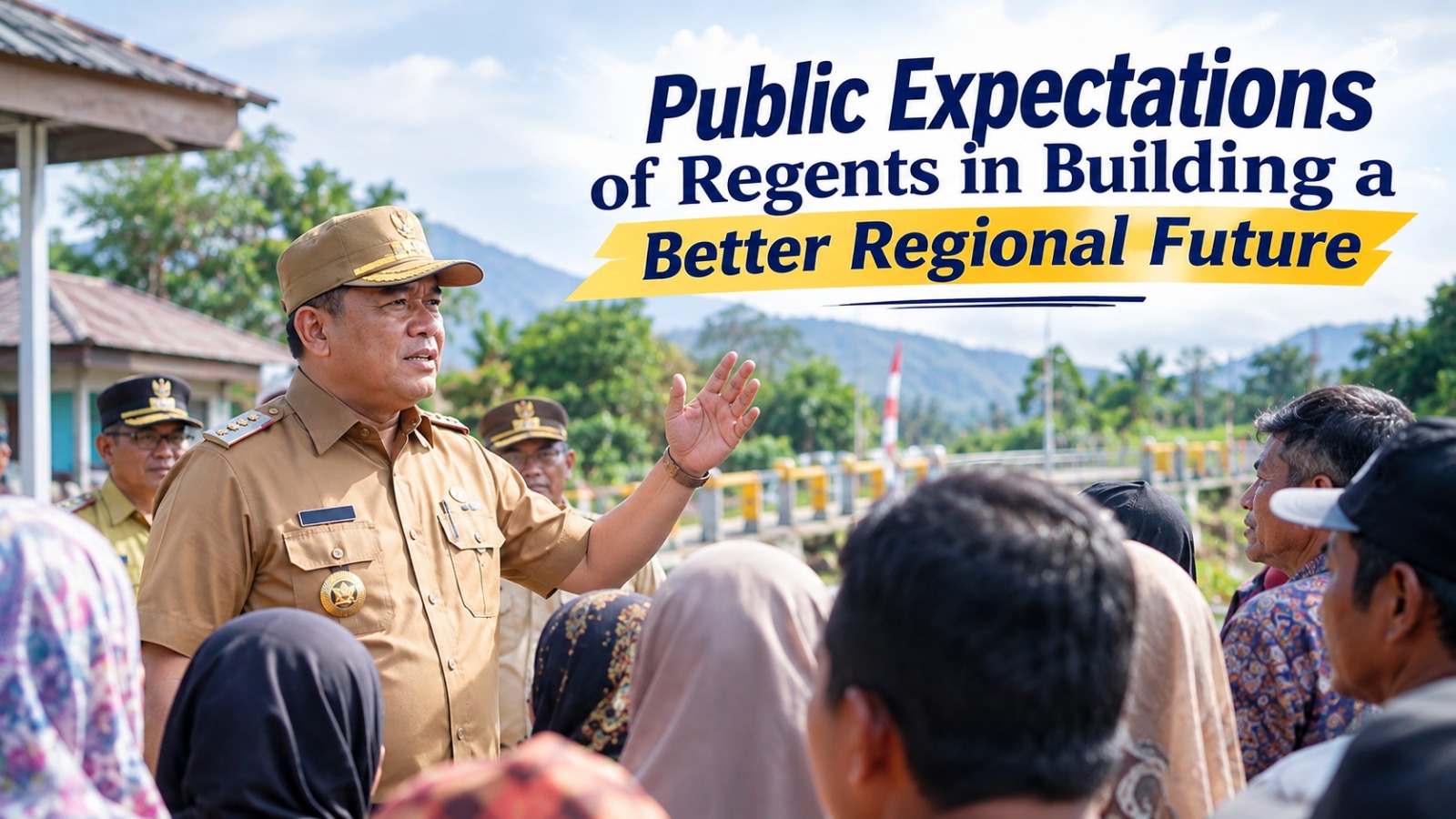
Citizens have high expectations of their regional leaders because the decisions made by a regent can influence many aspects of daily life. People expect improvements in public services, infrastructure, education, healthcare, employment, and economic opportunities. At the same time, citizens want government leaders to listen to their concerns and manage public resources responsibly. A regent cannot solve every problem immediately, but effective leadership can establish clear priorities and create meaningful progress. Understanding public expectations of regents is therefore important for building a better and more sustainable regional future.
UNDERSTANDING PUBLIC EXPECTATIONS
Public expectations reflect the needs and aspirations of communities. Residents generally want a government that provides reliable services, creates opportunities, and responds to problems fairly. Expectations can differ depending on local economic conditions, geography, population, and available infrastructure. A regent needs to understand these differences before establishing development priorities. Community needs should become an important reference for regional planning.
Public expectations should also be balanced with the authority, resources, and responsibilities of regional government. Not every issue can be handled directly by a regent because some matters fall under other levels of government or institutions. Clear communication can help citizens understand what regional government can realistically provide. This can create more realistic expectations while maintaining ambitious development goals. Good communication is essential for public trust.
IMPROVING PUBLIC SERVICES
One of the most common expectations of citizens is access to efficient and reliable public services. Residents want administrative procedures to be clear, healthcare services to be accessible, and government offices to respond professionally. A regent can encourage regional agencies to improve service standards and reduce unnecessary administrative difficulties. Quality public services can have a direct impact on people's daily lives.
Service improvement should be based on actual citizen experiences. Government agencies can monitor complaints, waiting times, accessibility, and other relevant indicators. Feedback can help identify problems that need immediate attention. Continuous evaluation can ensure that improvements are maintained over time. Better services can strengthen citizen satisfaction and confidence in regional government.
DEVELOPING BETTER INFRASTRUCTURE
Infrastructure is another major concern for local communities. Citizens often expect better roads, bridges, drainage systems, public facilities, clean water access, transportation, and internet connectivity. A regent can prioritize infrastructure development according to regional needs, development plans, available resources, and applicable regulations. Regional infrastructure development can improve mobility and support economic activity.
Infrastructure should not focus only on highly visible projects. Maintenance of existing facilities is equally important because neglected infrastructure can quickly lose its usefulness. Rural and remote areas may also require special attention because limited infrastructure can reduce access to education, healthcare, markets, and employment. Balanced planning can help ensure that development benefits a broader population. Good infrastructure provides a foundation for long-term regional development.
EXPANDING EDUCATIONAL OPPORTUNITIES
Citizens expect regional leaders to help improve educational opportunities for children and young people. Education can influence future employment, income, and social mobility. A regent can support appropriate programs involving school facilities, student support, teacher development, and access to education within regional authority. Education development should consider the needs of both urban and rural communities.
Modern education should also prepare young people for changing economic conditions. Digital skills, vocational abilities, entrepreneurship, communication, and problem-solving can complement academic learning. Cooperation with schools, training institutions, businesses, and communities can improve career preparation. Strong education can create a more capable workforce and contribute to future regional prosperity.
IMPROVING HEALTHCARE ACCESS
Healthcare is another important expectation of citizens. People want healthcare facilities and services that are accessible, safe, and responsive to community needs. A regent can support improvements in regional healthcare services, preventive programs, sanitation, and public health initiatives within the government's responsibilities. Accessible healthcare can improve quality of life and reduce barriers for vulnerable communities.
Healthcare development should also consider residents living far from service centers. Geographic distance and transportation problems can make healthcare less accessible in some areas. Community-based health initiatives and appropriate service arrangements can help address these challenges. Preventive education can also reduce health risks through better awareness. Strong healthcare systems support healthy and productive communities.
CREATING MORE EMPLOYMENT OPPORTUNITIES
Citizens often expect regional government to help create an environment where people can find productive employment. Jobs provide income and contribute to household stability and economic growth. A regent can support job creation through local economic development, vocational training, entrepreneurship, investment facilitation, and SME development within regional authority.
Employment programs should reflect actual labor market conditions. Local industries can help identify skills that employers need, while training institutions can prepare residents for those opportunities. Young people can also be encouraged to explore entrepreneurship and digital employment. A stronger labor market can increase household income and reduce economic vulnerability. Employment opportunities are an important part of community welfare.
SUPPORTING LOCAL BUSINESSES AND SMEs
Local entrepreneurs expect government to create a business environment that allows them to grow. Small and Medium Enterprises can contribute to employment, household income, innovation, and local economic activity. A regent can support SMEs through business information, training, market access, digitalization, infrastructure, and appropriate facilitation. SME development can strengthen the economic foundation of local communities.
Government support should help businesses become more competitive and independent. Entrepreneurs need opportunities to improve product quality, marketing, financial management, and digital skills. Connections with wider markets can also help local businesses expand their customer base. A strong SME sector can contribute to local economic growth and employment creation.
REDUCING POVERTY AND SOCIAL INEQUALITY
Citizens expect regional leaders to pay attention to households and communities experiencing economic difficulties. Poverty can affect access to education, healthcare, housing, employment, and other opportunities. A regent can support targeted social programs, economic empowerment, employment initiatives, and improved access to basic services. Poverty reduction should combine immediate support with long-term solutions.
Social inequality may also occur between urban and rural areas or between communities with different levels of access to resources. Government programs should be designed using reliable data to identify areas that need greater attention. Community participation can help authorities understand local barriers. Inclusive development can help ensure that economic progress benefits a wider part of society. This supports more equitable regional development.
PROMOTING TRANSPARENT GOVERNMENT
Citizens expect regional leaders to manage public resources responsibly. They want appropriate information about government programs, development priorities, public services, and the use of public funds. A regent can encourage government transparency through clear communication, appropriate reporting, accessible public information, and strong administrative procedures.
Transparency should be accompanied by accountability. Government agencies need to evaluate their performance and respond appropriately when programs do not achieve their objectives. Complaint and feedback mechanisms can provide additional information about problems. Strong transparency and accountability can improve public confidence in regional leadership.
INVOLVING CITIZENS IN REGIONAL DEVELOPMENT
Citizens want to feel that their opinions matter when important development decisions are made. Public consultations, community meetings, surveys, and other appropriate participation mechanisms can provide opportunities for residents to express their needs. A regent can encourage community participation in suitable stages of regional planning and evaluation.
Public participation can also help government identify problems that may not be visible in official data. However, participation should be meaningful and followed by clear communication about how feedback is considered. Cooperation between government and communities can create greater support for development programs. Active citizens can become important partners in regional development.
PROMOTING DIGITAL GOVERNMENT SERVICES
As technology becomes increasingly important, citizens expect government services to become easier and more convenient. Online administrative services, digital information platforms, complaint systems, and other appropriate technologies can improve access. A regent can support digital government services while ensuring that residents without strong digital access are not excluded.
Digital transformation also requires reliable infrastructure, trained public servants, and appropriate data protection. Government should evaluate whether digital systems are genuinely making services easier for citizens. Offline service options should remain available when necessary. Responsible digitalization can improve government efficiency and accessibility.
PROTECTING THE ENVIRONMENT
A better regional future cannot be separated from environmental sustainability. Citizens increasingly expect development to protect natural resources, manage waste properly, maintain clean water, and reduce environmental risks. A regent can support sustainable regional development through appropriate environmental programs and coordination with relevant institutions.
Environmental protection is particularly important in regions that depend on agriculture, fisheries, forests, tourism, or other natural resources. Development projects should consider environmental requirements and potential risks. Communities can also participate in waste management, conservation, and environmental awareness programs. Protecting natural resources can strengthen regional resilience for future generations.
PREPARING FOR FUTURE CHALLENGES
Citizens expect their leaders to think beyond immediate problems. Regions may face technological changes, economic uncertainty, demographic shifts, environmental pressures, and natural disasters. A regent needs to encourage long-term regional planning that considers both current needs and future risks.
Preparing for the future requires investment in education, infrastructure, technology, healthcare, economic resilience, and environmental protection. Government programs should also be flexible enough to adapt when circumstances change. Regular evaluation can help identify whether regional strategies remain relevant. Forward-looking leadership can create a region that is more resilient and competitive.
CONCLUSION
Public expectations of regents cover many areas, including public services, infrastructure, education, healthcare, employment, local businesses, poverty reduction, transparency, digital government, environmental protection, and long-term planning. Meeting these expectations requires more than launching new programs. It requires responsible leadership, accurate data, effective coordination, community participation, transparent management, and continuous evaluation. A regent who understands community needs and turns them into realistic development priorities can help create meaningful improvements. Ultimately, responding to public expectations can become a strong foundation for building a more prosperous, inclusive, transparent, and sustainable regional future.
About the Author
Gusti Ayu Tita P
Author — STEKOM University
An active author focused on academic issues, educational technology, and human resource development in the campus environment.















