
A Complete Guide to Attending a Job Fair for Fresh Graduates
Gusti Ayu Tita P
27 Agustus 2026
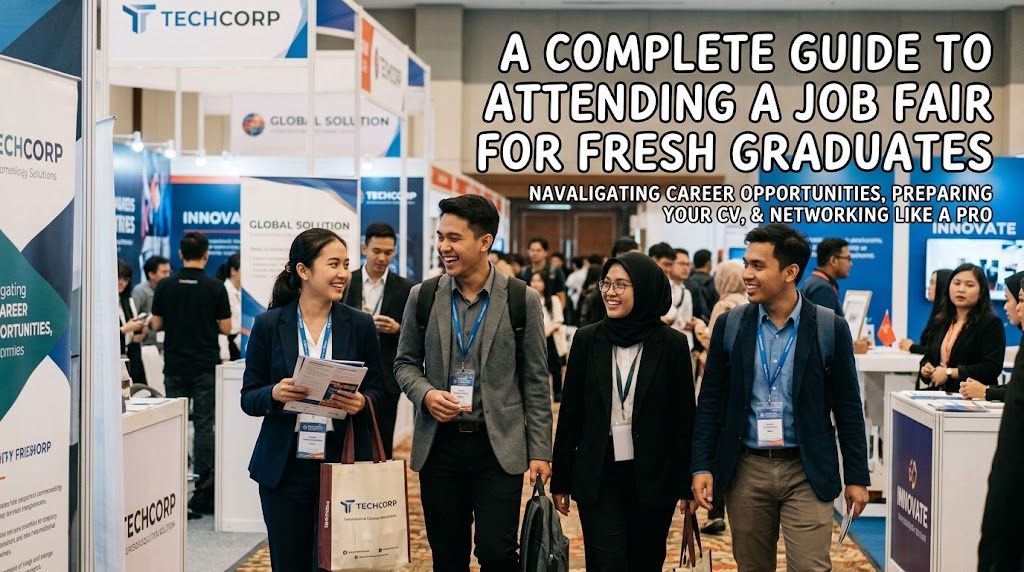
Attending a job fair can be an excellent opportunity for fresh graduates to meet recruiters, discover job openings, and learn more about different industries. Unlike applying online, a job fair allows candidates to introduce themselves directly to company representatives. However, simply attending the event is not enough to create a strong impression. Fresh graduates need proper preparation, professional communication, and a clear job search strategy to make the most of the opportunity.
UNDERSTAND THE JOB FAIR BEFORE ATTENDING
The first step is to collect important information about the job fair. Check the event date, location, opening hours, registration requirements, participating companies, and available job categories. If the organizer publishes a list of employers, review it before the event and identify companies that match your education, skills, and career interests. This preparation helps you avoid wasting time and allows you to focus on the most relevant opportunities.
You should also check whether the event requires online registration or specific documents. Some job fairs may have different procedures for submitting applications, such as online forms, QR codes, or company recruitment platforms. Understanding these requirements in advance can make the registration process easier. It also shows that you are organized and serious about finding employment.
PREPARE A PROFESSIONAL RESUME
A resume is one of the most important documents to bring to a job fair. Make sure it clearly presents your education, internships, organizational activities, projects, skills, certifications, and relevant achievements. Since fresh graduates may have limited professional experience, academic projects, volunteer activities, and campus organizations can demonstrate transferable skills. Keep the resume concise, well structured, and easy for recruiters to scan.
It is also useful to prepare different versions of your resume when applying for different types of positions. Highlight marketing experience for marketing roles, technical projects for technology positions, or administrative experience for office roles. Do not add information that is not relevant simply to make the resume longer. Every detail should be accurate and support your suitability for the position.
RESEARCH THE PARTICIPATING COMPANIES
Company research can give you an advantage when speaking with recruiters. Learn about the company's industry, products or services, available positions, and basic workplace information. You do not need to memorize everything about the company, but you should understand why you are interested in working there. This knowledge can make your conversation more specific and meaningful.
Research also helps you prepare better questions. Instead of asking information that is already clearly stated in the job advertisement, you can ask about responsibilities, recruitment stages, or skills that are especially valuable for the position. Showing genuine interest can make your interaction more memorable. It also helps you decide whether the company fits your career goals.
PREPARE YOUR SELF INTRODUCTION
Job fair conversations are often brief because recruiters may need to speak with many candidates. Prepare a short self introduction that explains who you are, your educational background, your main skills, and the type of position you are seeking. Keep it clear and natural rather than memorizing a long speech. A concise introduction allows recruiters to quickly understand your profile.
Practice your introduction before attending the event. You can practice in front of a mirror or with a friend and focus on speaking clearly and confidently. Be ready to explain your relevant experiences and why you are interested in a particular position. Good preparation can reduce nervousness and help you communicate more naturally.
DRESS AND ACT PROFESSIONALLY
Your appearance contributes to the first impression you make on recruiters. Choose clean, neat, comfortable, and professional clothing that suits the type of job fair you are attending. Your overall appearance should show that you understand the event is a professional environment. Avoid clothing or accessories that are excessively casual or distracting.
Professional behavior is equally important. Greet recruiters politely, maintain appropriate eye contact, listen carefully, and avoid interrupting them. Be respectful even when a company does not have a position that matches your profile. Every interaction is an opportunity to demonstrate your attitude and communication skills.
BRING IMPORTANT DOCUMENTS AND TOOLS
Prepare the documents you may need before leaving for the event. These can include printed resumes, digital copies of your resume, certificates, portfolios, identification documents if required, and other supporting materials requested by employers. Candidates in creative or technical fields should also prepare an accessible portfolio containing their strongest work. Check every digital file and link before the event to make sure everything works properly.
You should also bring practical items such as a smartphone, charger or power bank, pen, notebook, and a suitable folder for documents. Make sure your phone has enough battery and that important files can be accessed quickly. If recruiters use digital application systems, reliable internet access can also be useful. Good preparation prevents small technical problems from interrupting the recruitment process.
ASK RELEVANT QUESTIONS
A job fair should be a two way conversation rather than an opportunity to simply hand over your resume. Prepare several relevant questions for recruiters based on your research. You might ask about the main responsibilities of the position, recruitment stages, required skills, training opportunities, or the expected next steps after the event. Choose questions that help you understand both the role and the company.
Avoid asking questions that can easily be answered by reading the job advertisement. You should also avoid making salary the only topic of conversation during an initial meeting. Listen carefully to the recruiter's answers and respond appropriately. A thoughtful conversation can demonstrate preparation, curiosity, and genuine interest.
BUILD PROFESSIONAL NETWORKS
Job fairs are also useful for building professional connections. You may meet recruiters, industry professionals, career advisors, speakers, and other job seekers with similar interests. A brief conversation can provide useful information about career paths, industry expectations, and future opportunities. Networking does not always produce an immediate job offer, but it can create valuable connections for the future.
If a recruiter provides professional contact information or suggests connecting through a professional platform, follow up appropriately. Keep your message short, polite, and relevant to your previous conversation. Avoid sending repeated messages or immediately demanding an update about your application. Professional networking is most effective when it is based on genuine communication and mutual respect.
FOLLOW UP AFTER THE JOB FAIR
Your job fair strategy should continue after the event ends. Review the companies you visited and note the positions you discussed, application instructions, and any information provided by recruiters. If a company asks you to complete an online application, submit it according to the stated procedure and deadline. Do not assume that handing over your resume at the booth automatically completes the application process.
If appropriate, you can also send a brief professional thank you message after meeting a recruiter. Mention the position you discussed and express your appreciation for the information provided. Avoid sending excessive messages or pressuring the recruiter for an immediate response. Each company has its own recruitment process, so patience is an important part of professional communication.
EVALUATE YOUR JOB FAIR EXPERIENCE
Not every job fair will immediately result in an interview or job offer. If the results are not what you expected, use the experience as an opportunity to improve. Review your resume, self introduction, communication style, company selection, and overall preparation. Identify which parts worked well and which areas need improvement.
Your evaluation can make future job fairs more effective. You may discover that your resume needs to be more targeted, your introduction needs to be shorter, or you need more knowledge about the industry you want to enter. Continuous improvement is especially important for fresh graduates who are still developing their professional identity. Each job fair can become valuable practice for future recruitment opportunities.
CONCLUSION
A job fair can be an important starting point for fresh graduates who want to enter the professional world. Success depends not only on the number of resumes submitted but also on preparation, company research, communication, professional behavior, and follow up. Prepare a strong resume, understand your target companies, practice your self introduction, and bring all necessary documents before attending. During the event, communicate confidently, ask relevant questions, and build professional connections. With a focused strategy and a willingness to learn, fresh graduates can use job fairs to discover valuable career opportunities and take a meaningful step toward their professional goals.
About the Author
Gusti Ayu Tita P
Author — STEKOM University
An active author focused on academic issues, educational technology, and human resource development in the campus environment.