
A Guide to Writing Effective and Memorable Journal Conclusions
Gusti Ayu Tita P
12 Oktober 2026
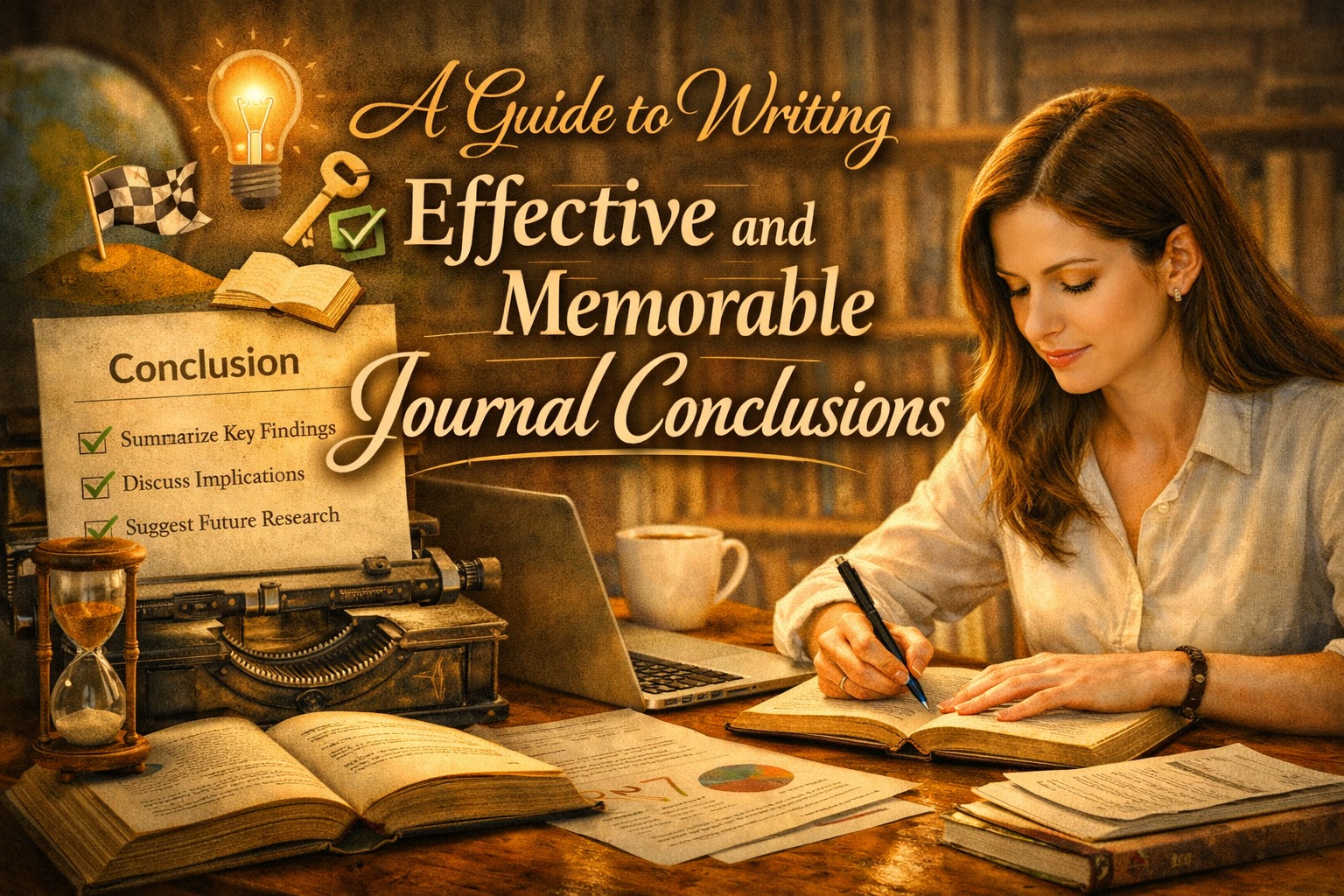
Writing a strong journal conclusion is one of the most important parts of academic writing. A conclusion is not just the ending of your work, but also the final message that readers will remember. Many writers focus more on the introduction and body, while forgetting that the conclusion plays a key role in strengthening the entire paper. A well-written conclusion can increase clarity, impact, and academic value. This article will guide you on how to create an effective and memorable journal conclusion in a simple and structured way.
UNDERSTANDING THE PURPOSE OF A JOURNAL CONCLUSION
A journal conclusion is designed to summarize the main ideas of your research or discussion. It helps readers understand the final outcome of your work without reading everything again. In journal conclusion writing, the goal is not to introduce new ideas, but to reinforce what has already been discussed. A strong conclusion also shows the importance of your findings in a broader context. This is why many academic experts consider the conclusion as the “final impression” of a paper. Without a clear conclusion, even strong research may feel incomplete or unclear.
KEY ELEMENTS OF AN EFFECTIVE CONCLUSION
An effective conclusion must include several important components. First, it should restate the main idea of the research in a simple way. Second, it should summarize the key findings without repeating everything in detail. Third, it should highlight the significance of the study in real-world or academic contexts. In academic journal conclusion, clarity and focus are more important than length. A good conclusion also connects the research back to the main objectives stated in the introduction. This helps create a complete and balanced structure in your writing.
COMMON MISTAKES IN WRITING JOURNAL CONCLUSIONS
Many writers make mistakes when writing conclusions, which can reduce the quality of their work. One common mistake is introducing new information that was not discussed in the main body. Another mistake is making the conclusion too long and repetitive. In research paper conclusion, unnecessary details can confuse the reader and weaken the main message. Some writers also fail to clearly restate their main findings, making the conclusion feel vague. Avoiding these mistakes is essential to maintain professionalism and academic quality in your writing.
PRACTICAL TIPS FOR WRITING STRONG CONCLUSIONS
To write a strong conclusion, you should focus on clarity and simplicity. Always begin by restating your main argument in different words. Then, summarize your key findings in a short and structured way. In effective conclusion writing, it is important to keep sentences direct and easy to understand. You should also emphasize the importance of your research contribution. Using journal writing tips such as reviewing your introduction before writing the conclusion can help maintain consistency. Finally, make sure your conclusion leaves a strong and lasting impression on the reader.
THE ROLE OF CLARITY AND IMPACT IN CONCLUSIONS
Clarity is one of the most important aspects of a strong conclusion. A clear conclusion helps readers quickly understand the main message of your journal. At the same time, impact ensures that your writing is memorable and meaningful. In journal conclusion writing, combining clarity and impact makes your work more professional and effective. A strong conclusion should not feel rushed or incomplete. Instead, it should feel like a natural and satisfying ending to your research journey.
CONCLUSION
In conclusion, writing an effective journal conclusion requires careful attention to structure, clarity, and purpose. A strong conclusion summarizes key points, reinforces findings, and highlights the importance of the research. By applying proper journal conclusion writing, academic journal conclusion, research paper conclusion, effective conclusion writing, and journal writing tips, you can significantly improve the quality of your academic work. A well-crafted conclusion not only completes your paper but also leaves a lasting impression on your readers.
About the Author
Gusti Ayu Tita P
Author — STEKOM University
An active author focused on academic issues, educational technology, and human resource development in the campus environment.